


The Story
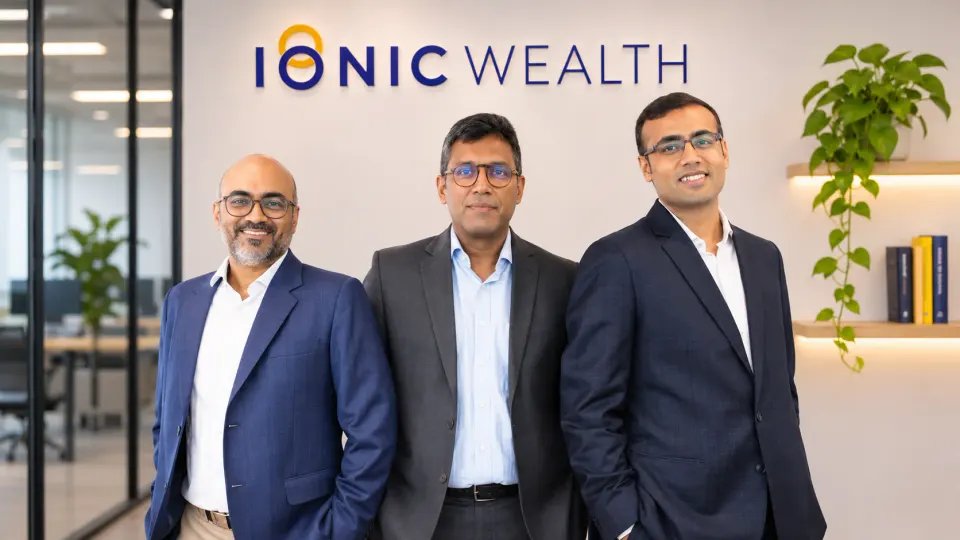
Ionic Wealth, the wealth management business of listed stockbroker Angel One, has raised ₹177 crore in a strategic round led by Angel One and what the company calls marquee families. Every investor from its previous round came back. None of the outside backers has been named; the company groups them as business families, Bollywood personalities, fintech entrepreneurs, global executives, board advisors and media houses. The round takes total capital raised to about ₹466 crore.
Ionic started out in 2024 as Angel One Wealth before taking on its own brand. Its first ₹290 crore came mostly from the parent: ₹250 crore from Angel One and ₹40 crore from 10 families, PTI reported last year. In April, Angel One's board approved a further ₹150 crore for Angel One Wealth, the entity behind the brand. The company has not said whether that money is part of this round, how the ₹177 crore splits between Angel One and the families, or what valuation the round carries.
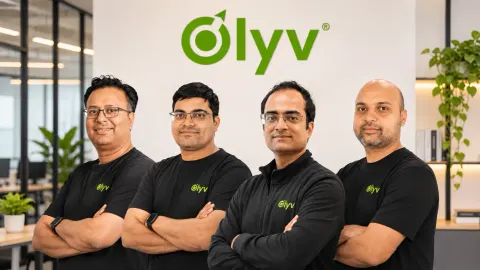
Srikanth Subramanian, who spent 23 years at the Kotak group and last headed Kotak Cherry, runs the business as co-founder and chief executive. His co-founders are Shobhit Mathur, who was on Kotak Cherry's leadership team, and Dharmendra Jain, who began his career in ICICI Bank's global private clients business.
The company says assets under management crossed ₹16,000 crore in September 2026, up from about ₹3,800 crore in March 2025. Over the same period clients rose from about 680 to more than 2,900 across more than 12 cities, served by over 100 private bankers. Revenue and profit were not disclosed.
The money will go into AI, a dedicated offering for India's wealthiest families, global investing through GIFT City, and hiring in India and overseas.
Why It Matters
Ionic was built for investors that traditional wealth managers tend to pass over. Those firms chase the ultra-rich, generally people with ₹25 crore or more. Ionic aimed lower, at households with ₹1 crore to ₹25 crore, using an app for routine work and private bankers for the conversations that move money.
The numbers show that model winning on breadth. AUM grew more than fourfold in 18 months, and so did the client count. Divide one by the other and the average account sits at roughly ₹5.5 crore, almost exactly where it was in March 2025. Growth has come from signing up new households, not from winning a bigger share of existing ones.
The product shelf earns the fees. Ionic runs portfolio management, advisory and alternative investment funds alongside distribution, plus a GIFT City arm registered with IFSCA, the regulator for India's international financial centre, for overseas investing. Specialised Investment Funds, a category SEBI opened in April 2025, add long-short strategies at a ₹10 lakh minimum, against ₹50 lakh for portfolio management services. That gives Ionic something new to sell to the clients it already has.
The costs sit in people. More than 100 private bankers for 2,900 clients means fewer than 30 relationships each, and bankers are typically a wealth manager's biggest cost. Technology is meant to stretch that ratio, which is why AI runs through the plan. Until it does, AUM grows roughly as fast as Ionic can hire bankers who bring clients with them.
The Strategic Read
Strip away the language of a funding round and this is mostly a listed parent capitalising its own subsidiary. Angel One's latest annual report describes Angel One Wealth as wholly owned. The families supplied only ₹40 crore of the first ₹290 crore, and the parent's board cleared another ₹150 crore in April. Neither side has explained how the families' money is structured.
The families matter more than their cheques. In a relationship business, a cap table of business families and Bollywood names doubles as a client list and a referral network. It also lends a credibility with the wealthy that a mass-market trading brand lacks, which is presumably why Angel One Wealth goes to market as Ionic.
For Angel One, the logic is diversification. SEBI's curbs on retail derivatives trading hit its core broking business hard. Profit fell 50% year on year in the September 2025 quarter, and FY26 profit dropped 22% to ₹915 crore. Wealth fees are steadier: in 2025 Ionic said three-quarters of its assets were recurring rather than one-off.
The next leg is harder than the last. Growth so far came from households averaging about ₹5.5 crore. The new money funds a dedicated proposition for the wealthiest families, and Ionic hired Rohit Suri from Avendus Wealth in March to run family office, offshore and alternatives work. That is the home ground of 360 ONE, Nuvama, Kotak and the global private banks, where clients care more about private deals and offshore structures than about a better app.
The headline AUM also needs care. In June 2025, ₹730 crore of the ₹5,070 crore Ionic reported was custody assets, which earn little, and it has not given that split for the latest figure. Without revenue, ₹16,000 crore cannot be read as a business size. Two signs will show whether this works: a rising average account, and the year Ionic stops needing its parent's money.
For daily, sharp analysis of the biggest moves in the Indian business and startup ecosystem, follow StartupFox.