

The Story
Olyv, the Bengaluru-based personal lending platform formerly known as SmartCoin, has raised ₹57.62 crore in an extension of its Series C round, according to regulatory filings. Nippon India Digital, a new investor, put in ₹50 crore, and existing backer Fundamentum, the fund co-founded by Nandan Nilekani, added ₹7.62 crore.
Olyv allotted 25,057 compulsorily convertible preference shares and 10 equity shares at ₹22,985.82 each, and says the money is for general corporate purposes. After the allotment, Nippon India Digital holds 4.53% of the company and Fundamentum 12.47%.
The extension follows a ₹207 crore Series C in February, in which Fundamentum invested ₹120 crore and SMBC Asia Rising Fund, the venture arm of Japan's Sumitomo Mitsui Banking Corporation, put in ₹87.5 crore. Estimates based on the filing suggest the new shares were issued on the same terms, valuing the company at about ₹1,104 crore, effectively flat.
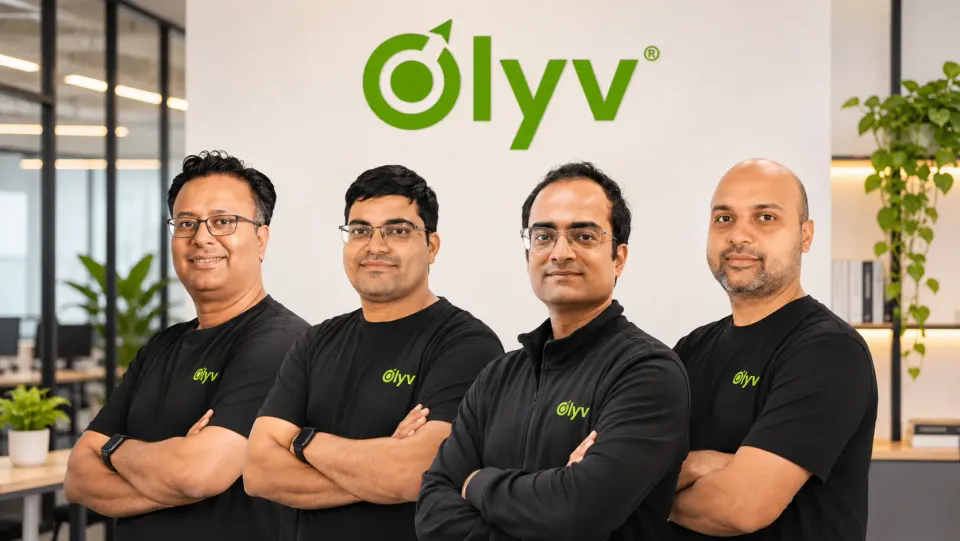
Olyv runs a lending marketplace through its app and website that connects borrowers with RBI-registered lenders. It offers small, unsecured personal loans to micro-merchants, small retailers, self-employed people, blue- and grey-collar workers and salaried professionals. Founded in 2015 by Rohit Garg, its chief executive, with Amit Chandel, Vinay Kumar Singh and Jayant Upadhyay, the company rebranded from SmartCoin in 2024.
Olyv has not yet filed its FY26 accounts. In FY25, it reported operating revenue of ₹338 crore, up 36% from ₹249 crore a year earlier, while net profit more than doubled to ₹26 crore.
Why It Matters
Olyv's business sits between two groups that rarely meet. Lenders want borrowers they can price, and many of the people Olyv serves, such as small shopkeepers, gig and factory workers and the self-employed, have thin or patchy credit histories. Olyv finds and screens these borrowers through its app, using its own data to decide who gets a loan and how much, while the loans themselves are made by partner lenders registered with the RBI. Its revenue comes mainly from what it earns for sourcing and servicing those loans.
Small-ticket loans are expensive to make. Each costs roughly as much to process and collect as a larger one, but earns far less. The model works only if the platform keeps acquisition cheap and defaults predictable, and repeat borrowers help with both: someone who has repaid once is cheaper to lend to again and easier to price. The company has said that about three-quarters of its customers come back.
Platforms of this kind also tend to share some of the credit risk with their lending partners through default guarantees, which the RBI caps at 5% of a portfolio. Equity is what allows a platform to offer that comfort, and to keep growing loan volumes without depending entirely on its partners' appetite.
The Strategic Read
The most telling number in this round is the price. Nine months after February's Series C, a new investor paid the same per share, even though Olyv had reported a profitable FY25 in which net profit more than doubled. Extensions are often priced on the original terms, so this is not a down round. But it suggests investors are not yet paying up for growth in small-ticket unsecured lending, a segment the RBI has watched closely and where stress among lower-income borrowers rose through 2024 and 2025.
At the estimated ₹1,104 crore, Olyv is valued at a little over three times its FY25 revenue and roughly 42 times its FY25 profit. Those figures are now more than a year and a half old, and the FY26 accounts will show whether growth held up as the sector tightened.
The shareholder base is becoming steadily more institutional. This year Olyv has brought in Fundamentum, which has now invested twice, and two investors with Japanese parents: SMBC Asia Rising Fund, whose group already owns the Indian lender SMFG India Credit, and Nippon India Digital, part of a fund house majority-owned by Japan's Nippon Life. Japanese financial groups have been building exposure to Indian credit for some time, and a profitable platform with millions of borrowers offers them data and distribution as well as equity upside.
Olyv has set targets of 100 million users and more than $1 billion in assets under management by FY29. Reaching them will depend less on equity than on partner lenders' willingness to keep funding small, unsecured loans. Investors with banking parents could help with that, if they bring lending relationships along with the cheque.
For daily, sharp analysis of the biggest moves in the Indian business and startup ecosystem, follow StartupFox.