

The Story
Zavya, a Gurugram-based brand selling everyday 925 sterling silver jewellery, has raised ₹22.6 crore (about $2.5 million) in a pre-Series A round. The money comes from Daksham Growth Ventures (DGV), the growth investment arm of the multi-family office Daksham Capital, which is new to the company, and from existing investor Orios Venture Partners. The round values Zavya at about ₹191.5 crore post-money, Entrackr reported.
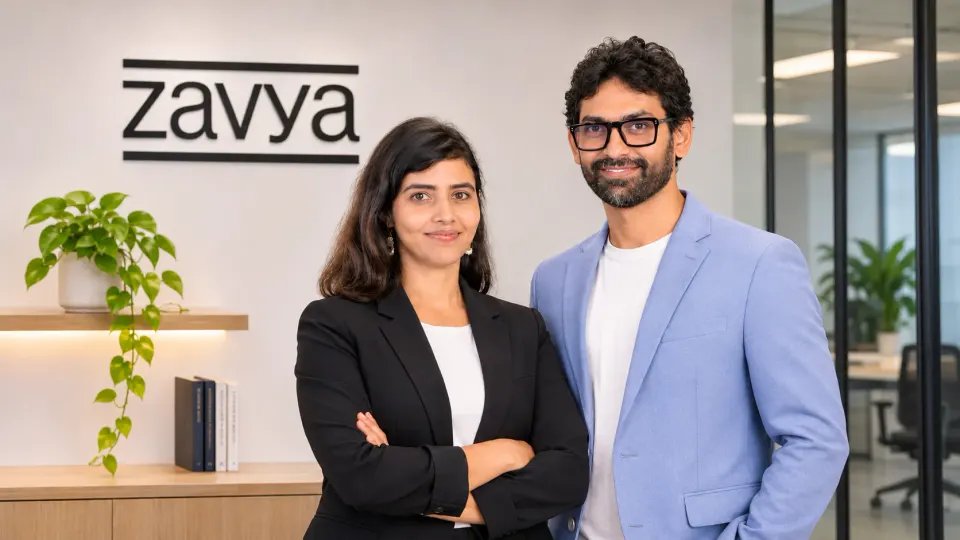
Poem Kabra, a graduate of IIT Delhi and IIM Lucknow, started Zavya in 2021 and is its chief executive. Ravi Malani, an IIT Kharagpur alumnus who was part of Snapdeal's senior leadership team, later joined as co-founder and chief operating officer. Kabra says the brand was built to make fine jewellery "an everyday expression of personal style, rather than something reserved for special occasions."
Zavya sells through its own website and app and on the quick-commerce apps Blinkit and Zepto. It is also listed on Amazon, Myntra and Nykaa, where it says it ranks among the top brands in its category. The company says it releases more than 50 new styles a month in weekly drops and is EBITDA-profitable. It also says it booked eight-figure net sales, meaning at least ₹1 crore, in a single day around Raksha Bandhan.
The money is meant for growing online and quick-commerce sales and for brand building. Part of it will fund Zavya's first move into physical retail.
Several basics were not disclosed. Zavya has not shared its revenue, the period over which it has been EBITDA-positive, how the ₹22.6 crore splits between the two investors, or what form the retail push will take. DGV has said its fund focuses on consumer companies with annual recurring revenue of ₹25 crore to ₹75 crore; Zavya has not said where it sits.
Why It Matters
Zavya's model rests on two choices: keep each piece light, and keep the catalogue moving.
Kabra describes the brand as built on lightweight, design-led pieces, and the economics follow from that. A lighter piece uses less silver, so more of what the buyer pays covers design and finish rather than metal. Because 925 silver can be hallmarked, unlike brass or alloy costume jewellery, the brand can sell at gifting prices and still call itself fine jewellery. The bet is that jewellery moves out of the family locker and into the daily commute.
The release schedule borrows from fast fashion. More than 50 new styles a month gives marketplace algorithms fresh listings to show and repeat buyers a reason to return. It also lets each batch be priced at current metal costs, which matters in a year when silver has lurched in both directions.
Quick commerce serves the gifting end. It turns a forgotten occasion into a delivery within minutes, and jewellery is easy for dark stores to hold, being small and valuable for its size. The Raksha Bandhan number shows how sharply that demand can spike.
For now, the cost base is commissions and customer acquisition rather than rent. Platforms take a share of each sale, and the brand's own site and app need paid marketing to draw traffic. Malani managed performance marketing and led analytics and growth projects at Snapdeal, the skill set that decides whether those channels pay. If the profitability claim holds, Zavya has found a mix that does.
The Strategic Read
The pitch from the company and its new investor leans on gold: as it climbed, younger buyers turned to hallmarked silver, a category still thinly served by organised and online retail. The picture is messier now. Gold has fallen about a quarter from its January 29 peak, though it remains far above its level of two years ago. Silver more than doubled between December 2025 and late January 2026, then gave the entire gain back, touching a one-year low of ₹1.69 lakh a kilogram in Delhi on November 17.
For a silver jewellery brand, that volatility is the underrated risk. Cheaper silver helps affordability and the margin on new stock, but any inventory bought near the January top lost value quickly. Light pieces and fast turnover limit the damage, which may be the real worth of weekly drops. The lasting case for Zavya cannot rest on the gold price. It rests on whether women buy silver jewellery the way they buy clothes, often and for themselves.
Physical retail is where the profitability claim meets its test. GIVA, which also began with 925 silver, shows both sides: it reported FY25 revenue from operations of ₹518 crore, up 89%, with roughly half from stores, alongside a ₹72 crore loss and operating lease costs that more than doubled. Rent and store staff are exactly what an online-first brand avoids. Zavya describes retail as an early step, which suggests it sees the risk.
Defensibility is thinner. Silver designs are easy to copy, and marketplace rankings tend to reward the biggest ad budgets, which explains the brand-building money in this round.
The terms suggest a company raising from strength. If the full ₹22.6 crore is fresh capital, investors bought roughly 12% of Zavya. DGV's Shivam Diwan said at the fund's launch that he wanted capital-efficient businesses, not growth bought with heavy cash burn, and he cited Zavya's profitability in announcing the deal. The next round will turn on what Zavya has not yet shown: its revenue, and how its first stores perform.
For daily, sharp analysis of the biggest moves in the Indian business and startup ecosystem, follow StartupFox.