
The Story
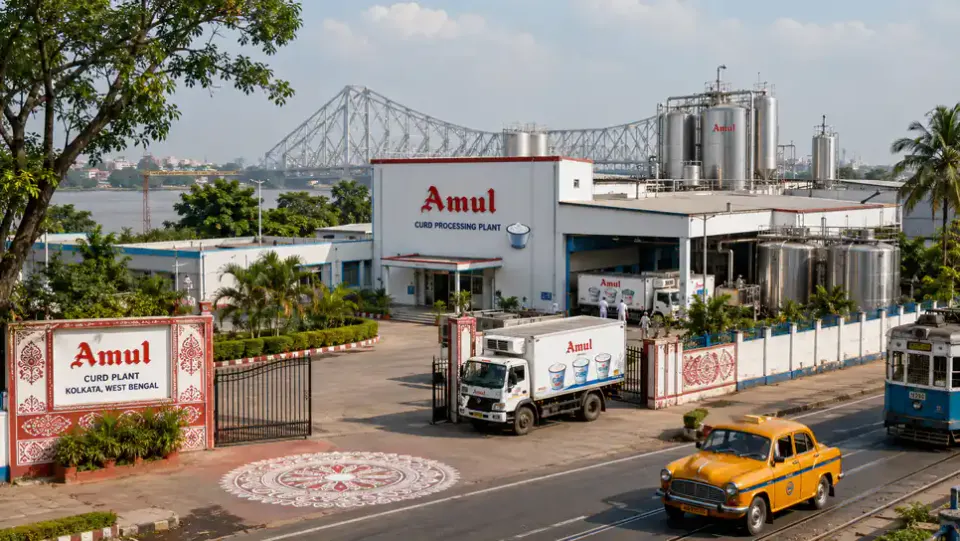
Amul is set to establish the world's largest curd manufacturing facility in Howrah, West Bengal, with a massive capital expenditure of ₹600 crore. As reported in early June 2026, this infrastructure project marks one of the most significant dairy sector investments ever made in eastern India. The Gujarat Cooperative Milk Marketing Federation (GCMMF), the umbrella body operating the Amul brand, intends to use this mega-plant to drastically scale its production capacity for fermented dairy products. By anchoring the facility in Howrah, a major industrial and logistics hub adjacent to Kolkata, Amul is aggressively positioning itself to capture the rising consumer demand across West Bengal, Odisha, and the broader northeastern corridor.
Why It Matters
The strategic rationale for this ₹600 crore capital deployment hinges on the shifting consumption patterns and unit economics of the Indian dairy market. Traditional fluid milk operates on notoriously thin profit margins, heavily dependent on sheer volume and hyper-efficient daily distribution. In contrast, value-added dairy products (VADPs) like packaged curd, yogurt, buttermilk, and cheese offer significantly higher profit margins and slightly longer shelf lives. Eastern India, particularly West Bengal, has a deeply ingrained cultural affinity for curd and fermented sweets, yet the packaged segment has historically been fragmented among unorganized local dairies and regional brands. By building a dedicated, world-class production facility, Amul achieves heavy economies of scale that smaller competitors simply cannot match. Furthermore, establishing production directly in Howrah eliminates the exorbitant cold-chain transportation costs associated with shipping perishable VADPs from western or northern India, directly improving bottom-line profitability while ensuring superior product freshness at the retail level.
The Strategic Read
Amul's aggressive expansion into Howrah signals an impending consolidation phase in the regional FMCG market. For legacy regional players and emerging direct-to-consumer dairy startups in the East, competing against Amul's localized supply chain and dominant pricing power will become exceptionally difficult. This infrastructure play also forces major national competitors like Mother Dairy, Britannia, and ITC to either ramp up their own regional manufacturing capacities or risk losing significant market share in the highly lucrative fermented dairy category. On a macroeconomic level, a ₹600 crore industrial investment will trigger a downstream economic multiplier effect. It will create substantial direct operational employment in Howrah while simultaneously providing thousands of local dairy farmers in the surrounding districts with a reliable, high-volume institutional buyer. Ultimately, this factory is not just about curd production; it is a structural moat built to secure Amul's absolute market dominance across eastern India for the next decade.
For daily, sharp analysis of the biggest moves in the Indian business and startup ecosystem, follow StartupFox.