


The Story
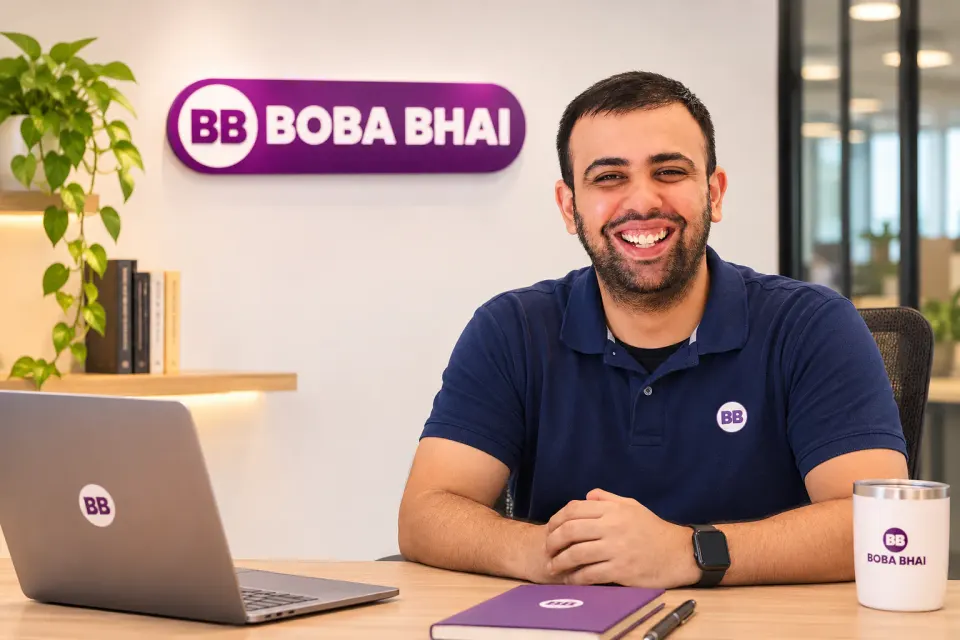
Boba Bhai, the bubble tea and Korean street food chain that Dhruv Kohli founded in October 2023, has raised $18 million (about ₹171 crore) in a Series B round led by US-based Left Lane Capital. Existing investor Titan Capital took part, and BIG Capital increased its stake. Kohli has said the round includes a small secondary component alongside fresh capital. Neither the split nor the valuation was disclosed.
The cheque is a large step up from the ₹40 crore round in March, which 8i Ventures, Titan Capital Winners Fund and Global Growth Capital led. Left Lane, whose food investments include the coffee chain Blank Street, counts Boba Bhai as its fourth investment in India.
Boba Bhai runs about 120 stores and serves more than three lakh orders a month through its outlets and delivery apps. Bengaluru is its largest market, and it has expanded into tier-II cities such as Lucknow, Jaipur and Kanpur. Food and beverages each make up about half of sales, the company says, and online orders account for roughly 60% of revenue.
The latest reported figures put FY26 revenue from operations at ₹68 crore, up 139% from ₹28.44 crore in FY25, and the loss at ₹21.8 crore, 2.2 times the previous year's. In May, the company had cited a smaller FY26 loss of ₹12.5 crore. Kohli says Boba Bhai has already surpassed its full FY26 revenue in the first half of FY27 and now brings in about ₹12.5 crore a month.
The company says the money will fund store expansion and senior hires, with a target of 250 to 300 outlets within 12 months. It will also back new brands under Boba Bhai Ventures, starting with Oreco Mexican Kitchen, which is being tested at two Bengaluru outlets.
Why It Matters
Boba Bhai's format is built for speed and repeatability. Bubble tea is a high-margin drink with assembly-style preparation, and Korean street food lifts ticket sizes and adds meal occasions beyond an afternoon drink. A roughly even split between food and beverages suggests the food menu is pulling its weight rather than filling out the counter.
The kitchen is designed not to depend on skilled cooks. Kohli has said he wants food that a 15-year-old employee can make taste the same every time, which is the logic behind most scaled QSR chains: standardised recipes and simple kitchen steps. That keeps hiring costs down and makes new stores faster to open.
The cost pressure sits in the channel mix. Online orders still account for about 60% of revenue, so a large share of sales passes through delivery aggregators that charge commissions and push discounts, and those orders carry packaging costs that dine-in sales avoid. That share has been falling, from about four-fifths of sales in 2024 by the company's own earlier figures, as the store network has grown. Same-store sales grew 30% to 40% in FY26, the company says, which helps absorb fixed store costs. The widening loss suggests expansion spending is still running ahead of store-level profits.
Boba Bhai Ventures is meant to reuse the same back end. Oreco targets lunch, a slot bubble tea does not own, and would share the supply chain and delivery presence the company has already built.
The Strategic Read
Left Lane is backing a pattern it has bet on before: small-format food chains that grow quickly on a narrow menu and strong brand recall. Its global food investments include Blank Street in coffee and 7th Street Burger in smash burgers. The assumption is that the taste for Korean food among young Indian consumers is a durable shift rather than a passing trend, and that Boba Bhai can own it at national scale before rivals do. Kohli has himself acknowledged that novelty alone does not build a lasting food brand.
The expansion plan is the central risk. Going from about 120 stores to as many as 300 within a year means opening several outlets a week while entering cities far from the Bengaluru base. Each new region needs its own supply lines and trained staff, and demand in smaller cities may not match the metros. In Indian QSR, rapid rollouts often stumble on site selection, where a poor lease can lock in losses for years.
The numbers carry a caution too. Revenue more than doubled in FY26, but the reported loss more than doubled as well, and the company has not explained the gap between the ₹21.8 crore now reported and the ₹12.5 crore it cited in May. Investors will watch whether store-level profitability holds as the network doubles.
Menu depth is the company's answer to the fad question. Ramen now accounts for about 5% of sales, and packaged Korean chips sell on Blinkit in five cities, which gives the brand reach beyond its stores.
The multi-brand plan cuts both ways. A shared back end can make a second brand cheaper to launch, but it also splits management attention just as the core brand attempts its fastest growth. With Oreco still in testing at two outlets, the real test of this round is whether Boba Bhai reaches 250 stores without its unit economics slipping.
For daily, sharp analysis of the biggest moves in the Indian business and startup ecosystem, follow StartupFox.