


The Story
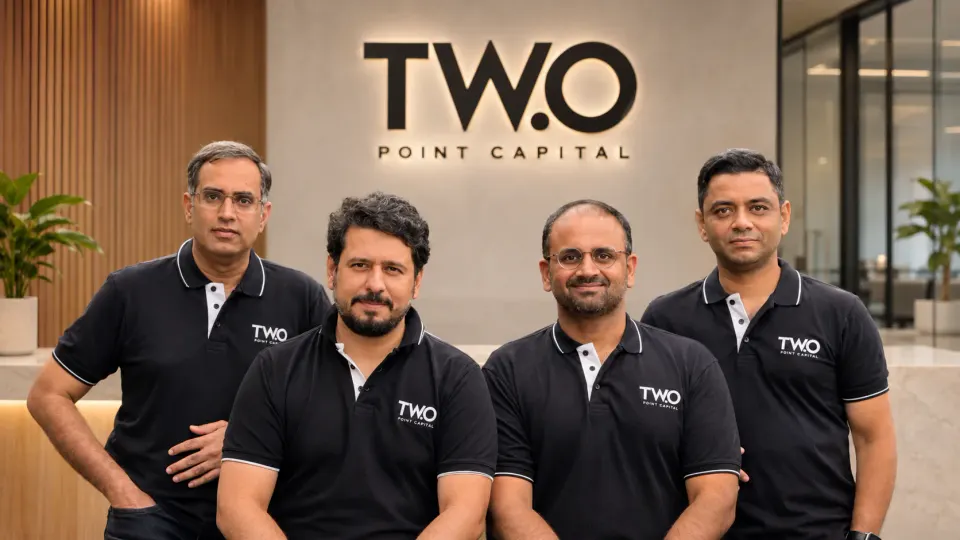
Two Point O Capital, which goes by TW.O, has raised $10 million (about ₹95 crore) in a round led by Transition VC, which describes itself as India's first venture fund focused on the energy transition. Existing investor Omnivore also took part, along with angel investors Chiranjeev Singh Saluja, managing director of the solar manufacturer Premier Energies, and Sudhir M Reddy.
The Mumbai-based company pays for clean energy and water projects at commercial and industrial sites, either financing them or owning the assets itself, so customers avoid a large upfront cost. It works with equipment makers and engineering, procurement and construction firms to install solar plants, energy-efficiency equipment and wastewater treatment systems, then measures how they perform and guarantees the results. A proprietary AI and machine-learning platform handles project design, underwriting and monitoring, including predicting when equipment needs maintenance.
Customers include Godrej, Wipro, JK Tyre, Phoenix Mills, Morepen Pharma and Premier Energies. TW.O says its assets under management have grown 1.5 times every quarter for the past three quarters, though it has not disclosed their size.
The new money takes the company into battery energy storage and deepens its work in solar, energy efficiency and wastewater treatment, with a focus on energy- and water-intensive sectors such as data centres, automotive, pharmaceuticals, manufacturing and healthcare.
TW.O was founded in 2024 by Archit Mehrotra, Karan Bhutani, Manya Ranjan and Shashidhar Reddy, whose previous employers include KKR, McKinsey, Shell, BP, Honeywell, ReNew, Sterlite Power and GIC. It raised a $6.3 million seed round led by Omnivore in September 2024, alongside Multiply Ventures, RTP Global, GrowX and Spectrum Impact.
Why It Matters
Most Indian companies want cheaper and cleaner power, but few want to spend their own capital on it. A rooftop solar plant, an efficiency upgrade or a water recycling unit competes for money with the machines that make the company's products, and energy projects rarely win that contest. Banks, meanwhile, find small distributed projects slow and costly to assess. The result is a gap between projects that make economic sense and projects that actually get built.
TW.O sits in that gap. By financing or owning the assets and guaranteeing results, it turns a capital decision into an operating one: the customer pays over time out of the savings, and TW.O carries the risk that the equipment underperforms. That is where its data matters most. Better information on how assets actually perform lets it price that risk more precisely, and in time borrow more cheaply against its portfolio.
Batteries are the natural next step. Time-of-day tariffs now make grid power costlier at peak hours for commercial and industrial users, so storing solar power for use later in the day has a clear payback, especially for factories, hospitals and data centres that cannot afford outages. Exports add pressure of their own: European buyers increasingly want suppliers to show lower emissions, and the EU has begun applying a carbon price to imports of goods such as steel and aluminium.
The Strategic Read
TW.O's customer list looks very different from its seed pitch. In 2024 it described its focus as MSMEs and rural enterprises, the borrowers banks serve worst. The customers it names now are large, creditworthy companies such as Godrej, Wipro and Phoenix Mills. That shift makes sense for a young company putting assets on its own books: big customers sign larger contracts and are far less likely to default. But it also puts TW.O alongside established developers such as CleanMax and Fourth Partner Energy, which already build and own renewable assets for large companies. Its answer is breadth: one partner for solar, efficiency, water and now storage, under a single performance guarantee.
The bigger constraint is capital. A business that owns assets needs far more money than $10 million, and equity mostly serves as the cushion that lets it borrow. Growing assets 1.5 times a quarter will test how cheaply TW.O can raise debt. Without the absolute size of those assets, the growth rate is hard to judge. The market claim has grown too, from a $10 billion annual financing gap at seed to a $100–150 billion yearly opportunity now, a figure that counts far more than financing.
Transition VC's lead is notable. The fund says it backs engineering-led hardware rather than software, and most of its portfolio, from battery packs to fuel cells and hydrogen, fits that description. A platform that pays for and installs equipment at customer sites could become a route to market for exactly that kind of hardware, in line with the fund's stated aim of building a portfolio whose companies help one another. Saluja's stake points the same way: the head of a company that makes solar cells and modules is backing the step that turns them into installed, paid-for projects.
For daily, sharp analysis of the biggest moves in the Indian business and startup ecosystem, follow StartupFox.