


The Story
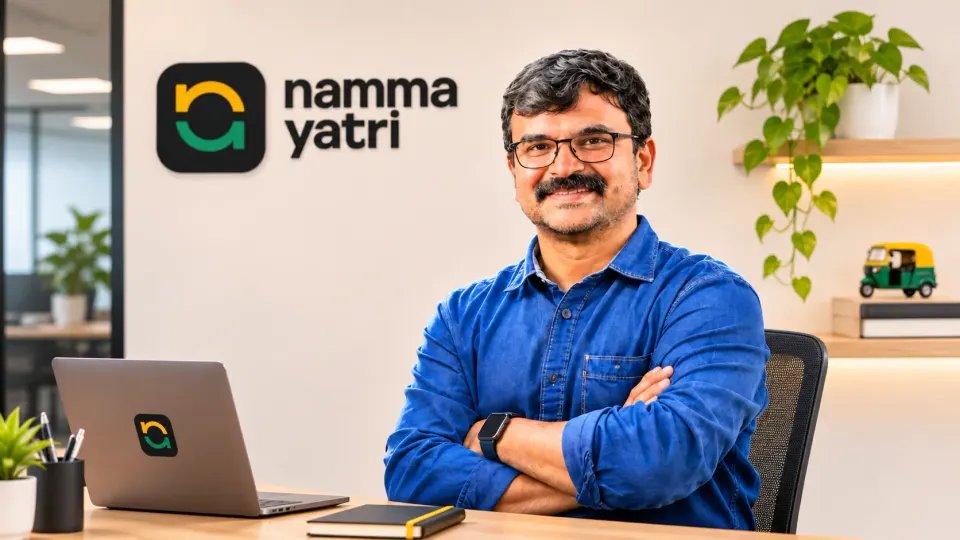
Moving Tech, the Bengaluru company behind ride-hailing app Namma Yatri, has raised ₹27.25 crore in an ongoing pre-Series A round led by the Michael & Susan Dell Foundation, Entrackr reported, citing regulatory filings. The foundation, a new investor, put in ₹27 crore. Narayana Hrudayalaya Limited, the listed hospital operator, invested the remaining ₹25 lakh.
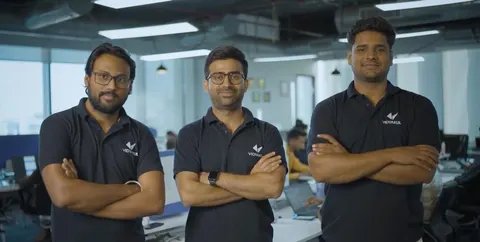
According to the filings, the company allotted 86,31,602 Series A2 compulsorily convertible preference shares at ₹31.57 each, along with 10 equity shares. That is the same price it set in March, when Juspay founder Vimal Kumar led an extension that Entrackr put at $4.4 million, with existing backers Blume Ventures and Antler taking part. Entrackr estimated the post-money valuation at about ₹526 crore, roughly flat.
Juspay remains the largest shareholder after the allotment with 27.93%, and Kumar holds a further 13.19%, the report said. Blume Ventures owns 10.43%. Co-founders Magizhan Selvan and Shanmugavel Mani Subbiah hold 7.68% and 6.28%. The Dell foundation's stake works out to 5.13%, while Google, which joined the $11 million round Moving Tech announced in 2024, holds 3.17%.
The filings also gave a fresh look at the numbers. Revenue from operations rose 89.4% to ₹37.5 crore in FY26 from ₹19.8 crore a year earlier, Entrackr reported, while the net loss narrowed 14.8% to ₹43.8 crore from ₹51.4 crore.
Moving Tech runs Namma Yatri and Yatri Sathi on a direct-to-driver model with no commissions, and also operates Bharat Taxi, according to the report. The money is meant for business expansion and growth.
The pre-money valuation was not disclosed, and with the round still open, neither was its final size. Operating metrics such as ride volumes were not part of the disclosure either.
Why It Matters
Namma Yatri does not take a cut of each fare. Drivers pay a flat fee to use the app instead. When it introduced the model in 2023, auto drivers could pay ₹25 a day for unlimited rides or ₹3.50 a trip for their first 10 trips, the company said at the time. Revenue therefore tracks how many drivers log in and pay, not fare levels or surge pricing.
That structure keeps the platform's take predictable but caps the upside. A commission platform earns more when fares rise, while a subscription platform earns the same fee whether a driver completes five rides or fifteen. Growth has to come from adding paying drivers and cities, which is where the FY26 numbers fit. Revenue grew 89.4% as reported, yet the reported ₹43.8 crore loss was still larger than revenue, so the company is spending well ahead of its income.
The capital involved is small for ride-hailing. A ₹27.25 crore round, as reported, is modest in a sector where incumbents fund driver incentives and rider marketing at scale. Moving Tech's offset is a second line of business as a technology provider. Mint reported last December that it would be the tech partner for Bharat Taxi, the cooperative-run platform backed by the Ministry of Cooperation, a role that can bring in revenue and reach without the marketing bill of a consumer brand.
The Strategic Read
The flat price is the signal worth reading. Two rounds in about eight months at ₹31.57 a share show that insiders and mission-led investors are willing to keep funding Namma Yatri, but not at a higher valuation. The March extension was led by Vimal Kumar, whose company Juspay is already the largest shareholder, and this one by a philanthropic foundation. Juspay-linked holders, including Kumar and Juspay co-founder Sheetal Lalwani, together own about 44.6% on Entrackr's figures. Conventional venture money has not priced a step-up.
The market assumption being underwritten is that drivers will stay loyal to the platform that first gave them a flat fee. That edge has narrowed. Rapido moved auto drivers to subscriptions first among the large players, and by mid-2025 Uber and Ola had followed. Once every platform charges drivers a flat fee, the contest shifts to ride volume, and volume follows rider habit and marketing spend, where the larger players are stronger.
What remains distinctive is the open, community-built approach. Namma Yatri was developed with Bengaluru's auto drivers' union and publishes its ride and driver metrics openly. That earns goodwill with drivers and governments, and the Bharat Taxi mandate shows the goodwill can be turned into contracts. It is hard to defend, though, because Bharat Taxi also competes for the same drivers.
Execution risk sits in two places. The first is cash. A reported annual loss of ₹43.8 crore, set against rounds of this size, leaves little room for an incentive war with better-funded rivals. The second is focus. Moving Tech runs its own consumer apps while serving as Bharat Taxi's technology partner. In March it also bought Netherlands-based Automicle to enter Europe. Spreading thin capital across a domestic price war and an overseas push works only if the core platform keeps growing revenue at close to its FY26 pace. If it does, this round will read as discipline. If it does not, it will read as a ceiling.
For daily, sharp analysis of the biggest moves in the Indian business and startup ecosystem, follow StartupFox.