


The Story
Bengaluru-based digital lender Finnable has raised ₹405 crore in a Series C round from a mix of new and existing investors, Entrackr reported on Thursday. Bharat Value Fund, part of the Pantomath Group, comes in as a new backer. So do Pratithi Investments, the investment firm of Infosys co-founder Kris Gopalakrishnan, and NKSquared, the vehicle through which Zerodha co-founders Nithin and Nikhil Kamath invest. Existing investors TVS Capital and Claypond Capital also took part.
The money will go towards expanding lending across Finnable's products, according to the report. The company lends mainly to salaried professionals through personal loans. It also offers loans against property and co-lends with banks and other financial institutions.
The round lands about a year after Finnable said it had closed a ₹500 crore equity raise led by Z47 and TVS Capital, with Ranjan Pai's MEMG Family Office participating. Its assets under management have since crossed ₹4,600 crore, up from around ₹3,000 crore at the time of that announcement, Entrackr reported. Profit after tax for the first half of FY27 was reportedly ₹51 crore.
The full-year numbers before that were thinner. Finnable reported consolidated revenue of ₹278.49 crore and a profit of ₹6.74 crore for FY25, after revenue of ₹181.7 crore and a loss of ₹5.88 crore in FY24.
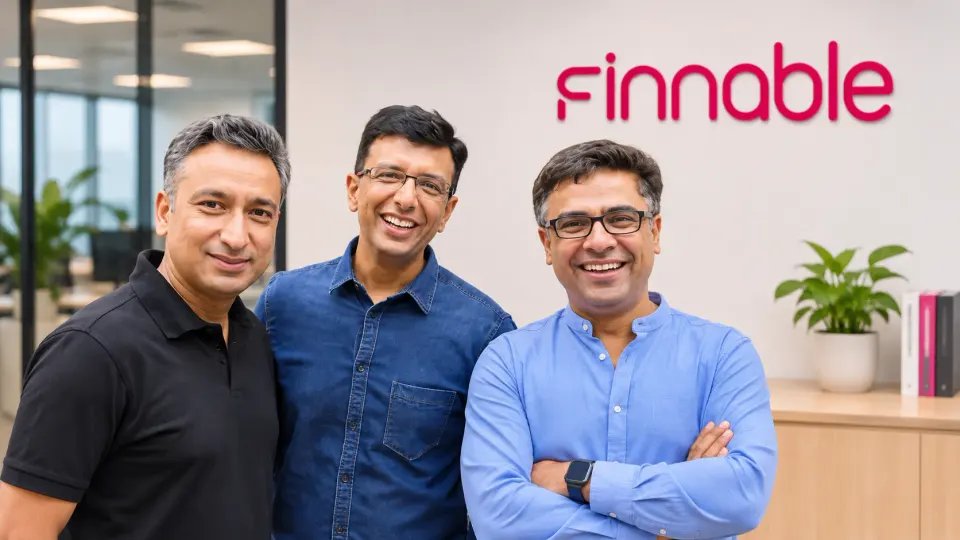
Several details were not disclosed. The report did not name a lead investor or say how much each backer put in. Neither the valuation nor the share price was made public, and it is not clear whether any part of the round involved secondary shares. Finnable was founded in 2015 by former bankers Nitin Gupta and Amit Arora, along with Viraj Tyagi.
Why It Matters
A lender's growth is rationed by its equity. Finnable runs its book through an RBI-registered NBFC, Finnable Credit, and every rupee it keeps on its own balance sheet needs a slice of capital behind it before banks and bond investors will fund the rest. Unsecured personal loans, reportedly about 95% of its business, carry a heavier capital charge than secured lending, so the equity requirement climbs with the book.
Retained profit could not have kept up. FY25 profit was a reported ₹6.74 crore, while AUM has added roughly ₹1,600 crore in about a year on the reported figures. The two rounds, ₹500 crore last November and the reported ₹405 crore now, are what make that pace possible.
Co-lending stretches the capital further. A partner such as Axis Bank or Utkarsh Small Finance Bank funds part of each loan and Finnable holds the rest. That lets a given amount of equity support more lending, though Finnable gives up part of the interest income in return.
On the cost side, borrowing is the line most exposed to scale. The first-time BBB+ rating the company highlighted last year still leaves it paying more for debt than higher-rated NBFCs. Credit costs arrive later. With a reported average tenure of 42 months, losses on loans written this year will keep surfacing for three years or more. Branches, which Finnable runs alongside its app, add a fixed cost that only pays off with volume.
The Strategic Read
The investors are underwriting a specific borrower. Finnable targets salaried people earning ₹15,000 to ₹50,000 a month, the company has said, a segment banks tend to under-serve because thin credit files and small tickets make manual underwriting uneconomical. The bet is that a steady salary, checked digitally and backed by a branch network for collections, makes these borrowers predictable enough to lend to at scale.
The reported numbers support that bet without proving it. Finnable said last year that its gross NPAs were 1.1%. That figure deserves care. When a loan book grows by about half in a year, recent loans dominate the denominator, and most of them have not been around long enough to default. With a 42-month average tenure, the real test of the 2025 and 2026 vintages is still ahead.
The profit line is the more telling shift. Half-year PAT of ₹51 crore, as reported, is more than seven times the whole of FY25. If that run rate holds, Finnable can fund more of its growth from earnings, which strengthens its hand on dilution in the next round.
The moat is mostly process, and little of it is proprietary in a way rivals cannot copy. Lenders such as KreditBee and Fibe chase overlapping borrowers, and the listings of Kissht in May and Moneyview in October have given public investors a direct read on what consumer lenders are worth. That cuts both ways. It hands Finnable's backers a valuation yardstick while exposing any gap in growth or asset quality.
Execution risk sits in concentration. With personal loans reportedly about 95% of the book, a turn in the credit cycle for salaried borrowers, or tighter RBI rules on unsecured lending, would hit almost all of it at once. Loans against property are the hedge, but they remain small. The investor mix, heavy on family offices from the Kamaths' NKSquared to Ranjan Pai's MEMG, points to patient capital. That patience will be tested if credit costs rise before the book matures.
For daily, sharp analysis of the biggest moves in the Indian business and startup ecosystem, follow StartupFox.