
 Yulu
YuluThe Story
Yulu, a Bengaluru-based electric mobility-as-a-service platform, has raised $93 million in a Series C funding round. The round combines $63 million in equity, led by GEF Capital Partners, with $30 million in debt, and was announced on 12 August 2026.
Around $5.5 million of the equity was used to buy out early seed investors whose funds were nearing the end of their investment life, rather than flowing into the business, chief executive Amit Gupta said. The round is reported to value Yulu at about $170 million post-money; Gupta declined to comment on the figure but did not dispute it. Existing strategic investors Bajaj Auto and Magna International did not participate, waiving their pre-emptive rights to let GEF Capital acquire its target stake.
The capital follows a long sequence of raises. Yulu previously took $19.25 million from Magna and Bajaj Auto in February 2024, an $82 million Series B led by Magna in September 2022, and multiple debt facilities; by one estimate it has now raised more than $228 million since inception. It plans to use the fresh money to quadruple its active fleet to 200,000 electric vehicles over two years, expand into new urban-mobility use cases, and prepare for a potential public listing.
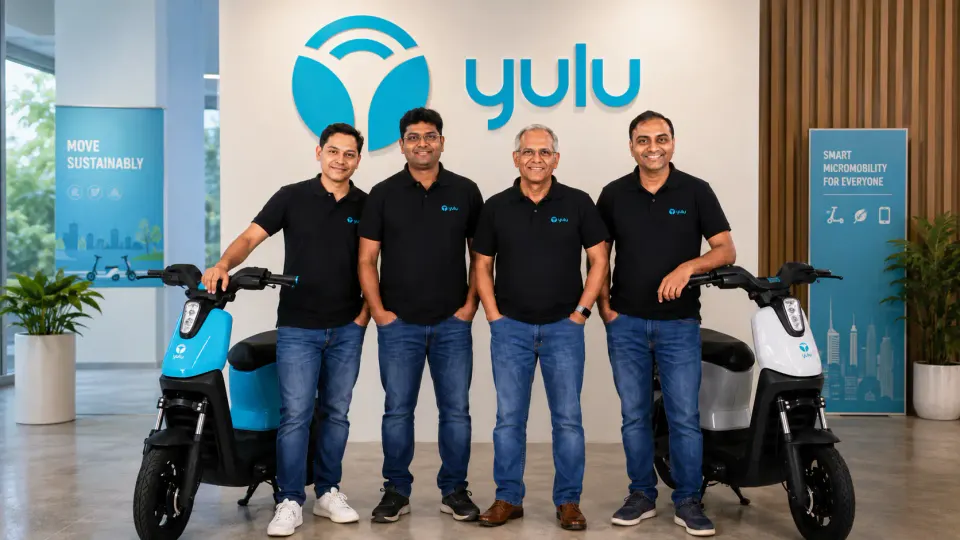
Founded in 2017 by Amit Gupta, RK Misra, Naveen Dachuri and Hemant Gupta, Yulu operates a technology-enabled fleet of electric two-wheelers for urban mobility and last-mile delivery, currently around 50,000 vehicles across 12 primary metros and eight franchise-operated markets. It reported operating revenue of ₹237.4 crore in FY25, up 98 percent from ₹119.9 crore in FY24, and a net loss of ₹126 crore, down 12 percent; the company says it has been EBITDA-positive since April 2025 and that revenue grew sevenfold between FY23 and FY26.
Why It Matters
Yulu's business has quietly changed shape. It began as a shared electric-bike service for short city trips, but the durable demand has come from delivery: its vehicles now carry riders for quick-commerce and food platforms, and the company says they handle more than 750,000 doorstep deliveries a day and account for over 15 percent of quick-commerce deliveries in India's four largest metros. The rise of ten-minute grocery has turned Yulu's fleet from a consumer novelty into logistics infrastructure.
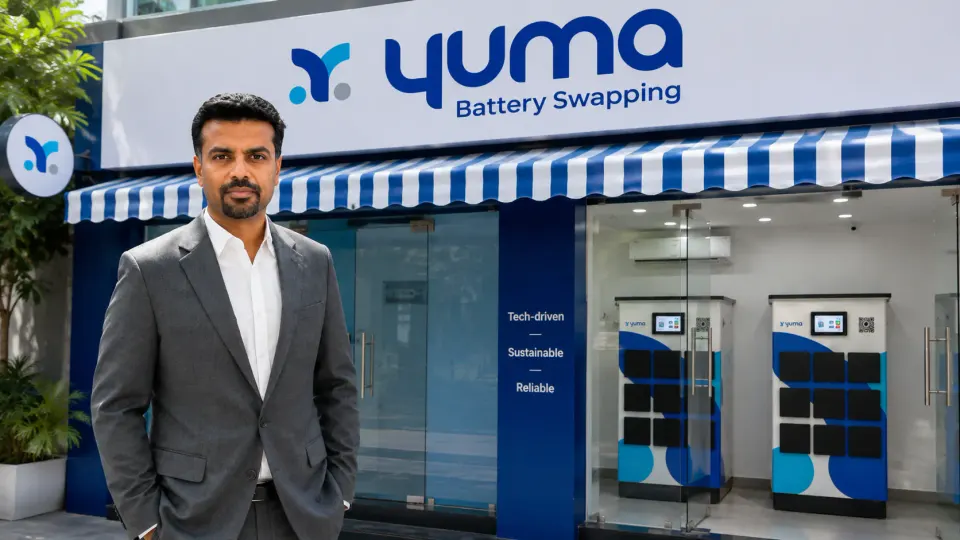
The model earns by keeping vehicles moving. Yulu owns the fleet and rents it out by the day or the trip, and its economics turn on utilisation, how many productive hours each vehicle logs, against the fixed cost of buying, financing and maintaining it. Battery swapping, run through Yuma, its joint venture with Magna, removes charging downtime and keeps the assets earning. That is also why debt features so heavily in Yulu's funding: an asset-heavy fleet is financed more cheaply with loans than by selling equity, and $30 million of this round is debt for exactly that reason.
The financials show the model working better than before without yet working comfortably. Revenue nearly doubled to ₹237.4 crore in FY25 and the company reached positive EBITDA in April 2025, real progress for a capital-intensive business. But it still lost ₹126 crore for the year, EBITDA excludes the depreciation and interest that a fleet business cannot ignore, and reaching net profitability while simultaneously quadrupling the fleet is a demanding balance. Growth in this model consumes cash before it returns it, because every new vehicle is paid for up front and earns back slowly.
The Strategic Read
The market assumption changing behind this round is that shared electric two-wheelers have found their real job as the delivery layer for quick commerce, and that owning that fleet is a route to durable, infrastructure-like economics. The pitch to invest in Yulu now rests less on urban commuting than on being the vehicle beneath Blinkit, Zepto and Swiggy Instamart as ten-minute delivery scales.
The terms of the round complicate that story, and they deserve to be read plainly. A reported post-money of about $170 million, nine years after founding and after more than $200 million raised, is not the mark of a company compounding value quickly; measured against a higher valuation ascribed to Yulu in 2025, it looks flat at best. That a chunk of the equity went to buying out early investors rather than into the business, and that strategic backers Bajaj and Magna chose not to add to their stakes, are consistent with a round arranged to give a new investor entry and old investors an exit more than with a competitive up-round. The company frames the non-participation as clearing the way for GEF; both readings can be true.
What Yulu has that many mobility peers lack is a genuine operating turn. Positive EBITDA, near-doubled revenue and a captive demand source in quick commerce are real, and the Yuma swapping network and Bajaj manufacturing partnership give it cost advantages a pure rental startup cannot copy. The move into Yulu Express, a higher-payload scooter for e-commerce and parcel delivery, is a logical extension of the delivery thesis into larger loads.
The largest risk is concentration meeting capital intensity. Yulu's delivery demand rests on a handful of quick-commerce platforms that are themselves burning cash and could bring logistics in-house or squeeze rates, and quadrupling the fleet to 200,000 vehicles will absorb capital long before it returns profit. The company has said it wants to go public once profitability and readiness improve, but a flat, partly-secondary round is a reminder that the market is pricing the path to that listing conservatively. Whether Yulu converts EBITDA breakeven into sustained net profit as it scales, rather than raising again to fund the next fleet, is the question this round leaves open.
For daily, sharp analysis of the biggest moves in the Indian business and startup ecosystem, follow StartupFox.