


The Story
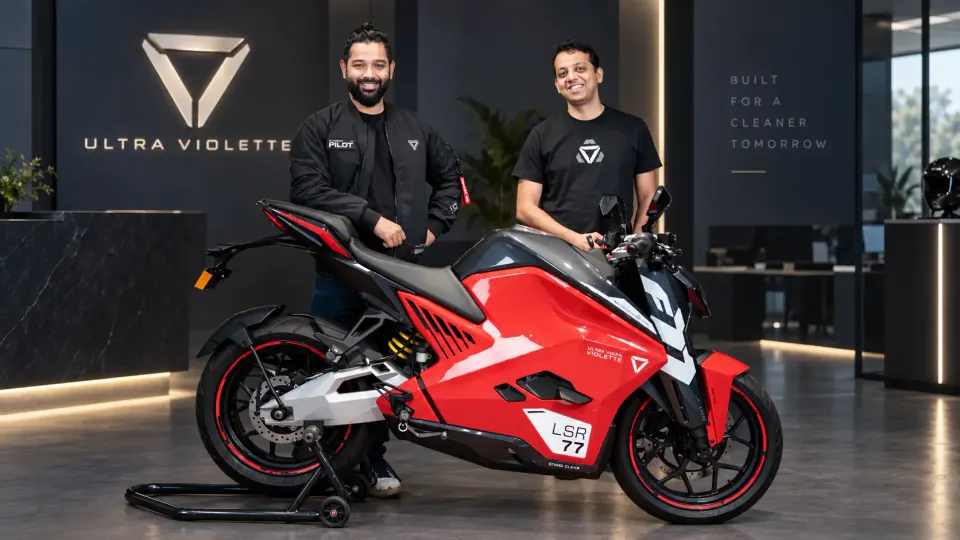
Ultraviolette has raised $85 million in a round co-led by Yali Capital and TDK Ventures, with Walden International chairman Lip-Bu Tan participating alongside existing investors. Tan has also joined the company as an advisor.
The Bengaluru company will use the capital to scale production of its F77 and X-47 electric motorcycles and bring the Tesseract scooter and Shockwave enduro to market, along with developing its next generation of EV platforms across battery technology, power electronics, vehicle architecture and software.
It is targeting entry into the United States in 2027, followed by expansion across Latin America and Southeast Asia. It currently sells in India and 20 European countries.
The round follows $66 million raised earlier in the ongoing Series E, including $21 million from TDK Ventures and $45 million from Zoho Corporation and Lingotto. That takes disclosed fundraising to $151 million since August 2025. It also follows the announcement of a new manufacturing facility with annual capacity of up to 500,000 units.
Narayan Subramaniam and Niraj Rajmohan founded the company in 2016. It designs performance-focused electric motorcycles and the platforms underneath them, with in-house battery architectures spanning 48V to 400V. Its investors include TVS Motor Company, Zoho Corporation, Lingotto, Qualcomm Ventures and Speciale Invest.
Subramaniam has said the company first met Tan in 2019, when it was pre-revenue with prototype battery packs and pre-production motorcycles, and that Tan was encouraging about its approach of vertical integration and first-principles engineering.
In FY25, Ultraviolette reported operating revenue of ₹32.3 crore, more than double the ₹15.1 crore of the previous year, against a net loss of ₹116.3 crore. Vahan data recorded 547 vehicles sold in that period.
Why It Matters
The name that should stop anyone reading this announcement is Lip-Bu Tan.
Tan is one of the most consequential figures in global semiconductors. He ran Cadence Design Systems, the company whose software the world's chips are designed in, for more than a decade, and through Walden International he has spent a career identifying hardware companies early. He does not appear on the cap tables of consumer vehicle brands. That he has invested personally in a Bengaluru motorcycle company, and joined as an advisor, says something about what he thinks he is buying.
Almost certainly it is not motorcycles. Ultraviolette has built its own battery architectures across a range from 48V to 400V, its own power electronics, its own vehicle architecture and its own software stack. Very few companies of its size anywhere have attempted that level of vertical integration, and fewer still have done it in India, where the two-wheeler industry is built on assembling components designed elsewhere. Subramaniam's account of their first meeting in 2019 is revealing: the company was pre-revenue, with prototype battery packs and pre-production bikes, and what Tan responded to was the approach rather than the product.
That explains the rest of the register too. TDK makes electronic components and batteries at enormous scale. Yali Capital invests in semiconductors and hardware. Qualcomm Ventures is there. These are not consumer investors making a bet on a brand; they are technology investors making a bet on a platform, in a category where most of the world's manufacturers buy their powertrains from somebody else.
The strategic logic follows from it. A company that owns its battery and powertrain technology can put it into motorcycles, scooters and whatever comes next, can sell into markets with very different regulations, and holds something durable if the vehicle market shifts underneath it. A company that assembles other people's components holds nothing of the sort. That is the bet being funded here, and it is why the revenue figure matters less than it would for an ordinary two-wheeler brand.
The Strategic Read
Set the money against the volumes and the shape of this company becomes clear.
FY25 revenue was ₹32.3 crore on 547 vehicles registered. The loss was ₹116.3 crore, roughly three and a half times revenue. The capital raised since August 2025 is $151 million, around ₹1,430 crore. A company is raising something close to forty times its annual revenue, and the planned capacity is up to 500,000 units a year against a few hundred sold.
That is not a criticism so much as a description of what kind of company this is. Ultraviolette is not a two-wheeler brand that needs money to sell more bikes. It is an engineering company that happens to sell motorcycles, and the numbers say so plainly: in FY25 employee costs of ₹59 crore were its largest expense, comfortably ahead of materials at ₹33 crore. A manufacturer running volume production would show the reverse. This is a business still spending most of its money on people who design battery architectures, not on the parts going into them.
The investor list confirms the reading. TDK is one of the world's largest electronic components manufacturers. Yali Capital invests in semiconductors and hardware. Qualcomm Ventures is already on the register. And Lip-Bu Tan, who ran Cadence for over a decade and has spent a career backing chip companies, is not an obvious name on an Indian motorcycle cap table unless the thing being funded is the platform rather than the product. Tan met the founders in 2019 when they had prototype battery packs and nothing else, which tells you what he was looking at then and presumably still is.
The vertical integration is therefore the asset, and it is also the reason the losses look the way they do. Building your own battery packs, power electronics and vehicle architecture is expensive, slow and produces very few units in the early years. It also means that if the platform works, it can be applied across motorcycles, scooters and eventually licensed or sold in ways a bike brand cannot manage.
Which makes the US plan the part to watch most carefully. America is not a market that rewards a small premium electric motorcycle brand easily. Harley-Davidson's LiveWire has struggled for years with modest volumes despite deep resources, and Zero Motorcycles has spent well over a decade building a niche. Entry requires DOT and EPA compliance, a dealer or service network, homologation work and warranty infrastructure, all before a single competitive advantage appears. Ultraviolette's Indian volumes are in the hundreds. Europe, where it already sells across 20 countries, has not yet produced the numbers that would demonstrate the export model works.
The more grounded question is the price ladder. The flagship F77 lands at ₹4 to 5 lakh on the road, which in a market dominated by cheaper petrol motorcycles and mass electric scooters is a very narrow audience. The ₹1.75 lakh Shockwave and the X-47 are the corrective, and how they sell will say considerably more about this company's next two years than the American plan does.
For daily, sharp analysis of the biggest moves in the Indian business and startup ecosystem, follow StartupFox.