

 betterhood
The Story
betterhood has raised ₹11.5 crore in a seed round led by Sauce, with existing investor Kairon Capital participating.
The figure is the total for the round rather than new money alone. The Bengaluru company raised ₹5 crore of it in March, in a tranche led by Kairon Capital with participation from Yogesh Kabra, Rishubh Satiya, Rohit Chawla, Sifat Khurana and Shayamal Vallabhjee.
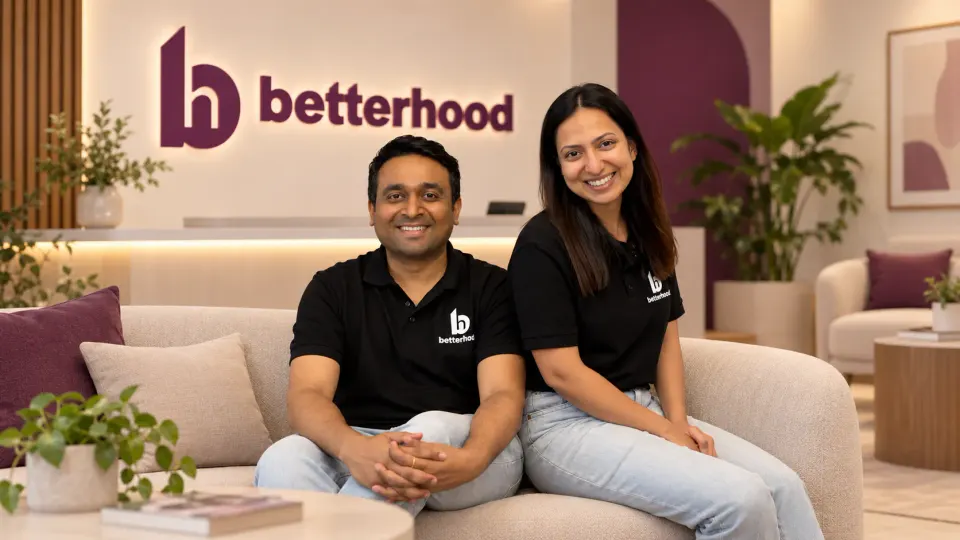
Founded in October 2024 by Vikram Kadam and Neha Zade, betterhood sells products aimed at musculoskeletal discomfort before it becomes chronic. Its range covers posture and ergonomic supports, orthotic soft goods including back, knee, ankle and wrist supports, and pain relief and recovery products. The founding team also includes Manoranjan Nayak and Subhanandan Palit. Shayamal Vallabhjee, a sports scientist and performance psychologist who took part in the March tranche, is chief science officer.
The company runs an education layer alongside the products, comprising articles, open-forum question and answer sessions and podcasts. It is also building Physio Circle, a community of physiotherapists that it says now exceeds 7,000. As of March it reported serving more than 60,000 customers and producing over 1,000 pieces of educational content.
betterhood estimates the categories it currently sells into at about ₹20,000 crore in India, growing in the low to mid teens, and puts the wider preventive pain care opportunity, including rehabilitation, fitness tools and personalised nutrition, at around ₹35,000 crore. Both figures are the company's own.
The capital will go towards deepening the product portfolio, expanding distribution across quick commerce and modern retail, scaling the content and physiotherapist community, and strengthening product development and growth teams.
Why It Matters
The use of funds describes two businesses, and they are not the same business.
Quick commerce and modern retail is a shelf. A back support sold through Blinkit or a pharmacy chain competes on price, placement and paid acquisition against every other back support. The customer arrives already looking for one, chooses on rating and delivery speed, and has little reason to return to the same brand. That is a conventional consumer goods problem, won by whoever spends most on visibility and negotiates the best margins with retailers.
Physio Circle is something else. A physiotherapist recommending a specific support to a patient is closer to a prescription than a purchase. The patient is not comparing options, the recommendation carries professional authority, and the practitioner will recommend the same product repeatedly if it works. Seven thousand physiotherapists, if genuinely engaged, is a distribution asset a competitor cannot replicate by outspending on advertising.
The two channels also pull the product roadmap in opposite directions. Retail rewards simple, cheap, visually distinctive items that sell themselves from a shelf. Clinical recommendation rewards specificity and evidence, which usually means fewer products at higher prices.
A seed-stage company can fund both for a while. Which one produces the volume will determine what betterhood becomes, and it is the thing worth watching in whatever it discloses next.
The Strategic Read
The harder question is whether preventive demand exists in the quantity the category thesis requires.
People buy pain relief when they are in pain. That is the central difficulty with preventive health products, and it is why the education layer exists at all. betterhood is not simply selling supports to people who want them. It is trying to persuade people who are not yet uncomfortable enough to act that they should act anyway.
That is an expensive proposition. Content, podcasts, physiotherapist communities and open forums are the machinery of demand creation rather than demand capture, and demand creation is slow. The marketing spend is doing a job that advertising in an established category never has to do.
The likely reality sits in between. Most revenue in orthotic soft goods comes from people who already have discomfort, because that is when the purchase happens. Positioning as preventive shapes how the brand is perceived and what it can sell next, but the immediate customer is probably someone whose back already hurts. That is not a criticism. It is how most wellness categories actually convert.
The demographic point in Sauce's framing is the most useful thing in the announcement. Musculoskeletal pain is common among Indians over 45 and the age of onset keeps moving earlier. A generation that sat at desks through their twenties and thirties, and increasingly exercises without supervision, produces exactly the pattern betterhood is built around.
The market sizing deserves more caution. ₹20,000 crore for current categories and ₹35,000 crore including rehabilitation, fitness tools and nutrition are company estimates, and the second counts markets betterhood does not yet operate in. A seed-stage brand with ₹11.5 crore is not addressing ₹35,000 crore. It is addressing whichever slice its distribution can reach.
For daily, sharp analysis of the biggest moves in the Indian business and startup ecosystem, follow StartupFox.