



The Story
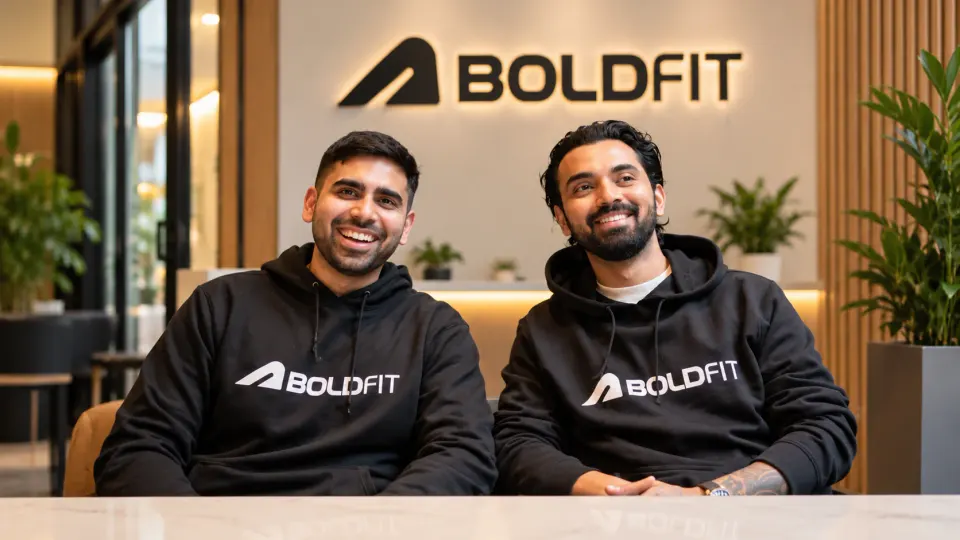
Boldfit has raised over ₹400 crore, about $42 million, in a Series B round led by Bharat Value Fund, a Category II alternative investment fund managed by The Wealth Company Alternates, part of the Pantomath Group. Existing investor Bessemer Venture Partners also participated.
The Bengaluru company previously raised ₹110 crore in a round led by Bessemer in November 2024, and a further $8.37 million from existing investors including cricketer KL Rahul.
Pallav Bihani founded Boldfit in 2018, with Aasshna Guptaa as co-founder. It started with a small loan and two products, both yoga mats, and now sells more than 400 sports and fitness products across apparel, footwear, fitness equipment, nutrition supplements and accessories, covering sports including basketball, cycling, football, volleyball, badminton and cricket. It sells through its own website and online marketplaces, and says it serves more than 2 crore customers a year.
The money goes into nationwide retail expansion, product innovation and manufacturing, and the company says it will also pursue selective acquisitions to strengthen its presence across categories. It describes its aim as building a sports brand for a billion Indians through product innovation, manufacturing and national distribution.
"We're building a deeply integrated sports business, investing in product innovation, manufacturing excellence and nationwide retail," Bihani said.
Boldfit has not yet filed FY26 accounts. In FY25 its operating revenue rose 2.17 times to ₹304 crore from ₹140 crore, and its profit rose to ₹35 crore from ₹16.82 crore.
Elsewhere in sports and fitness, Agilitas raised ₹225 crore from Nexus Venture Partners and Rainmatter in June to build sportswear manufacturing, retail and technology, and PlayBlue raised $2.7 million in seed funding in July for an omnichannel sports retail business.
Why It Matters
Boldfit began in 2018 with a small loan and two products, both yoga mats. It grew the way a generation of Indian consumer brands did, through online marketplaces, selling inexpensive fitness essentials such as mats, gloves, shakers and resistance bands. Unlike most of that generation, it made money doing it. Operating revenue rose from ₹140 crore in FY24 to ₹304 crore in FY25, and profit roughly doubled to ₹35 crore, a net margin above 11 percent in a category where most direct-to-consumer brands lose money.
That record is why this round matters. Profitable consumer brands rarely raise this much, because they have no losses to fund. Boldfit is raising ₹400 crore not to survive but to change what kind of company it is. The money goes into three things: nationwide retail, product development and manufacturing, and acquisitions. Each moves the business from selling through someone else's platform towards owning more of the chain: the factory that makes the product, the shop that sells it and, potentially, the brands that compete with it.
The model is a recognisable one. Decathlon built its position in India by designing and making its own products and selling them in large stores at prices international brands could not match. Boldfit's stated ambition of a sports brand for a billion Indians, built on product, manufacturing and national distribution, describes the same integrated approach from a very different starting point: an online brand with a large customer base and no stores.
That customer base is worth reading carefully. Boldfit says it serves more than 2 crore customers a year. Set against FY25 revenue of ₹304 crore, that points to small average purchases, even allowing for growth since, which fits a business built on accessories. Moving into apparel, footwear and equipment, and into physical stores, is how a brand raises the value of each customer, and it is where much of the new money is aimed.
The Strategic Read
The trade being made is margin for control. Boldfit's FY25 profit came from an asset-light model: products made by suppliers and sold through marketplaces that handle traffic, payments and delivery. Stores and factories reverse that. A retail network means rent, staff and inventory spread across locations, each of which takes time to break even. Manufacturing means capital tied up in plant and machinery before it produces a rupee of revenue. The margins that made Boldfit attractive will probably compress before the new assets pay back, and the FY26 and FY27 accounts will show by how much.
The reason to make the trade is dependence. A brand built on marketplaces lives with their algorithms, their advertising costs and their own private labels, which compete for the same searches. A brand with its own stores and factories has customers who come to it directly and a cost base it controls. Manufacturing also matters for quality and price in a category where much of the fitness equipment sold in India has historically been imported. Owning production is how Boldfit can price against Decathlon rather than against generic imports.
Acquisitions are the other new element. A profitable brand holding ₹400 crore becomes a buyer in a category full of small fitness and nutrition brands that have found capital hard to raise, and deals could add categories and customers faster than building them. Integration is where such deals usually go wrong, and the company has said it will be selective.
The investor is worth noting too. Bharat Value Fund is a Category II alternative investment fund rather than a conventional venture firm, and Bessemer, which led the 2024 round, has returned alongside it. Capital of this kind and size, going into a profitable consumer company, usually comes with a path to listing in view, though Boldfit has said nothing about one.
The field is moving at the same time. Agilitas raised ₹225 crore in June to build sportswear manufacturing and retail, and PlayBlue raised seed money for omnichannel sports retail in July. Capital is flowing into the same integrated model from several directions, which means Boldfit's head start online will matter less than how quickly its stores and factories earn their keep.
For daily, sharp analysis of the biggest moves in the Indian business and startup ecosystem, follow StartupFox.