



The Story
Zomint has raised ₹36 crore, about $3.75 million, in a seed round from Lightspeed and Prime Venture Partners.
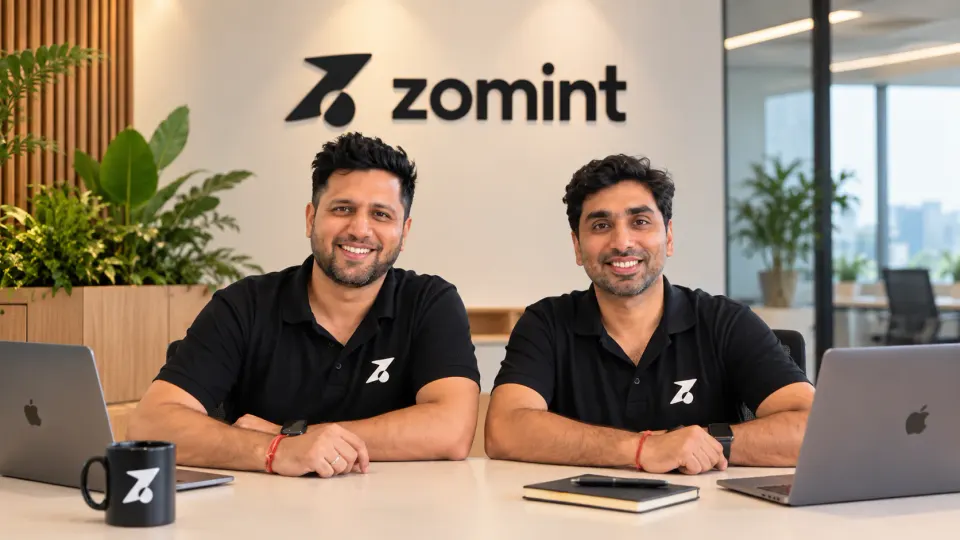
Aman Mittal and Shavir Bansal founded the company in September 2025. Mittal, the chief executive, is an IIT Delhi graduate who spent more than 14 years in fintech and e-commerce product roles at Flipkart, Pine Labs and Ula. Bansal, the chief operating officer, is an IIM Calcutta graduate and former Kotak corporate and investment banker who founded Bekifaayati, a personal finance content platform on YouTube and Instagram with more than 50 lakh subscribers.
Zomint offers wealth management to working professionals and families, starting from a monthly SIP of ₹25,000 or a lump sum of ₹5 lakh, below the thresholds wealth managers typically set for wealthy clients. Each family is assigned a personal wealth expert who tracks its investments and goals, supported by investment research and AI tools that pull together portfolio information, past conversations and research, flag issues that need attention and track agreed actions. Its offerings span equity, debt, hybrid, gold and silver and global funds, including GIFT City funds, and it plans to go beyond domestic mutual funds. It operates as an AMFI-registered mutual fund distributor and says applicable commissions are disclosed to clients.
The company says it has retained 97 percent of its clients since launch despite market volatility, and that nearly one in three made additional investments within three months of starting. Each of its relationship managers serves more than 250 families. It says it acquired its entire client base organically through Bekifaayati's content, without spending on paid marketing.
The money goes into expanding its wealth and investment teams, strengthening its technology platform and building out its investor education and content operations.
Why It Matters
Wealth management in India has always had a floor. Below a substantial pool of investable assets, a dedicated adviser was uneconomic for the firm, so working professionals with meaningful but modest savings got an app, a bank relationship manager selling the bank's products, or nothing. Two costs kept them out: the adviser's time, and the marketing needed to find them in the first place, both too high against what a mid-sized portfolio earns.
Zomint attacks both. The service cost is handled by giving each wealth expert more than 250 families, made workable by AI tools that keep track of every portfolio, conversation and agreed action so the adviser does not have to hold it all in their head. The acquisition cost is handled by something most financial firms cannot buy: an audience that already trusts the founders. Bekifaayati has spent years explaining personal finance to more than 50 lakh subscribers. Every Zomint client so far has come from there, and the company has spent nothing on paid acquisition.
That reflects a shift well beyond one company. Over the past few years the most effective distribution channel in Indian personal finance has been creators, people whose explanations built audiences larger than the marketing reach of most fund houses. Turning that trust into a regulated business is the obvious next step, and Zomint is one of the clearest examples of a creator taking it with institutional backing behind him.
The Strategic Read
The structure is the first thing to understand. Zomint is an AMFI-registered mutual fund distributor, not a SEBI-registered investment adviser. Distributors are paid by fund houses through commissions built into the regular plans of the funds they sell, which carry higher annual costs than the direct plans an investor can buy without an intermediary. The client pays for the service indirectly, through those costs, rather than through a fee. That is a legitimate and common model, and the company says its commissions are disclosed. It also means the business earns more as clients invest more, which is worth holding alongside the figure that one in three clients added money within three months.
The second is the relationship between the content and the business. In 2024 SEBI barred regulated entities from associating with unregistered people who give investment advice or promise returns, a rule aimed squarely at finfluencers, while leaving room for pure education. Zomint's structure avoids the association the rule targeted, because the creator is himself a registered distributor and a co-founder. But that puts more weight on the content, not less. An audience built on what it took to be independent education now has a commercial relationship with the educator, and Bekifaayati's value depends on viewers continuing to trust that its explanations are not sales pitches. That trust is the real asset here, and the company's investor education plans will be judged on whether they keep it intact.
The economics run on time. A family investing ₹25,000 a month generates little commission in its first year, because trail commission is paid on accumulated assets. Revenue per family grows as the portfolio does, which is why 250 families per adviser is a necessity rather than a stretch, and why retention matters more than the headline client count. The model works if families stay for years. A year of strong retention through volatile markets is a good start, and still only a year.
The limit on growth is the audience. Organic acquisition from one channel is efficient until it saturates. Fifty lakh subscribers is a large number, but subscribers are not all investors, and the ones with ₹25,000 a month to put away are a fraction of them. Growing beyond Bekifaayati's reach means more content, more creators or paid acquisition, and each erodes some of the cost advantage that made the first year so efficient.
Lightspeed and Prime backing a seed round of this size suggests they see the content-led model as repeatable. Whether it is depends on whether trust built in one creator's voice transfers to a company that will need to grow beyond it.
For daily, sharp analysis of the biggest moves in the Indian business and startup ecosystem, follow StartupFox.