

 Base Power
 Ribbit Capital
 Addition
 Valor Equity Partners
 JPMorganChase
 Altimeter CapitalDD1 Capital Partners
 Sands Capital
 CoatueLLayer Global
 Energy Impact Partners
 Thrive Capital
 Andreessen Horowitz
 Lightspeed Venture PartnersTTrust Ventures
 CapitalG
The Story
Base Power has raised $1 billion, about ₹9,600 crore, in a Series D round at a post-money valuation of $13 billion. The round was announced on 3 August 2026, ten months after the company closed a $1 billion Series C at a $4 billion valuation.
The round is led by Ribbit, Addition, Valor Equity Partners and JPMorganChase's Strategic Investment Group, part of the bank's Security and Resiliency Initiative. New participants include Altimeter, D1 Capital Partners, Sands Capital, Coatue, Layer Global and Energy Impact Partners. Existing backers Thrive Capital, Andreessen Horowitz, Lightspeed, Trust Ventures and CapitalG reinvested.
The dilution and the split between primary capital and any secondary purchase have not been disclosed. Michael Dell, chief executive of Dell Technologies and father of Base Power co-founder and chief executive Zach Dell, did not participate in the round.
Base Power says total capital raised now exceeds $2.5 billion. Its four disclosed equity rounds sum to roughly $2.27 billion: $68 million in May 2024, $200 million in April 2025 and the two billion-dollar rounds. The difference has not been accounted for and no debt facility has been announced.
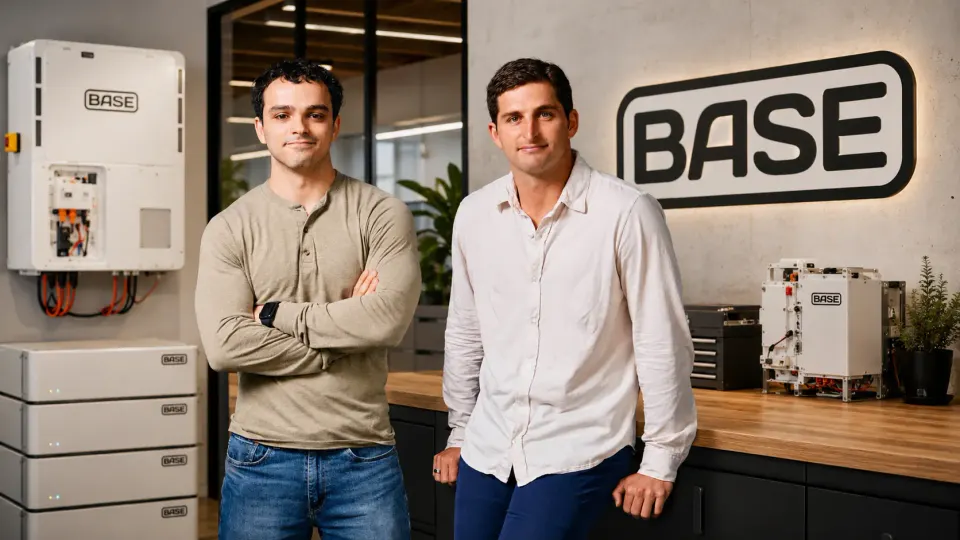
Alongside the round the company launched Base Core, a home battery built at its Austin factory, available in 39.2 kilowatt-hour and 78.4 kilowatt-hour configurations.
The company was founded in 2023 by Zach Dell and Justin Lopas, previously head of manufacturing at Anduril Industries. It has installed more than 500 megawatt-hours of storage, operates in Texas and Illinois, and says it is installing around 100 batteries a day with the intention of doubling that by the end of the year. Those operating figures come from the company and from reporting citing it, not from audited disclosure.
Why It Matters
Most energy storage companies build where the grid connection is: large battery installations on industrial land, close to substations, sized in hundreds of megawatt-hours. Base Power inverts that. It breaks the same capacity into roughly 40 kilowatt-hour units and puts them behind residential meters, which sidesteps land acquisition, interconnection queues and the permitting timelines that govern utility-scale projects.
The commercial mechanism is that the customer never buys the hardware. In the Houston area a household pays $695 to install one battery, $19 a month, and 13.1 cents per kilowatt-hour, which the source describes as roughly the prevailing local rate. The customer gets backup power at close to normal electricity prices. Base keeps the asset and sells the stored electricity back into the grid when prices spike, which in a market like ERCOT is where the margin sits. In regulated markets it instead contracts with utilities that pay for access to the fleet.
That structure explains the size of the rounds. A company that retains ownership of every unit it deploys is financing an asset base, not a software rollout, and each additional customer consumes capital rather than returning it. At around 100 installations a day, the hardware bill runs continuously.
What has not been disclosed is whether the economics work at the unit level. Base has published no revenue figure, no gross margin, no grid services income and no payback period per battery. The $19 subscription and the electricity margin are visible; what a battery earns from the grid over a year is not. Every claim about this business ultimately rests on that unpublished number.
The Strategic Read
The market assumption being underwritten is that American electricity demand is rising faster than transmission and generation can be permitted and built, and that the gap gets closed by capacity installed at the edge of the network rather than at the centre of it. Data centre construction and electrification are the demand side of that argument. The strained PJM grid, which covers parts of Illinois where Base operates, is the evidence.
Base's insight is that this capacity already has a place to sit. Land near a substation requires acquisition, interconnection studies and years of queue. A homeowner's back yard requires a sales call and an afternoon. If the battery is the same lithium either way, the constraint being solved is not technical but procedural, and that is a real arbitrage while it lasts.
The moat is harder to locate than the insight. Nothing prevents a utility, an incumbent installer or a well-funded competitor from putting batteries in yards. Sonnen, Tesla and others have sold home storage for years. What Base has built that they mostly have not is the retail electricity licence, the utility relationships, the installation crews and now the factory, which is a combination that takes time rather than cleverness to assemble.
The valuation is where scrutiny belongs. Divide $13 billion by the roughly 23,000 batteries reported installed and the market is paying about $565,000 for each unit in the ground, against a household paying $695 up front and $228 a year in subscription. The rest of the return has to come from grid services revenue at a scale the company has not disclosed, or from a fleet many multiples larger than today's.
The financing structure is the part to watch. Base owns every battery, so growth is funded by equity rather than earned from customers, and each of the last two rounds bought roughly ten months of runway. Cheap capital is currently an input to the business model rather than a consequence of it.
For daily, sharp analysis of the biggest moves in the Indian business and startup ecosystem, follow StartupFox.