
 Veriqus Group
The Story
Veriqus Group has raised ₹387 crore, approximately $40 million, in a funding round led by global investment firm Norwest, as the Mumbai-based company begins building an integrated financial platform for high-net-worth individuals, entrepreneurs, family offices and institutions.
The transaction was announced on 20 July 2026. Family offices and a group of ultra-high-net-worth individuals also participated, according to a company release reported by PTI, but their identities were not disclosed. Veriqus also did not disclose the funding stage, valuation, equity dilution or whether the transaction included any secondary share sales. It should therefore be treated as a completed funding round without assumptions about its capital structure.
The company intends to use the capital to build capabilities across wealth management, asset management, business advisory and lending. Its technology plans include portfolio analytics, risk monitoring, consolidated client reporting and decision-support tools using artificial intelligence.
Veriqus is also targeting Tier II and other high-growth cities, where it expects first-generation entrepreneurs and business families to require more sophisticated advice as personal wealth, operating businesses, property, liquidity requirements and succession plans become increasingly interconnected.
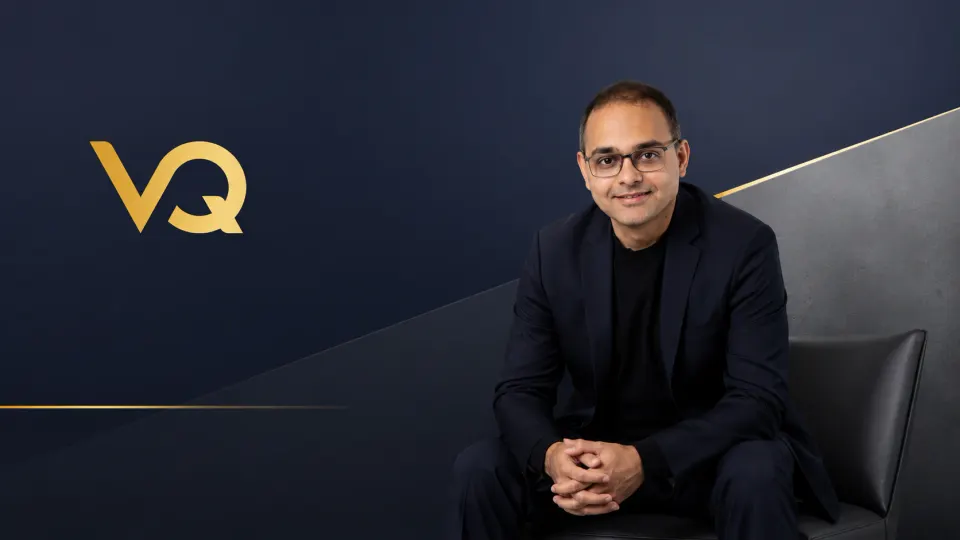
The group was founded by Ashish Gumashta, the former chairman and chief executive of Julius Baer India, and Roshi Jain, a former senior fund manager at HDFC Asset Management Company. Gumashta, who has spent roughly three decades in wealth management, will lead the wealth-management and business-advisory operations. Jain will head asset management. She previously managed more than ₹1.35 lakh crore across prominent HDFC Mutual Fund schemes, according to media reports accompanying the announcement.
The business was previously known as Veriqus Partners and is now being positioned under the broader Veriqus Group identity. Its stated proposition is to act as one financial partner across a client’s investment portfolio, operating business, financing requirements, real estate interests and long-term legacy planning.
That ambition is ahead of the information currently available about operating scale. Veriqus has not disclosed assets under management, client numbers, revenue, relationship-manager strength or the proportion of its announced services that are already commercially active. Company materials have also indicated that it is pursuing various regulatory licences, making it important not to describe every vertical as fully operational until the relevant approvals and product launches are confirmed.
Why It Matters
Veriqus is attempting to solve a structural problem in Indian wealth management: affluent clients are frequently served through disconnected relationships for investment products, business financing, estate planning, portfolio reporting and corporate advice.
That fragmentation creates inconvenience for clients but also limits revenue capture for financial firms. A wealth adviser may understand the client’s assets but have little visibility into the operating company, debt requirements or succession plans. A lender may see collateral and cash flows without controlling the broader investment relationship. Veriqus wants to place these functions behind one client interface.
Commercially, the integrated model can increase revenue earned from each relationship. Once a firm has acquired a wealthy family and built trust, it can potentially earn advisory fees, asset-management fees, brokerage income, financing economics and transaction-related revenue without repeatedly paying to acquire the same customer.
A unified platform can also reduce servicing costs. Portfolio data collected once can support reporting, risk analysis, lending assessments and adviser recommendations. AI may improve adviser productivity by identifying portfolio concentration, liquidity gaps or reporting exceptions, but the practical value lies in reducing manual work rather than replacing human judgement.
The ₹387 crore raise matters because wealth management remains expensive to scale. Veriqus must hire credible relationship managers, investment professionals, compliance teams and local market leaders before the resulting assets generate meaningful recurring fees. Expansion beyond metros adds another cost layer because wealthy business families often select advisers through reputation and personal networks, not digital advertising.
The capital gives Veriqus time to build that distribution before demanding immediate profitability. It also allows the company to compete for senior talent against private banks, established wealth firms and brokerages that already control large client books.
The Strategic Read
The deeper bet is not that India needs another investment platform. Veriqus is betting that wealthy families will move from buying separate financial products to consolidating their financial lives with one institution.
That assumption has become more plausible as new wealth increasingly originates from business ownership. An entrepreneur’s personal portfolio cannot always be separated neatly from company equity, acquisition plans, working-capital requirements, property holdings and succession decisions. A platform that sees the full balance sheet can offer more relevant advice than a distributor focused only on marketable investments.
Veriqus can create value by controlling three layers simultaneously.
The first is distribution: the relationship with the family or founder. The second is intelligence: consolidated information about assets, liabilities, businesses, liquidity and risk. The third is execution: the ability to manage assets, arrange financing and provide business advice.
Controlling all three can lower customer-acquisition costs and increase wallet share. It can also create switching costs. Moving one mutual-fund portfolio is relatively simple; transferring an advisory relationship that connects investments, loans, business decisions and family governance is substantially harder.
This is what Veriqus controls now that a conventional advisory boutique may not: the potential to convert one trusted relationship into several revenue streams while using shared data across them. Its founders’ institutional backgrounds may accelerate access to both clients and experienced employees, while Norwest’s capital enables the company to make those hires before revenue fully develops.
The model places pressure on private banks, independent wealth managers and product-led distributors. Private banks already combine advice and lending, but their recommendations may be constrained by larger institutional product structures. Boutiques can offer independence but may lack balance-sheet capacity, proprietary investment products or the technology budget required for consolidated reporting. Veriqus is trying to occupy the space between the two.
However, integration also creates its strongest risk: conflicts of interest. A firm that advises clients while manufacturing investment products and providing loans may earn more by recommending its own solutions. If clients suspect that “holistic advice” is being used to increase product penetration, the trust required for the model can collapse.
The second risk is economic. Wealth businesses are often presented as technology platforms, but growth remains heavily dependent on relationship managers. Senior hires carry high fixed compensation, and clients do not always follow immediately when an adviser changes firms. If Veriqus builds its team faster than it attracts assets, the ₹387 crore can be consumed by payroll and infrastructure before recurring management fees cover the cost base.
Over the next 6–18 months, the most important evidence will not be another product announcement. Readers should monitor regulatory approvals, disclosed assets under management, net new assets per relationship manager and the percentage of assets sourced outside major metros. These metrics will show whether Veriqus is building a scalable institution or funding an expensive collection of senior financial professionals.
For daily, sharp analysis of the biggest moves in the Indian business and startup ecosystem, follow StartupFox.