



The Story
Iztri has raised ₹10 crore, about $1.1 million, in a seed round co-led by All In Capital and Suashish Group. Angel participants include Anupam Mittal, Kunal Shah, Tanmay Bhat, Gaurav Munjal, Roman Saini, Abhishek Goyal, the JK Tyre family office, and Shadowfax founders Abhishek Bansal and Vaibhav Khandelwal. Early backer PedalStart also took part.
The Bengaluru company organises clothes ironing, one of the most frequent household services in urban India and one of the least formalised. Rather than aggregating existing istri-wallahs, it runs its own apartment hubs: neighbourhood-level infrastructure sited in or beside residential communities, staffed by trained workers and run off a technology backend, using fabric-safe steam ironing to avoid the burns and shine common to conventional pressing.
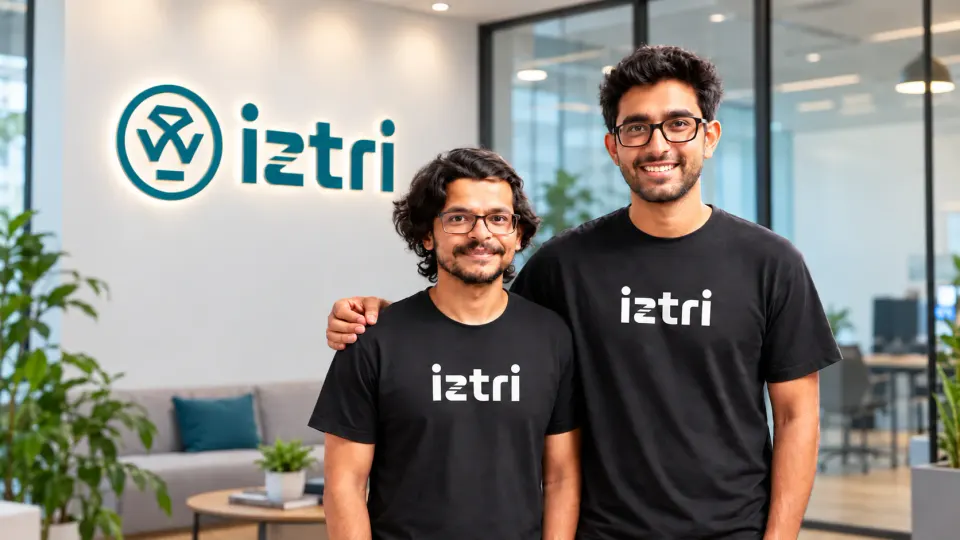
Rohit Ramesh and Ankit Choudhary founded it in 2024 and began operations in early 2025. Ramesh spent five years at Unilever and studied at MICA Ahmedabad; Choudhary is an IIT Delhi graduate who worked in operations at the logistics company Shadowfax, whose founders are in this round. After launching in Koramangala, the company reached 100 orders a day within three weeks.
Iztri says it now serves more than 25,000 customers across Bengaluru, including several premium residential societies, and has created formal employment for over 200 blue-collar workers. It is targeting more than 100,000 customers within six months.
The capital funds hub network expansion, operational and technology infrastructure, and a move into adjacent categories including dry cleaning and shoe care. The company plans to deepen its presence across southern India over two to three years before entering the top five metros.
It follows a ₹1.5 crore pre-seed led by AJVC in 2025, which the founders said went from first call to signed term sheet in six days, and a $50,000 round led by PedalStart earlier that year.
Why It Matters
Ironing may be the hardest consumer service in India to build a company around, for one reason that never appears in the announcement: the transaction is worth about ten rupees.
That single fact governs everything. At five to fifteen rupees a garment, there is no room for a delivery rider, a marketing budget or a customer support team in the way there is at a four-hundred-rupee food order. Every rupee of overhead has to spread across a transaction most people do not think about at all. It is why Indian laundry startups have repeatedly failed on logistics rather than on demand. The service was never the problem. Getting the clothes there and back for less than the clothes were worth to press was.
The apartment hub is a direct answer to that constraint. If the hub sits inside or beside the residential complex, the last mile is a lift ride rather than a bike trip. Pickup and delivery, the line item that killed the previous generation, mostly disappears. Density does the work that scale usually has to.
The second choice is equally deliberate. Iztri runs its own hubs and staff rather than aggregating the ironing vendors who already exist, which is the distinction All In Capital's Aditya Singh drew in backing it: building the operating infrastructure around a service rather than sitting on top of the people providing it. Aggregation has been tried in Indian home services and it inherits the vendor's variability without gaining control of the cost base. Owning the hub is harder and slower. It is also the only version where the finish on the shirt is the company's responsibility.
The founding pair maps onto exactly those two problems. Ramesh spent five years at Unilever building consumer businesses. Choudhary ran operations at Shadowfax, a last-mile logistics company. Consumer brand and route density is the correct pairing for this, and it is not an accident that Shadowfax's founders put money in.
The Strategic Read
The competitor Iztri has to beat runs on a cost base of almost nothing.
The istri-wallah pays no rent, because the cart sits on the pavement. No provident fund, no employee state insurance, no minimum wage compliance, because there is no employment relationship. No technology. No supervisor. No brand spend. He takes cash, keeps no books, and is fifty metres from the customer's gate. Against that, Iztri employs more than 200 people formally, leases hub space, runs an app and a backend, and pays a management layer. The formal employment is genuinely good, and it is simultaneously the hardest number on the page.
Which means the only route to viable margins is throughput. If a worker presses substantially more garments per shift than a pavement operator does, because orders arrive batched and predictable rather than as walk-ins, the extra cost per garment can be absorbed. That is exactly what the company has said it optimises: cutting idle time, consolidating demand, raising daily order volume per worker. The economics are not a pricing story or a brand story. They are a utilisation story, and it either works at the unit level or it does not.
Which makes the disclosed numbers frustrating. Twenty-five thousand customers is a headcount. In a business where the entire question is garments per worker per day, that is close to the least informative metric available. There is no order volume, no revenue, no average ticket, no frequency, no hub-level contribution margin. The 100,000-customer target has the same problem: it counts people rather than throughput, and in a service used weekly, the two can diverge badly.
The angel list is worth reading with a little scepticism too. Kunal Shah, Anupam Mittal, Gaurav Munjal, Tanmay Bhat and a tyre-industry family office is an unusually decorated cap table for $1.1 million. Some of it is network, since Choudhary came out of Shadowfax and its founders are in the round. But some of it is that this is a business every investor understands instantly, because every one of them has stood at an ironing cart. Categories that need no explanation attract capital easily. That is not the same as being easy to build.
What is genuinely in its favour is that nobody has to be persuaded to buy the service. The demand exists, it is weekly, and it is already being paid for in cash. Iztri is not creating a habit, it is trying to capture one, which is a far shorter route to revenue than most consumer businesses get.
For daily, sharp analysis of the biggest moves in the Indian business and startup ecosystem, follow StartupFox.