
 Fuaark
The Story
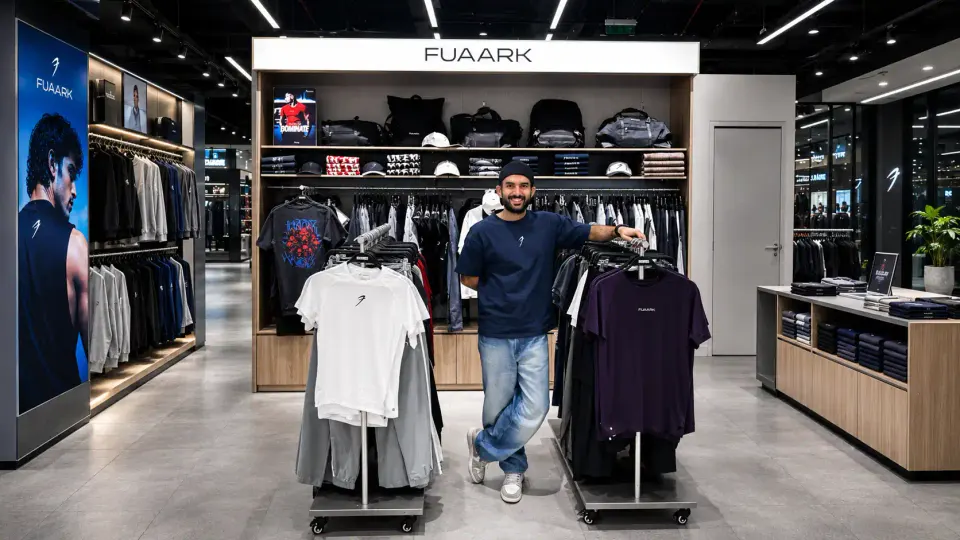
Fuaark, the Surat-based activewear brand, opened its third store on October 31 at 43 Bungalow Road in Delhi's Kamla Nagar, opposite Pantaloons. The market is a short walk from Delhi University's North Campus, and the store, which includes a mini gym, is aimed at what the brand calls serious athletes between 18 and 30.
Fuaark opened its first store only this year, in March, on 100 Feet Road in Bengaluru's Indiranagar. By the founders' account, customers were waiting outside before the shutters went up, many of them already wearing the brand. Its second store followed in Gurugram, which makes Kamla Nagar its second outlet in the Delhi region. Two of its three stores now sit in North India, which Fuaark says is its largest customer base, built entirely online before any store existed there.
The Delhi launch was built around the experience of turning up. The earliest customers got fixed discounts and custom-made dog tags, those who came later tried their luck with discount scratch cards, and everyone left with a cupcake.
Founded in 2017 by Rimpy Juneja, Swati Juneja and Saket Juneja, Fuaark sells t-shirts, tank tops, shorts, joggers, compression wear and outer layers, and added a women's line in 2023. It has never raised outside capital and says it has been profitable from the start. The founders have said revenue reached about ₹40 crore in FY24 and that the brand was running at about ₹6 crore a month in 2025. Fuaark says it has now served more than 2 million customers.
Why It Matters
Many direct-to-consumer brands open their first stores where it looks good to be seen: a mall flagship or a premium shopping street. Fuaark's choices follow a plainer logic. Kamla Nagar is one of north Delhi's busiest markets, and much of its crowd comes from the North Campus colleges next door, the young, active customers the brand is chasing. A store there sits in the path of the people most likely to buy, rather than in a location chosen for prestige.
The choice of region also follows the brand's own sales. Fuaark sells mostly online, through its own D2C website and app and through marketplaces such as Amazon, Myntra and Flipkart, and its order data shows where demand already exists. Putting two of its first three stores in and around Delhi, in the region it says buys the most, is a lower-risk bet than opening stores in the hope of creating demand.
A store also solves a particular problem for performance wear. Fit is much of what a training t-shirt or compression layer is sold on, and fit is the hardest thing to judge from a product page. Size-related returns are one of the biggest costs in online apparel. The mini gym in the Kamla Nagar store takes the fitting room a step further: customers can feel how the clothes move through a few sets, not just how they look in a mirror. A place where people can test the range properly, and then keep ordering online in the right size, can make the online business cheaper to run, not just add another channel.
The Strategic Read
The launch shows how a bootstrapped brand can turn an opening into an event for people who already know it. Rewarding the earliest arrivals gives existing fans a reason to show up on day one, and a crowd outside a new store advertises it to everyone walking past. A custom-made dog tag turns a discount into a keepsake that lasts long after the saving is spent. The scratch cards gave later arrivals a shot at a deal of their own, and the cupcakes cost little but make the day easy to remember. For customers who have known the brand for years only through a screen, how the first visit feels matters more than the size of the discount.
The harder test comes after opening day. Launch crowds show the strength of a community, but a store has to cover its rent on an ordinary weekday. Kamla Nagar's student shoppers are numerous and price-conscious, and Fuaark is priced above budget sportswear, though well below international brands. The store needs a steady flow of buyers, not just fans.
Fuaark is moving from online to physical retail one store at a time, without outside investors. That limits how fast it can expand, but it also means each new store has to be justified by the ones before it. Opening three in about seven months suggests the founders are satisfied with the early results.
The figures worth watching are where the Delhi store's buyers come from and how many were already online customers. If Kamla Nagar keeps drawing them, Fuaark will have shown that its online following turns into footfall, and that the Delhi region can support two of its stores.
For daily, sharp analysis of the biggest moves in the Indian business and startup ecosystem, follow StartupFox.