
 Wiffy
WiffyThe Story
Wiffy has raised $3 million in a Series A funding round led by Earth Fund, with participation from Japan's Persol Holdings and existing investor Capria Ventures. The round was announced on 23 July 2026.
The company said the money will go towards expanding its technology platform, strengthening AI-powered workforce management, deepening enterprise partnerships and accelerating category expansion.
The valuation, the dilution and the instrument have not been disclosed. Neither has revenue, the share of income coming from its largest brand partners, technician utilisation, or the commercial terms under which brands pay for the service.
Earth Fund is a Category II alternative investment fund registered with SEBI, launched by Brigade Group and Gruhas, and focused on real estate technology and sustainability. Persol Holdings is a Japanese human resources group whose predecessor Tempstaff was founded in 1973. Persol said in a statement dated 15 July 2026 that it invested through Persol Venture Partners.
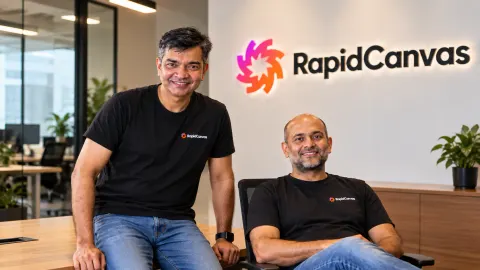
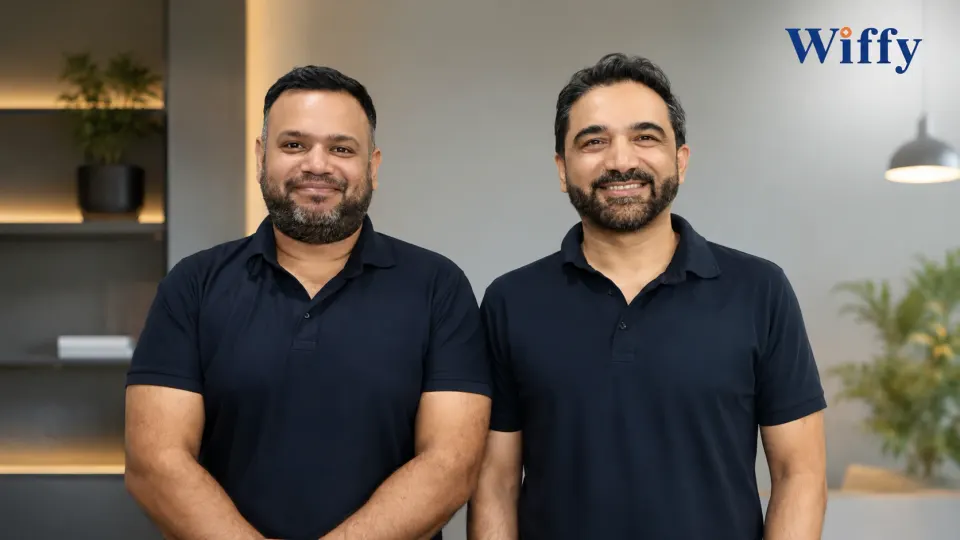
The company was founded in 2019 by Vikram Sharma and Deepanshu Goel and is based in Mumbai. It has rebranded from Wify, and its earlier domain now directs to wiffy.ai. It raised $2 million in a seed round in July 2022 and a pre-Series A in 2024. That round was reported at the time as ₹25 crore, closing in July 2024. Mount Judi Ventures, which co-led it, states on its own portfolio page that it was over ₹40 crore and closed in May 2024, with Singularity Ventures also participating.
Wiffy provides installation, maintenance, warranty and field services for home improvement and consumer durables brands. It says it works with more than 100 brands, including IKEA, Panasonic, Godrej, Hettich and Amazon, and has served over one million homes through a network of more than 5,000 certified technicians. Coverage has been reported at more than 100 cities, while Persol's statement says more than 90.
Why It Matters
Wiffy calls itself a technology platform, and the software is real, but the thing being financed is a labour network. Everything that determines whether this business works sits in how many jobs a technician completes in a day and how often the job is finished on the first visit.
Field service economics run on density. A technician who completes six installations within a few kilometres earns the platform a margin. The same technician crossing a city for two jobs does not. This is why the geographic spread deserves more attention than the headline. More than 5,000 technicians across at least 90 cities averages roughly fifty people per city, and fifty technicians cannot be dense anywhere. The company has expanded reach ahead of depth, which is the standard trap in this category.
The claim of minimal acquisition cost is accurate and it is also the constraint. Demand arrives because IKEA sold a wardrobe, not because a homeowner chose Wiffy. That removes the marketing budget, and it removes the customer. The brand owns the relationship, sets the service standard and can put the contract out to tender.
So the margin is squeezed from both directions. Technicians must be paid enough to stay trained and available, and brands are procuring a service they could run themselves.
What would settle the question is first-time-fix rate, jobs per technician per day, and repeat volume per brand. None of the three has been published.
The Strategic Read
The market assumption being underwritten is that a trained technician network is an asset worth owning, rather than a cost that brands will eventually absorb.
Look at who is buying. Earth Fund is backed by Brigade Group, a large property developer, and Gruhas. Persol is a staffing conglomerate. Tracxn lists Security and Intelligence Services, a listed Indian manpower company, among earlier investors. Hettich, a German furniture hardware maker that is also a brand partner, has a representative on the board. This is not a cap table of generalist technology investors. It is a cap table of organisations that either supply labour or need it.
That tells you what is being priced. These investors are not underwriting a software multiple. They are underwriting a recruitment and training engine in a country where trained installers are scarce and where the demand for them tracks furniture and appliance sales directly.
It is a coherent thesis, and it comes with a discount attached. Strategic capital arrives when a business is valuable to particular buyers rather than to the market generally, which is also why the cheque is $3 million rather than $30 million.
The concentration risk is the one nobody has quantified. Wiffy's demand originates with a hundred brands, but a handful of them almost certainly account for most of the volume. IKEA alone runs a national installation requirement. If a single large partner insources that function, or moves it to a rival, the revenue does not decline gradually.
Neither the brand mix nor the contract lengths have been published, and until they are, the near-zero acquisition cost is a strength that cannot be sized.
For daily, sharp analysis of the biggest moves in the Indian business and startup ecosystem, follow StartupFox.