




The Story
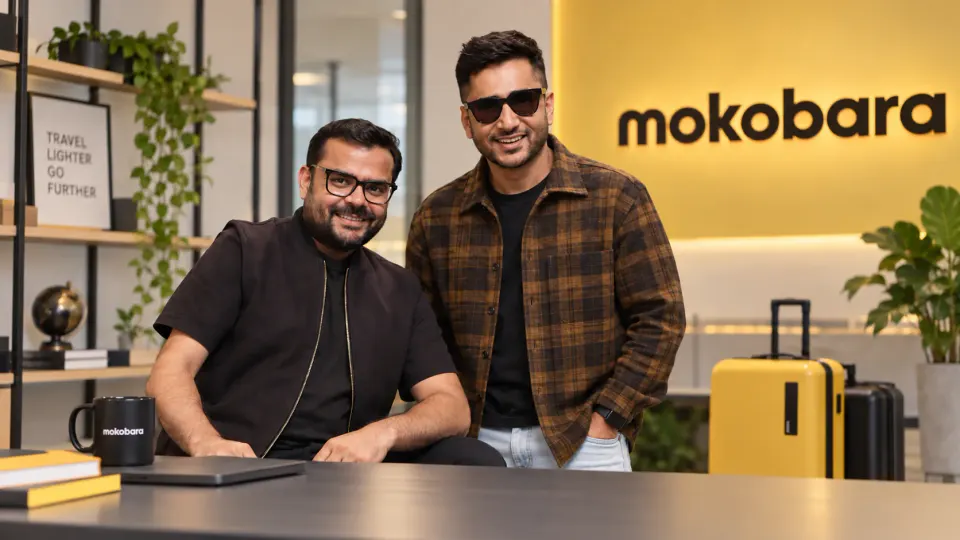
Mokobara has raised ₹170 crore, about $18 million, in a Series C round led by Sauce.vc, with Peak XV Partners, AYRA Ventures, Niveshaay Investment and existing backers participating. The company has not issued a formal statement.
The regulatory filings account for less than the announced figure. The board approved 1,300 Series C compulsorily convertible preference shares at ₹6.2 lakh each, amounting to ₹80 crore, and allotted a further 199 shares at ₹5.4 lakh apiece for ₹10.7 crore. That is ₹90.66 crore of new issuance against a ₹170 crore headline. Sauce.vc's vice president Karan Kathpalia has separately said the firm put ₹109 crore into the round, which on its own exceeds the total new shares approved.
Reported figures put the post-money valuation at around ₹1,930 crore, roughly $203 million, against ₹700 crore at the Series B in February 2024. After allotment, Sauce.vc holds 20.48 percent, Peak XV 16.76 percent and Saama Capital 13.65 percent. Co-founders Sangeet Agrawal and Navin Parwal hold 21.46 and 11.25 percent respectively.
Agrawal and Parwal met at the furniture brand Urban Ladder, where they watched design turn a commodity category into one people would pay a premium for. They spent eighteen months iterating on a first product and were turned down by 33 investors before Sauce.vc's Manu Chandra wrote the first cheque. Mokobara now sells luggage, backpacks, totes, slings, wallets and travel accessories through its own site, Amazon and Flipkart, around 50 stores across Bengaluru, Delhi, Mumbai and Pune, and one in Dubai opened in February 2025.
Operating revenue nearly doubled to ₹230.15 crore in FY25 from ₹117.44 crore, which was itself more than double the ₹53 crore of the year before. Net loss widened to ₹10.18 crore from ₹4.24 crore. FY26 figures have not been disclosed.
Why It Matters
Put the two Indian D2C stories of this week side by side and the difference is not execution. It is category.
Sugar Cosmetics raised at a quarter of its peak valuation, on revenue that has fallen two years running and losses at a third of sales. Mokobara has raised at 2.76 times its last price, on revenue that has doubled twice, with losses at 4.4 percent of sales. Both are Indian D2C brands that pushed into physical retail after a venture round. One of them worked.
The reason sits in the product rather than the management. Luggage has a high average order value, a small number of SKUs, no expiry, and it is a considered purchase people want to handle before buying: the wheels, the handle, the weight. A store selling ₹10,000 suitcases can cover its lease on modest footfall. Cosmetics is the opposite, with a low ticket, hundreds of shades, shelf-space fees, expiry dates, and a customer who buys the same lipstick online next time. Offline retail rewards one of these and punishes the other, and no amount of operating discipline changes that arithmetic.
The founding story reinforces the point. Agrawal and Parwal came out of Urban Ladder, where they watched design convert furniture from a commodity into something with pricing power. They applied the same thesis to a category Indians had been buying unchanged since childhood. Thirty-three investors declined before one agreed, which tells you the thesis was not legible until the revenue proved it.
The Strategic Read
The numbers do not reconcile, and the way they fail to is informative.
Three figures are in circulation. The announced round is ₹170 crore. The board has approved ₹90.66 crore of new shares. Sauce.vc says it contributed ₹109 crore by itself. One investor's stated cheque exceeds the entire new issuance, which means a substantial part of what has been announced is not new capital entering the company.
The most likely explanation is secondary. Sauce.vc emerging with 20.48 percent, ahead of Peak XV at 16.76 and Saama at 13.65, is consistent with buying existing shares from earlier investors alongside subscribing to new ones. Secondary purchases do not show up as fresh allotment because no new shares are created; they change who owns the company rather than what the company has to spend. If that reading is right, Mokobara receives roughly ₹91 crore and early shareholders take around ₹79 crore off the table at a valuation that has nearly tripled. That is a good outcome for everyone involved. It is simply a different transaction from the one the headline describes.
On valuation, ₹1,930 crore against FY25 revenue of ₹230 crore is roughly eight times sales. For a brand that has doubled revenue twice while holding losses near four percent, that is defensible rather than cheap. It also prices in FY26 continuing the pattern, and FY26 numbers are not out.
The founders' position is worth noting. After five rounds and roughly $24 million raised before this one, Agrawal holds 21.46 percent and Parwal 11.25 percent, about a third of the company between them. That is healthy ownership at Series C. The gap between the two co-founders is unusual, and neither has explained it.
What remains untested is the offline build. Fifty stores is the point at which this stops being a capital-light business, and store-level economics have not been disclosed. The Indian D2C brand that most resembles Mokobara at this stage also expanded into retail during a good year, and its fixed costs only became visible once growth slowed.
For daily, sharp analysis of the biggest moves in the Indian business and startup ecosystem, follow StartupFox.