



The Story
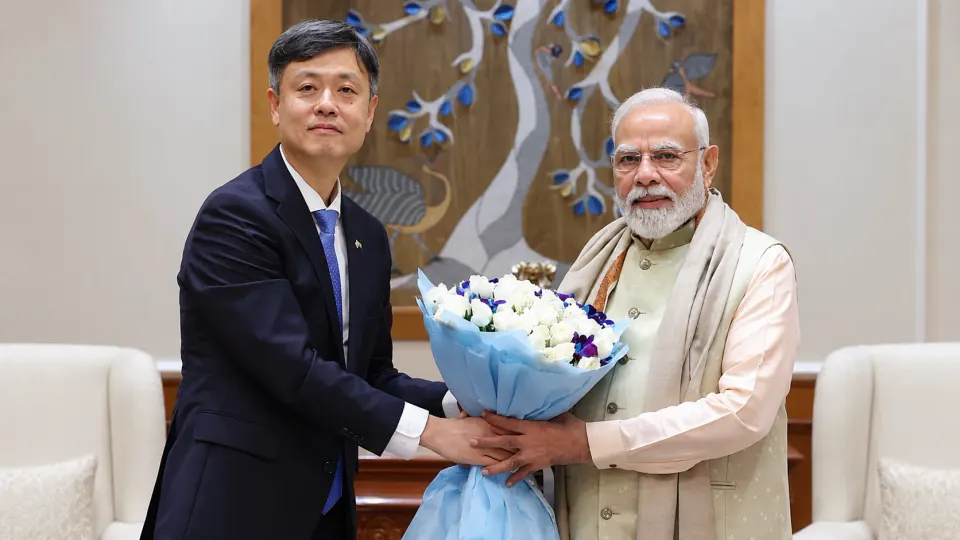
Krafton will invest another $250 million in India over the next three to four years, extending beyond games into artificial intelligence, robotics and deep technology. The commitment was announced after chairman Byung Gyu Chang met Prime Minister Narendra Modi in New Delhi on 4 September.
The South Korean company has put more than $250 million into India since 2021, so the new pledge takes its total stated commitment past $500 million. It is separate from the $670 million India growth fund Krafton launched with Naver and Mirae Asset in December 2025, to which it said it would contribute about $137 million at first close.
India is among Krafton's most important markets by users. Battlegrounds Mobile India, the localised version of PUBG Mobile it launched in 2021, has passed 260 million downloads, and a lighter version, BGMI Lite, is due by the end of 2026.
The company has backed around 18 Indian companies, four or five of them gaming studios. The rest are largely media and content: the esports operator Nodwin Gaming, the streaming platform Loco, the storytelling platform Pratilipi, the audio company Kuku FM and the creator marketing firm One Impression. In March 2025 it acquired a controlling stake in the Pune studio Nautilus Mobile, which makes the Real Cricket series, for $14 million.
It has also signed a memorandum with IIT Madras for KIGI Academy, a six-month fully funded game development programme whose first cohort takes 30 students. Krafton framed the investment against the government's Create in India campaign and the Viksit Bharat agenda.
Why It Matters
Read the history and this looks less like a growth bet than an insurance premium.
In September 2020 India banned PUBG Mobile along with 117 other apps linked to China, after border clashes in the Himalayas. The problem was not the game. It was the publisher. Tencent, which had bought roughly a tenth of Krafton for around $500 million in 2018, held the Indian publishing rights. Krafton severed that relationship, moved its India servers onto Microsoft's Azure, relaunched the game under an Indian name and got back into the market in 2021. In 2022 Delhi banned it again, letting it return the following year on a three-month trial.
Everything Krafton has done in India since reads as an answer to that. Local investment, a local studio bought outright, a training programme with IIT Madras, servers on American infrastructure, an announcement timed to a meeting with the prime minister and framed around a government slogan. These are the things that make a company difficult to switch off.
Which also explains the move beyond gaming. A games publisher putting money into robotics is strange on its face. It is entirely rational if your game has twice been removed from a country by executive decision and you want exposure to that market which does not depend on a single product keeping its licence.
The Strategic Read
Start with the arithmetic, because the headline number is doing work.
More than $500 million is the sum of $250 million already spent and $250 million promised. Past spending is not a commitment; it has already happened. The new money is $250 million across three to four years, which is $60 million to $85 million a year into a country that absorbed several billion dollars of venture capital last year alone. Meaningful for the companies that receive it, and not a market-moving figure. The $670 million fund with Naver and Mirae Asset is counted separately, and Krafton's own share of that was about $137 million at first close, so the pooled vehicle is mostly other people's money.
The portfolio tells you what Krafton actually is in India. Nodwin, Loco, Pratilipi, Kuku FM, One Impression: esports, streaming, storytelling, audio, creator marketing. Only four or five of eighteen companies are game studios. Krafton has been operating as an Indian media and content investor for years while being described as a gaming company, and the language about AI and robotics extends a diversification already well underway rather than beginning one.
The risk that remains is the one it cannot buy its way out of. Krafton's India business exists at the discretion of a government that has already exercised that discretion twice, and the reason was never really the game. Tencent still holds its stake. Any shift in how New Delhi reads foreign ownership with Chinese threads running through it puts the same question back on the table, and local goodwill does not override a ministry order.
Against that, the direction of travel is favourable. Korea is not China, the two governments are actively courting each other, and India wants precisely what Krafton is offering: capital, an IIT partnership, jobs and intellectual property built domestically. Krafton has spent five years learning what New Delhi wants to hear. This announcement is the most fluent version of it yet.
For daily, sharp analysis of the biggest moves in the Indian business and startup ecosystem, follow StartupFox.