
 UpKraft
The Story
UpKraft has raised ₹1.6 crore, roughly $180,000, in a pre-seed funding round led by PedalStart. The round was announced on 23 July 2026.
The company said the money will go towards AI product development, expansion across Bengaluru and Gurugram, strengthening its technology platform and operations, and hiring across product, technology, growth, sales and tutor operations.
Neither UpKraft nor PedalStart has disclosed the valuation, the dilution, the instrument used, or the identities of the other participants, who are described only as a curated group of angel investors, entrepreneurs, operators and early-stage ecosystem participants. No student enrollment figure, tutor count, revenue number, price point or count of partner communities has been published.
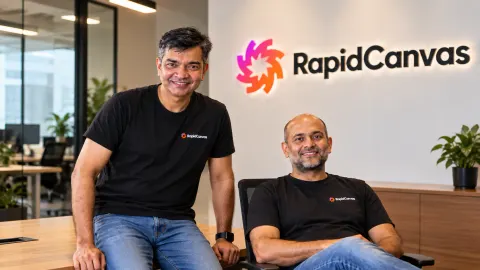
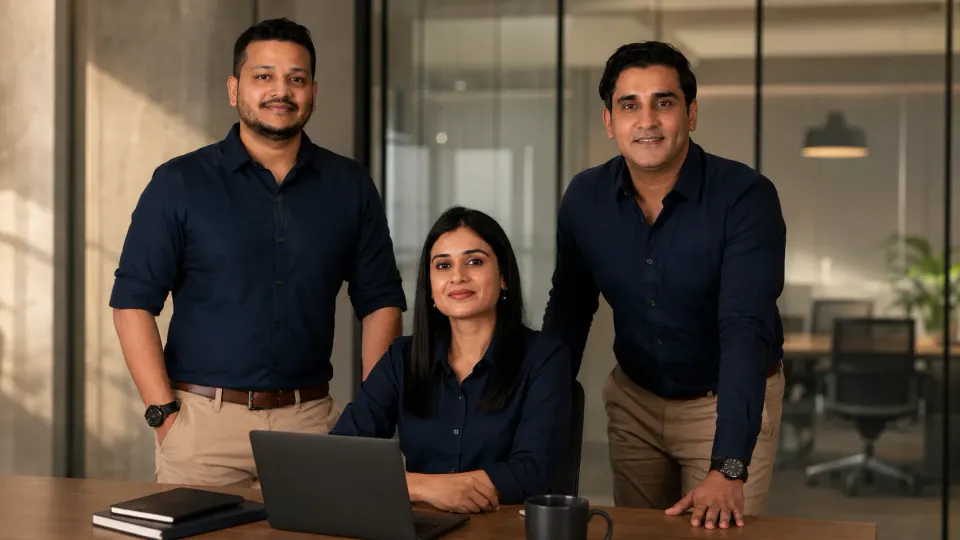
UpKraft was co-founded in July 2025 by Tejasvi Singh Kushwah, Varun Mangal and Kritika Varandani, and is based in Bengaluru. It sends vetted tutors to teach extracurricular subjects at students' homes, inside residential societies and in schools. Music is the lead category, with the company's website offering preparation for examinations and musician certification.
Its software includes an AI practice companion for feedback, practice tracking and performance analytics, adaptive learning paths, tutor productivity tools and parent dashboards. The company says it has achieved customer satisfaction scores above 4.7. It has not stated the scale used or how many responses the figure rests on.
PedalStart is an accelerator rather than a venture fund. It describes itself as a founder-led accelerator for pre-seed and idea-stage startups, and its stated contribution alongside capital is fundraising guidance, investor introductions, mentorship, business strategy and governance preparedness.
UpKraft says the round is intended to validate its model before it raises institutional capital.
Why It Matters
Home tuition does not scale, because tutors travel. A music teacher visiting five students in five parts of Bengaluru spends more of the day in traffic than in lessons, and every hour in transit is an hour nobody pays for. The economics of the category have always been set by that number rather than by teaching quality.
UpKraft's actual mechanism is clustering. If the tutor works inside one gated community, a morning can hold four or five lessons in adjacent towers with minutes between them. Utilisation rises, the tutor earns more per day, and the platform can take a margin without pricing the lesson beyond what a parent will pay. The society partnership is not a marketing channel. It is the unit economics.
The release calls the model asset-light. That is accurate about capital and misleading about cost. There are no studios to lease, but delivery is still a person in a room for an hour, and gross margin is capped by whatever that person is paid. Software does not move that ceiling.
Which is what the AI layer is really for. Practice tracking, parent dashboards and progress analytics do not reduce the cost of a lesson. They reduce churn, by giving a parent a reason to believe the money is producing something. In a category where children abandon instruments within months, retention is the business.
None of the figures that would show this working have been published.
The Strategic Read
The market assumption being underwritten is that extracurricular learning can be standardised without losing the thing parents are actually paying for.
Earlier attempts at Indian consumer education sold outcomes to anxious parents and bought growth with performance marketing. The unit that broke was retention. Acquisition cost was recovered over a contract length that students did not complete. UpKraft is betting that geography solves what advertising could not. If demand is generated inside a residential community by word of mouth between parents living in the same complex, acquisition cost falls towards zero and the payback arithmetic changes entirely.
That is a real thesis and it is the strongest thing in the announcement.
The moat claim is weaker. PedalStart's co-founders describe the community-led model as difficult to replicate. Residential society arrangements are rarely exclusive, and a resident welfare association that admits one tutoring provider can admit a second. What would genuinely be hard to copy is density: enough enrolled students inside a single complex that a competitor cannot assemble a workable tutor schedule there at all. Whether UpKraft has reached that threshold in any community is precisely what has not been disclosed.
Then there is the size of the round. ₹1.6 crore is roughly $180,000, set against a plan that names two cities and hiring across six separate functions. That funds a year, perhaps eighteen months, of a small team. The company has effectively said so, describing the round as a foundation for validating the model before institutional capital arrives.
Which puts the real risk on the next raise rather than this one. The lead investor is an accelerator whose listed contribution includes investor introductions and fundraising preparedness. That is useful to a company in this position, and it is also an acknowledgement that the money raised here was never going to be enough on its own.
For daily, sharp analysis of the biggest moves in the Indian business and startup ecosystem, follow StartupFox.