
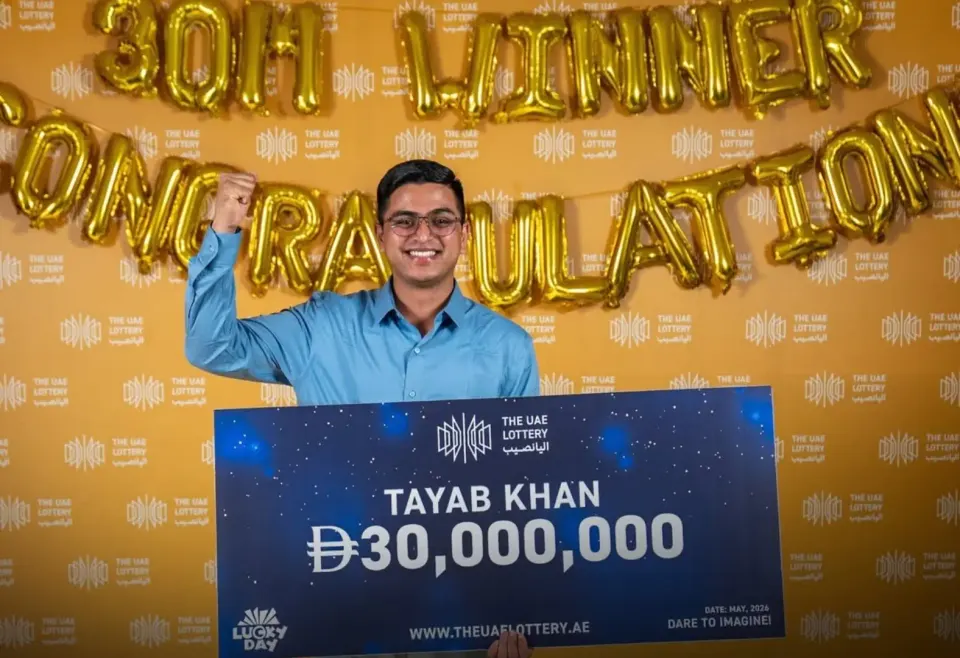

The Story
Tayab Khan, a 26-year-old Nepalese security guard working in Abu Dhabi, just claimed the first-ever Dh30 million (Rs 78 crore) Grand Prize from the UAE Lottery's Lucky Day draw. The massive payout was triggered by a ticket purchased on May 27, 2026. However, Khan is not taking the entire sum home alone. Operating through a disciplined five-person WhatsApp syndicate called "Future Millionaires", the group pooled small contributions to buy tickets, meaning the Rs 78 crore windfall will be split evenly. Khan’s individual take amounts to Dh6 million, or roughly Rs 15 crore, which he plans to immediately deploy into real estate, entrepreneurial ventures, and asset purchases like a Mahindra Thar and a Rolex watch.
Why It Matters
To understand this win, you have to look at the mechanics of expat lottery participation in the Middle East. For low-wage and blue-collar workers locked out of traditional equity markets, capital compounding, or venture creation, government-regulated lotteries serve as an accessible, high-risk wealth vehicle. The unit economics of this specific win are fascinating: the group utilized a micro-pooling strategy, contributing just Dh50 each to dilute the individual financial risk of regular participation while dramatically increasing their collective probability of a strike. By rotating the responsibility of selecting numbers each week, they essentially ran a rudimentary distributed risk model. This structural habit of syndicate betting is highly prevalent among South Asian expats, treating ticket purchases less like a gamble and more like a subscription-based, asymmetrical bet on socio-economic mobility.
The Strategic Read
This phenomenon signals a much larger macroeconomic reality regarding the structural wealth bottlenecks faced by migrant labor forces. Traditional employment in these roles rarely offers the kind of upward mobility required to build generational wealth, pushing the reliance on systemic windfalls. When these localized liquidity events happen, they function as massive capital injections into South Asian home countries—in Khan's case, a primary goal is building a house for his family in Nepal. From a consumer behavior standpoint, this highly publicized "rags-to-riches" narrative acts as a powerful marketing flywheel for the UAE Lottery itself, ensuring the continuous influx of retail capital from millions of other expats hoping to replicate the exact same syndicate model. It is the ultimate gamification of hope, tightly regulated and highly lucrative for the operators.
For daily, sharp analysis of the biggest moves in the Indian business and startup ecosystem, follow StartupFox.