
The Story
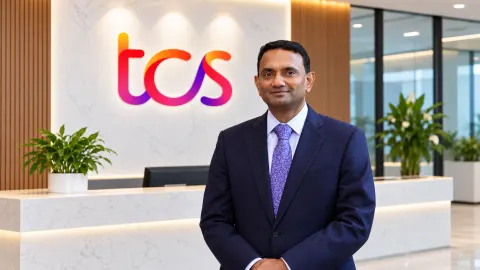
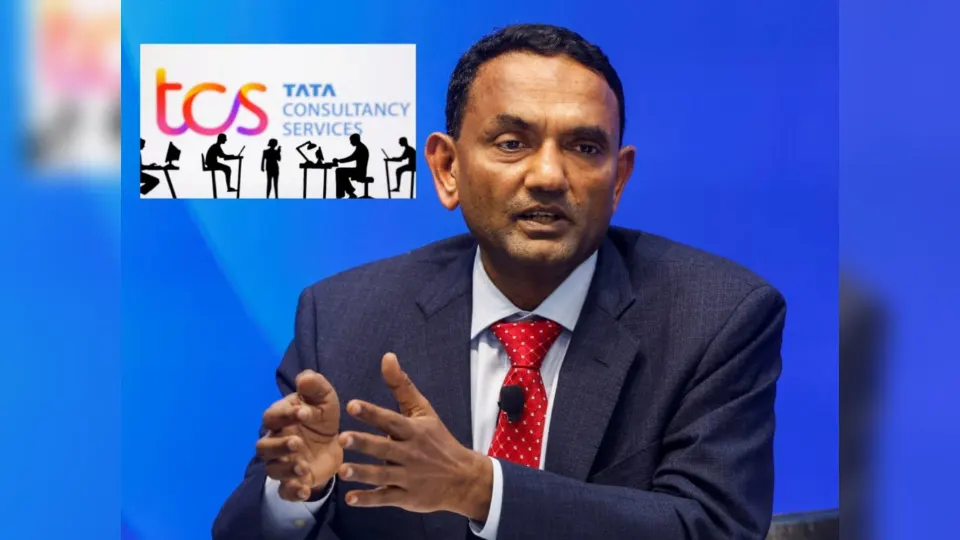
Tata Consultancy Services (TCS) Chief Executive Officer and Managing Director K Krithivasan has strongly pushed back against the prevailing narrative that artificial intelligence will trigger widespread job losses across the global IT services sector. Speaking during the company's first-quarter (Q1 FY27) earnings call on Thursday, Krithivasan stated that while generative AI will drastically reshape the nature of daily technological workflows, it will not lead to a severe reduction in overall white-collar employment at India’s largest software exporter.
Instead of writing basic syntax and executing routine coding tasks, Krithivasan noted that existing engineers will organically transition into higher-value, specialized roles. “We do not believe that there would be a drastic reduction in employment," he stated. "There will be people doing different things. Like currently, if they are doing software engineering and coding, there could be more skill sets required in terms of prompt engineering. People will be training models, testing models, and lifecycle management".
The executive's reassurances were distinctly backed by robust Q1 hiring data. Reversing the recent trend of shrinking IT workforces and fears of "silent layoffs" across the broader Indian tech sector, TCS reported a net addition of 9,279 employees for the quarter ending June 30, 2026. This aggressive recruitment drive marks the company's largest quarterly workforce expansion in nearly four years, elevating its total global headcount to 593,798. Furthermore, the company maintained voluntary attrition in IT services at a highly stable 13.6% on a last-twelve-month basis, and issued offers to more than 14,000 freshers, actively scouting campuses for AI-native talent.
Why It Matters
This internal narrative friction matters immensely because TCS operates as the definitive bellwether for India’s $315 billion IT outsourcing industry. The sector is currently navigating an existential crisis regarding its core commercial architecture. For the past three decades, Indian IT majors generated compounding revenue by deploying "labor scale." If a Fortune 500 client required customized enterprise software built faster, TCS simply billed them for more engineers operating on a standardized time-and-materials basis.
Generative AI fundamentally breaks this linear relationship between headcount volume and productive output. If a newly deployed AI coding assistant can write, review, and debug basic enterprise software infrastructure ten times faster than a junior engineer, the client logically expects the project to take one-tenth of the billable hours. Left unchecked, this productivity leap threatens to collapse the top-line revenue of legacy IT services. Krithivasan’s stated strategy is essentially a massive, defensive upskilling maneuver designed to protect that lucrative billing volume. By aggressively retraining its workforce to handle complex AI lifecycle management, data security compliance, and sovereign cloud implementations rather than basic coding, TCS can justify keeping hundreds of thousands of employees on the active billing sheet. The company is effectively signaling to its enterprise clients that while AI will write the foundational code, human experts remain absolutely mandatory to ensure the AI does not hallucinate, expose proprietary corporate data, or irreparably break legacy infrastructure systems. The robust Q1 net addition of 9,279 employees provides hard evidence that, for now, clients are actively willing to pay for these premium human-in-the-loop transition services.
The Strategic Read
The contrasting public statements from the CEO and the Chairman expose the dual timeline of the artificial intelligence revolution within enterprise services. Krithivasan is successfully managing the immediate, short-term commercial reality: global enterprises desperately need human consultants to safely integrate raw AI capabilities into their messy, heavily regulated legacy tech stacks today. Conversely, Chandrasekaran is acknowledging the long-term, structural reality: once those AI agents are fully integrated, customized, and autonomous, the necessity for a 600,000-person workforce mathematically evaporates. The underlying business mechanism driving this current quarter's financial success is "cognitive leverage" masking potential operational bloat. By embedding advanced AI tools deeply into its own workforce, TCS vastly improves its internal operating margins on fixed-price software contracts. However, to maintain absolute top-line revenue growth, the company must convince clients to purchase highly complex, higher-margin consultative services—such as customized AI model tuning and enterprise data architecture—to financially replace the low-margin coding work that AI has thoroughly commoditized.
The competitive consequence of this strategic shift places immediate, immense pressure on mid-tier Indian IT firms and smaller Global Capability Centres (GCCs). While an apex giant like TCS possesses the massive balance sheet required to retain nearly 600,000 employees and absorb the heavy capital expenditure of retraining tens of thousands of engineers into "AI lifecycle managers," smaller competitors do not. If TCS successfully normalizes a hybrid enterprise pricing model—charging clients simultaneously for both human oversight and autonomous AI agent output—it will secure a virtually unassailable competitive moat over pure-play legacy outsourcers who lack the capital to fund their own proprietary AI partnerships. However, the strongest countercase to Krithivasan’s enduring optimism regarding headcount is the rapidly accelerating competence of autonomous AI agents themselves. Currently, expensive human oversight is strictly necessary because foundational AI models remain prone to severe errors in complex, multi-layered enterprise environments. But as frontier models continuously improve their reasoning capabilities and expand their context windows, the need for massive human teams to manually "test and train" these models will inevitably experience a sharp decline. If AI agents become fully capable of unsupervised, end-to-end software deployment within the next 36 months, the traditional time-and-materials billing model will permanently fracture.
For daily, sharp analysis of the biggest moves in the Indian business and startup ecosystem, follow StartupFox.