
The Story
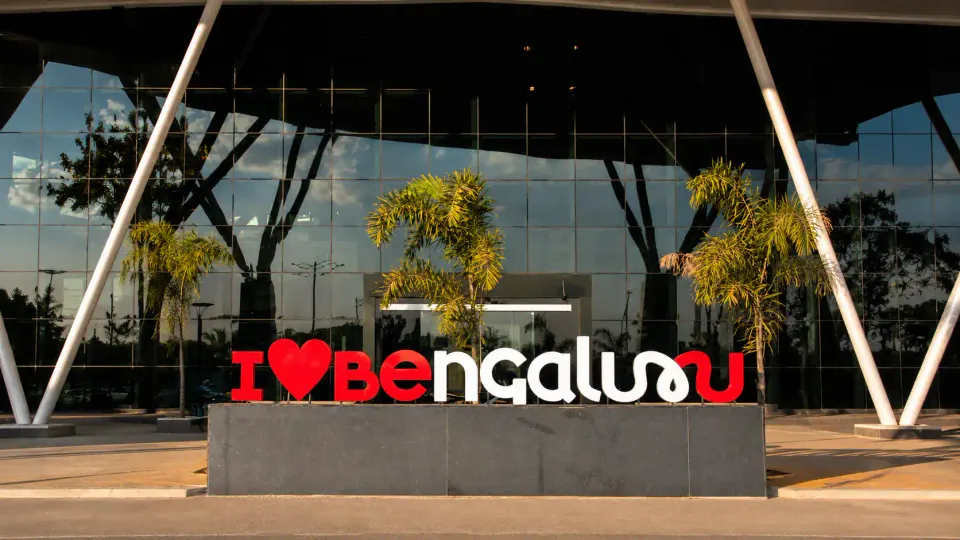
Bengaluru has formally overtaken Mumbai to become India’s largest geographic hub for young founders, according to the newly released Avendus Wealth–Hurun India U30 List 2026. The southern technology capital is now home to 21 entrepreneurs aged 30 or younger on the prestigious list, an aggressive addition of 14 founders in just a single year. Mumbai, which held the top position in 2025, slipped to second place with 16 entrepreneurs, while Gurugram recorded a sharp jump to secure third place with 12 founders.
The 2026 list recognises 102 entrepreneurs—a 28% increase from the previous year—whose companies collectively command a valuation of ₹2.9 lakh crore. To qualify, first-generation founders must operate businesses valued at $25 million or more. The data reveals a rapidly maturing early-stage pipeline. While the average founder age remains at 28, the youngest entrants have dropped to just 20 years old, represented by Onkar Singh Batra of SpaceTech firm Apolink and Dhravya Shah of AI startup Supermemory.
This year's cohort signals a massive sectoral shift away from traditional consumer internet. One in four entrepreneurs on the list operates in DeepTech or HardTech sectors. Artificial intelligence and machine learning ventures account for eight founders, while space technology, electric vehicles, and aerospace defence feature prominently. Capital continues to concentrate heavily at the top of the pyramid, with the top 10 companies collectively raising over $3.5 billion, led by quick-commerce giant Zepto ($2.3 billion). However, the number of seed-stage companies on the list jumped from five to 13. Highlighting a shift toward operational discipline, Hurun researchers noted that over 50% of the capital raised by these young founders is being deployed directly into product development and geographic expansion, rather than discretionary marketing. Together, the U30 entrepreneurs currently employ more than 75,000 people.
Why It Matters
The geographic flip between Mumbai and Bengaluru matters because it acts as a direct proxy for a broader structural shift in Indian venture capital. For the past decade, Mumbai dominated the youth entrepreneurship narrative by cultivating high-velocity consumer brands, fintech disruptors, and direct-to-consumer (D2C) retail platforms. These sectors relied heavily on the city's deep financial services talent pool and historical strength in media and consumer marketing.
Bengaluru’s resurgence is driven by the rise of "atoms over bits." Building a space technology startup, an autonomous drone company like Airbound, or an electric mobility platform requires an entirely different ecosystem than a pure software-as-a-service (SaaS) tool. Hardware and DeepTech are incredibly capital-intensive and require vast networks of specialized engineering talent, prototyping facilities, and legacy aerospace or manufacturing infrastructure.
By adding 14 founders in a single year, Bengaluru has validated its position as the only Indian city with the required "engineering density" to support this new wave of HardTech companies. Furthermore, the fact that over 50% of funding is being allocated to product development and expansion proves that these founders are confronting the brutal realities of hardware unit economics. They are building complex, physical supply chains that require immense upfront capital before any meaningful commercial revenue can be realised.
The Strategic Read
Bengaluru’s takeover of the U30 list signals that the barrier to entry for top-tier Indian startups has structurally increased, pivoting from user-acquisition expertise to core technological defensibility. The underlying business mechanism driving this shift is the "infrastructure clustering effect." When 25% of the country's top young founders build DeepTech and hardware, they cannot operate in isolation. They require high-end testing labs, specialized talent from institutions like IISc, and proximity to advanced manufacturing supply chains. Bengaluru provides this physical and intellectual clustering. Once an ecosystem reaches critical mass in deep tech, it creates a gravitational pull that forces new founders to relocate there, creating a self-sustaining moat for the city's real estate and tech ecosystems.
The competitive consequence of this shift places immense pressure on legacy Indian venture capital funds. For years, domestic VCs perfected the art of underwriting consumer internet metrics: customer acquisition cost (CAC), lifetime value (LTV), and monthly active users (MAU). DeepTech and SpaceTech cannot be evaluated using these SaaS frameworks. Investors are now forced to evaluate patent viability, hardware failure rates, and multi-year R&D timelines. VCs that fail to re-tool their diligence teams with specialized engineering talent will rapidly lose access to the top 1% of this new hardware-focused entrepreneurial cohort.
The primary leverage point these young DeepTech founders possess is proprietary intellectual property. Unlike a D2C brand or a food delivery app, a company building low-Earth orbit broadband infrastructure or autonomous drones cannot be easily replicated by a well-funded competitor overnight. This deep IP creates massive switching costs and long-term defensibility, which is exactly why institutional capital is suddenly comfortable backing 20-year-old founders in highly complex sectors. However, the strongest countercase to this DeepTech euphoria is its catastrophic failure cost. Software startups can pivot relatively cheaply by rewriting code. Hardware startups cannot pivot their way out of a broken supply chain or a flawed physical prototype. While capital is currently flowing into sectors like EVs and SpaceTech, these companies burn massive amounts of cash before ever achieving product-market fit. If the global venture ecosystem experiences a sudden liquidity crunch, these capital-intensive HardTech startups carry a significantly higher mortality risk than their software predecessors, potentially stranding millions in specialized R&D assets.
For daily, sharp analysis of the biggest moves in the Indian business and startup ecosystem, follow StartupFox.