

 PepsiCo
The Story
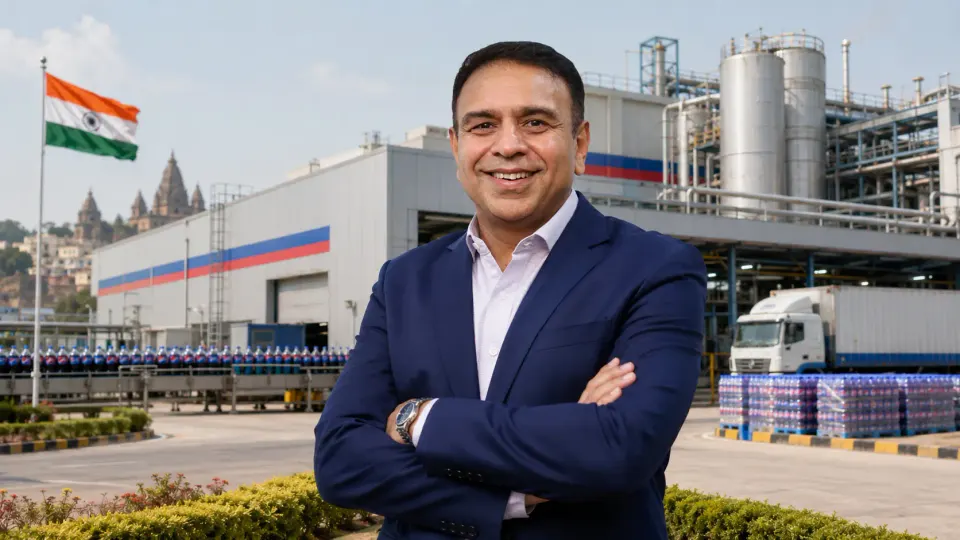
Leading food and beverage maker PepsiCo India inaugurated its flavour manufacturing facility in Ujjain, Madhya Pradesh, on Tuesday with an investment of ₹1,266 crore. Built on a 22-acre campus, the site marks the company's second flavour manufacturing plant in the country and will manufacture beverage concentrates for PepsiCo's iconic beverage portfolio.
The Ujjain plant is a critical component of PepsiCo's broader ₹5,700-crore investment commitment pipeline in India through 2030, which is designed to expand manufacturing capacity, strengthen supply chains, and support long-term growth. According to the company, the facility is expected to generate approximately 500 direct and indirect employment opportunities while supporting ancillary industries across central India.
The plant was virtually inaugurated by Madhya Pradesh Chief Minister Mohan Yadav. Emphasizing industrial sustainability, PepsiCo executives noted the facility will operate on renewable electricity and incorporate zero liquid discharge technology. Furthermore, the site will implement advanced water-efficiency measures designed to replenish 100 per cent of the water used at the facility.
The investment deepens the company's footprint in the state, where PepsiCo India already has a presence through a collaborative farming initiative engaging more than 2,000 farmers for the sustainable sourcing of chip-grade potatoes. Addressing the launch, PepsiCo CEO for International Beverages Eugene Willemsen stated that the facility is the company's ninth globally and second in India, reinforcing its long-term strategic focus on the region. PepsiCo India & South Asia CEO Jagrut Kotecha added that the operations reflect the company's strict "In India, For India" manufacturing commitment.
Why It Matters
The ₹1,266-crore allocation matters because it aggressively localizes the most critical and high-margin component of the global beverage supply chain: the proprietary flavour concentrate. In the soft drink industry, the primary brand owner (PepsiCo) typically does not manufacture the final, packaged liquid that reaches the consumer. Instead, the core business model revolves around manufacturing the highly guarded, IP-heavy flavour concentrates and syrups. These concentrates are then sold to massive, independent bottling partners who add carbonated water, handle the capital-intensive bottling process, and manage hyper-local retail distribution. Historically, multinational beverage conglomerates often imported significant portions of their proprietary concentrates into emerging markets to protect intellectual property and maintain quality control. By building its second massive concentrate plant in India—and only its ninth globally—PepsiCo is structurally de-risking its Indian operations. Localizing this specific production layer insulates the company from global supply chain shocks, sudden import tariffs, and volatile currency fluctuations that can severely erode gross margins.
Furthermore, the geographic placement in Ujjain is highly deliberate. Madhya Pradesh sits at the geographic center of the country, providing a premier logistical hub. This centrality allows for the rapid, cost-effective dispatch of concentrates to bottling mega-plants across North, West, and South India. By shortening the distance between the concentrate facility and the bottling lines, PepsiCo reduces transit times and inventory holding costs for its partners, massively increasing the overall velocity of the domestic supply chain.
The Strategic Read
The Ujjain facility signals that global FMCG giants have moved entirely past basic product localization; they are now embedding their core intellectual property deeply within the Indian industrial ecosystem to defend their market share. The underlying business mechanism driving this ₹1,266-crore bet is the symbiotic scaling between PepsiCo and its primary Indian bottler, Varun Beverages Limited (VBL). Over the past few years, VBL has aggressively expanded its manufacturing capacity and deep-rural distribution network, transforming India into one of PepsiCo’s most lucrative global growth engines. However, an aggressive bottler can only scale as fast as it receives the raw concentrate. PepsiCo’s new Ujjain facility acts as the high-capacity upstream engine required to feed VBL’s downstream mega-plants. By ensuring an uninterrupted, localized supply of concentrate, PepsiCo maximizes its own high-margin B2B revenue while empowering its bottler to dominate retail shelf space without facing ingredient bottlenecks.
The competitive consequence of this localization places immediate pressure on both legacy rival Coca-Cola and aggressive domestic disruptors like Reliance’s Campa Cola. As Campa Cola attempts to break the global duopoly by flooding the market with aggressively priced beverages, PepsiCo requires absolute efficiency in its supply chain to defend its margins. Localizing concentrate production allows PepsiCo to optimize operational costs and maintain pricing power, ensuring it can weather a prolonged retail price war without sacrificing profitability. However, the strongest countercase to this manufacturing expansion is the severe structural risk of water scarcity in central India. While PepsiCo heavily emphasized that the plant features zero liquid discharge technology and 100 per cent water replenishment, beverage manufacturing remains fundamentally reliant on massive water procurement. The Malwa region is susceptible to erratic monsoon cycles and groundwater depletion. If regional water tables drop over the next decade, local political and agricultural backlash against multinational beverage facilities is historically inevitable. No amount of internal water-efficiency technology completely insulates a high-capacity beverage plant from the macroeconomic reality of regional droughts, potentially turning a ₹1,266-crore asset into a stranded liability during severe climate events.
For daily, sharp analysis of the biggest moves in the Indian business and startup ecosystem, follow StartupFox.