


The Story
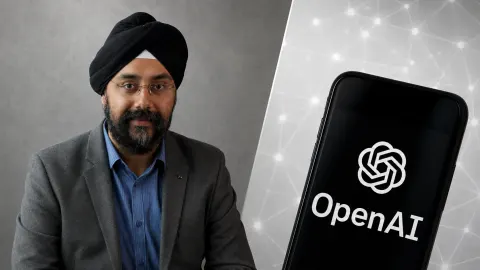
Razorpay has partnered with OpenAI to help Indian brands advertise on ChatGPT, using its growth marketing platform Razorpay Engage.
Engage will help businesses prepare product catalogues, structure product feeds, launch campaigns and track performance on ChatGPT Ads. Razorpay said the platform will also deploy an AI agent, built on ChatGPT Ads best practices, to create and manage campaigns across different contexts, monitor their performance and adjust them, with human oversight from its own team.
Early participants include Fastrack, Traya, Tata Neu, Rivaah by Tanishq, Tanishq, Shaadi.com, Axis Max Life, Palmonas and the Narsee Monjee Institute of Management Studies.
Nitin Bawankule, head of enterprise sales for India at OpenAI, said ChatGPT is changing how people discover products and make decisions, with users describing what they need and refining choices through conversation rather than searching a fixed set of options.
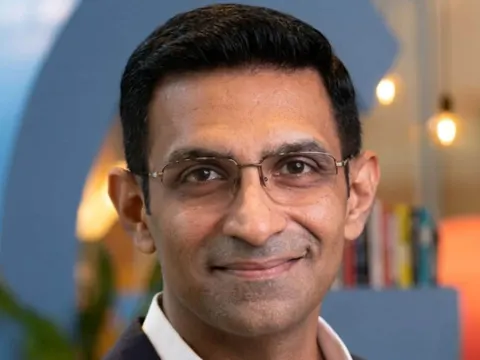
Razorpay chief operating officer Rahul Kothari said the arrangement lets businesses test ChatGPT Ads without having to build the necessary expertise from scratch.
The partnership comes as OpenAI expands ChatGPT Ads in India. OpenAI said at its DevDay conference last week that ChatGPT now reaches 1.2 billion weekly users.
Razorpay confidentially filed for a listing earlier this year following its reverse flip to India.
Why It Matters
A payments company selling advertising services is less strange than it first appears, and the reason says something about where margin is moving.
Payment processing is a commodity. The fee per transaction is competed down, the service is undifferentiated once it works, and the only ways to grow are volume and adjacent products. Razorpay has spent years adding those adjacencies, and a growth marketing platform sitting on merchant data is among the more defensible of them.
What makes this particular adjacency notable is that it is an arbitrage on unfamiliarity. ChatGPT Ads is a new surface. Nobody has five years of experience structuring product feeds for conversational discovery, and the techniques that worked for search are not obviously transferable. Razorpay is selling the gap between a channel existing and brands knowing how to use it.
That gap closes. Agencies will learn, OpenAI's own tooling will improve, and the specialist knowledge that justifies an intermediary today becomes standard practice within a couple of cycles. The same thing happened with search marketing, with Facebook ads and with performance marketing on marketplaces.
Which makes the AI agent the more durable part of the offering. If campaign management runs largely without a human, Razorpay can serve small merchants that no agency would take, and that is a position harder to compete away than early expertise in a new channel.
Nitin Bawankule, head of enterprise sales for India at OpenAI: \"Instead of searching through a fixed set of options, people can describe what they need, explore possibilities, and refine their choices through conversation.\"
The Strategic Read
The brand list is the most informative part of the announcement.
Fastrack, Tanishq, Rivaah, Traya, Palmonas and Tata Neu are jewellery, watches, hair treatment and retail. Shaadi.com is matchmaking, Axis Max Life is insurance, NMIMS is education. These are categories where buying decisions involve long consideration, comparison across unfamiliar options, and questions people are often reluctant to ask a shop assistant.
That is precisely where conversational discovery would plausibly beat a search box. Someone choosing a term plan, a hair treatment or a management programme is not looking for ten blue links. They are trying to work out what they need before they can even name it.
Insurance is the interesting entry on that list. Axis Max Life appearing among the first advertisers places life insurance inside a conversational interface at the moment when IRDAI is proposing to cap what may be paid for distributing it, and when the regulator's separate registry consultation would make policy information portable. A channel where a model explains options and a buyer narrows them down is a different distribution model from an agent or an aggregator, and it is not obviously covered by rules written for either.
For Razorpay the logic is less about payments than about what it already knows. It processes transactions for hundreds of thousands of merchants and therefore holds catalogue and conversion data most agencies do not. Selling campaign management on top of that is a reasonable extension, and it arrives as the company prepares to list, when a credible new revenue line is worth more than its near-term economics suggest.
For daily, sharp analysis of the biggest moves in the Indian business and startup ecosystem, follow StartupFox.