
 Mstack
The Story
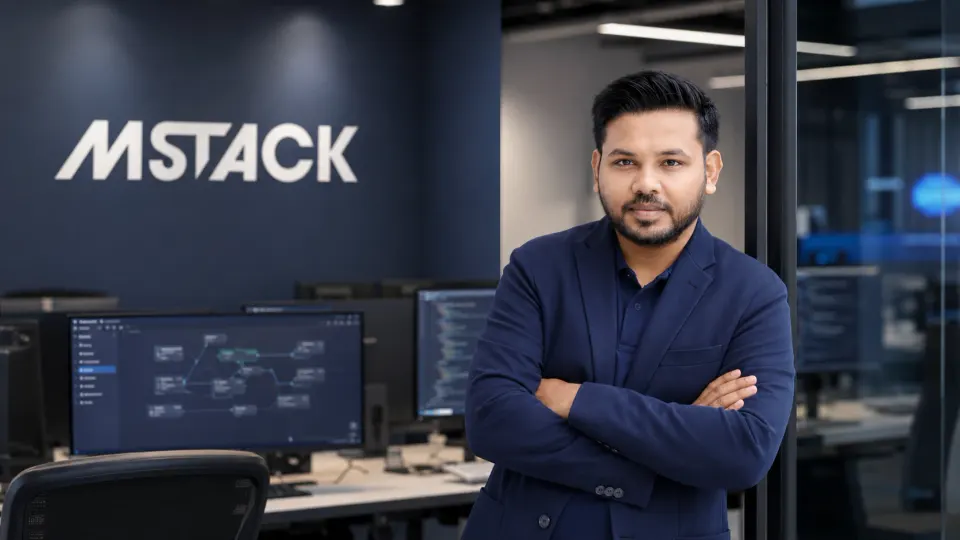
Mstack, a specialty-chemicals startup that runs a cross-border sourcing and manufacturing platform, is in talks to raise a minimum of $30 million, according to a report. The company is said to be in discussions with its existing backers Alpha Wave Global and Lightspeed Venture Partners, and with Prosperity7 Ventures, the growth fund of Saudi Aramco, as a new investor.
The round has not closed. The reported figure is a floor rather than a confirmed amount, and Mstack has not disclosed the valuation it is seeking, the final size of the round, the terms, or how the proceeds would be used. The list of investors in talks may change before any deal is finalised, and no closing date has been reported.
The discussions follow the $40 million Series A the company closed in October 2024, co-led by Lightspeed and Alpha Wave Global with a debt facility from HSBC Innovation Banking, at a valuation reported at the time to be around $90 million to $100 million. In September 2025, founder and chief executive Shreyans Chopra said the company was targeting a $100 million Series B to close by the end of that year. The current reported minimum of $30 million is a smaller figure, and the round appears not to have closed in the interim.
Mstack was founded in 2022 by Chopra and is headquartered in Houston, with operations in India including a sourcing presence in Bengaluru and research laboratories in Hyderabad. It sells a platform through which buyers source, test and receive specialty chemicals across sectors including oil and gas, coatings, water treatment, personal care, agrochemicals and pharmaceuticals.
Why It Matters
Mstack sells access to a supply chain rather than a single chemical. Its platform lets manufacturers source, test, ship and track specialty chemicals from a diversified base of suppliers, across categories from oil and gas and coatings to agrochemicals and pharmaceuticals, and it layers on Chemstack AI, a system for literature analysis, synthesis design and cost modelling meant to cut the time from molecule to commercial production. The company earns on the margin between what it costs to source or manufacture a chemical and what a buyer pays, alongside its newer research and formulation services.
The demand it is selling into is a response to disruption. Tariffs, the China-plus-one shift and the decline of Europe's chemical producers have pushed buyers to find suppliers outside the incumbents, and a platform that makes that diversification faster and more reliable is timely. Mstack has built sourcing operations and, more recently, research laboratories in India to serve that need, positioning itself as the intermediary for buyers who no longer want to depend on a single geography.
What the fundraising talk does not settle is the quality of the economics. Mstack has said it grew revenue tenfold with operational profitability around the launch of Chemstack AI, but those are company figures and have not been audited. A sourcing and trading business can post rapid revenue growth on thin gross margins simply by moving more volume, so a large top line does not by itself show the model is software-like. Whether the AI layer earns the higher margins that would justify a step-up in valuation is the question the round, once its terms are known, will begin to answer.
The Strategic Read
The market assumption changing behind these discussions is that geopolitics has turned supply-chain diversification in specialty chemicals into a durable, fundable theme, and that a platform sitting between buyers and a diversified supplier base can own a slice of a market worth several hundred billion dollars. The investors reported to be at the table are underwriting that thesis rather than any single product.
The most telling name in the reported list is Prosperity7. Saudi Aramco's growth fund is a strategic rather than purely financial investor in a chemicals company, and its presence signals that the supply-chain thesis is drawing capital tied to the energy and petrochemicals complex, which could bring offtake and distribution as much as money. Existing backers Alpha Wave and Lightspeed returning is continuity; a new strategic lead of that kind would be validation.
Where durable value would sit is the AI and R&D layer rather than the sourcing itself. Cross-border chemical trading is a low-margin, replicable business, and revenue can grow quickly simply by moving more product without the economics improving. The defensible part is Chemstack AI and the Hyderabad labs, if custom-molecule development and faster synthesis genuinely command higher margins and lock in customers. Mstack competes here against the Bengaluru startup Scimplify, which has raised its own Series B from Accel and Bertelsmann, as well as established trading houses, so the platform has to prove its edge is the technology and not just scale.
The signal worth weighing is the shape of the raise. A round that was described as a $100 million target a year ago and is now reported as a $30 million minimum, still in talks, can mean a staged first close, a bridge, or a scaled-back ambition in a harder market for capital-intensive, thin-margin models. Until it closes and the valuation and investor set are confirmed, the size, the backers and the terms remain reported intentions, and the claimed profitability remains unaudited.
For daily, sharp analysis of the biggest moves in the Indian business and startup ecosystem, follow StartupFox.