
The Story
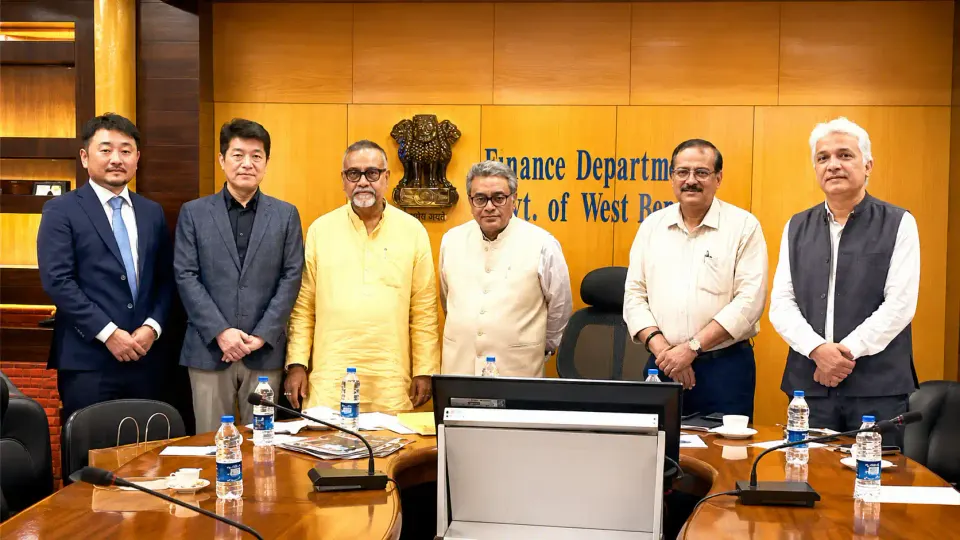
Japanese conglomerate Mitsubishi Chemical Group has initiated formal discussions with the West Bengal government to explore setting up a semiconductor manufacturing unit in the state. Senior company representatives, including Teruo Fujita and Tomofumi Koyama, recently held meetings at the state secretariat, Nabanna, with Industries Minister Tapas Roy and Finance Minister Swapan Dasgupta.
According to Roy, the state has proposed allocating land in the established industrial hubs of Durgapur or Panagarh, noting that the project requires a relatively limited physical footprint. A second delegation of Mitsubishi executives is scheduled to visit the proposed sites in the fourth week of July to assess feasibility and further the discussions. The Japanese major has a notable historical footprint in the region. In 1997, it established MCC PTA India Corp as a subsidiary, commissioning a massive purified terephthalic acid (PTA) plant in Haldia in 2000. However, Mitsubishi exited that specific business a decade and a half later, selling the entity to The Chatterjee Group in 2016.
The renewed interest aligns with a broader policy overhaul in West Bengal. The state government is currently finalising a ₹5,000-crore investment promotion framework that was announced in its recent budget. Minister Roy indicated that the administration intends to transition from a "permission-based to a facilitation-based" governance model, introducing a new draft industrial policy and a dedicated startup framework within the next three months to target sunrise sectors like artificial intelligence, data centres, and semiconductors.
Why It Matters
Mitsubishi’s exploratory talks matter because they highlight the decentralisation of India's semiconductor ambitions. Over the past two years, the narrative surrounding India’s multi-billion-dollar semiconductor push has been heavily concentrated in Gujarat (with Tata and CG Power OSAT facilities) and southern states like Karnataka and Tamil Nadu, which boast legacy electronics manufacturing ecosystems. West Bengal has historically struggled to capture these high-tech, capital-intensive mega-projects, largely due to lingering perceptions of complex land acquisition and historically rigid industrial policies. Attracting a player of Mitsubishi’s calibre would serve as a powerful signal of structural change.
Mitsubishi Chemical Group is not a traditional chip designer like Nvidia or a pure-play foundry like TSMC. Instead, it is a critical player in the global semiconductor supply chain, manufacturing the advanced process materials, specialty chemicals, and consumables required for wafer fabrication. Because a single semiconductor fab requires hundreds of highly specialised chemical inputs, material suppliers must establish facilities near broader manufacturing clusters. If Mitsubishi anchors a chemical or materials unit in Durgapur, it physically lays the groundwork for larger fabrication or packaging plants to justify moving to the region, drastically reducing their future inbound logistics costs.
The Strategic Read
The West Bengal government’s aggressive pursuit of Mitsubishi signals a strategic shift in state-level economic planning: weaponising bespoke capital incentives to brute-force a high-tech ecosystem into existence.
The underlying business mechanism here is the "anchor tenant" effect in industrial real estate. A semiconductor ecosystem cannot be built piecemeal. It requires uninterrupted power, massive water reserves, and a deep, highly specialised supply chain. By offering prime land in Durgapur and Panagarh—and backing it with a ₹5,000-crore investment promotion framework—the state is attempting to subsidise the initial friction of setting up this ecosystem. If the government can convince one global giant to absorb the first-mover risk, subsequent companies will follow to service that anchor, creating a self-sustaining regional supply chain. The competitive consequence of these talks places immediate pressure on neighbouring states. Mitsubishi is actively shopping for the best fiscal deal; its delegation notably met with Assam Chief Minister Himanta Biswa Sarma just days prior to discuss parallel investments in Assam’s chemical engineering and semiconductor sectors. This triggers a classic regulatory race to the bottom, where state governments must outbid each other with massive capital subsidies, power tariff waivers, and tax holidays to secure the geopolitical prestige of hosting a semiconductor unit.
However, the strongest countercase to Bengal’s semiconductor ambitions is execution risk and institutional memory. Signing a Memorandum of Understanding (MoU) or hosting a delegation is trivial compared to the brutal operational reality of high-tech manufacturing. Global investors have long memories, and Mitsubishi is intimately aware of the state's industrial climate, having previously exited its massive Haldia investment in 2016. Furthermore, while the state government promises protection from "extortion and syndicates," the highly sensitive nature of semiconductor materials manufacturing requires absolute operational stability. A single day of union-driven logistics disruption can ruin millions of dollars of specialised chemical inventory.
For daily, sharp analysis of the biggest moves in the Indian business and startup ecosystem, follow StartupFox.