
 Lytmus AI
The Story
Bengaluru-based educational technology startup Lytmus AI has raised ₹5 crore in a pre-seed funding round led by Boundless Ventures. The fresh capital will be deployed to strengthen the startup's artificial intelligence capabilities, accelerate product development, and expand student acquisition.
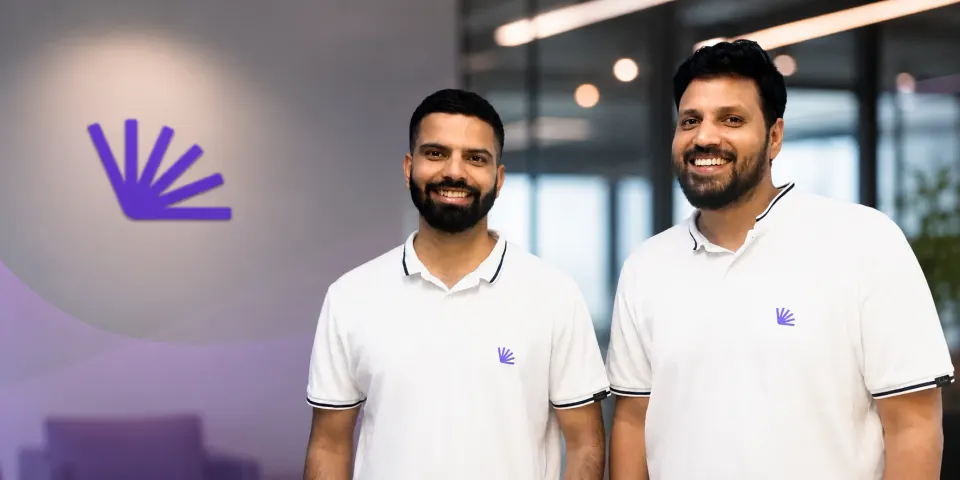
Founded in 2024 by Ajit Kumar, Praveen Y., and Naveen Yadav, the company builds AI mentors tailored for competitive exam preparation, beginning with the highly competitive National Eligibility-cum-Entrance Test (NEET) segment. The startup's core product features what it calls "teacher twins"—AI agents explicitly trained to replicate the distinct pedagogical styles of top educators to provide round-the-clock support.
The platform operates on a two-layer technological architecture. The infrastructure layer absorbs subject expertise and specific teaching patterns, enabling the AI to explain concepts effectively. Simultaneously, the application layer provides persistent memory and contextual understanding for each individual student, allowing the software to personalize the learning experience over time.
Lytmus AI claims the platform has already been utilized by over 16,000 students over the past 90 days. According to the company, users relying on its AI mentors complete up to three times more daily practice compared to those without the tool.
Regarding capital allocation, the company plans to direct approximately 60% of the funds toward product development, talent acquisition, and AI reinforcement. The remaining 40% will be dedicated to operational expansion and growth initiatives.
Why It Matters
The ₹5 crore pre-seed allocation highlights a structural shift in how educational technology approaches the massive Indian test-prep market. With over two million candidates registering for NEET annually, the demand for high-quality instruction heavily outweighs the supply of premium educators.
Over the past decade, heavily funded legacy edtech platforms attempted to solve this disparity through aggressive digital aggregation. Companies burned immense venture capital to poach and retain "superstar" teachers, broadcasting their lectures to tens of thousands of students simultaneously via live streams. While this model scales content delivery, it fundamentally fails at personalization. In a one-to-many broadcast, real-time doubt resolution and customized academic pacing remain impossible for the average student.
Lytmus AI is attempting to break this human bottleneck through generative AI. By creating AI "teacher twins" that operate continuously, the startup effectively reduces the marginal cost of premium, personalized tutoring to near zero.
For a student preparing for NEET, the learning cycle is grueling and spans up to two years. Traditional educational chatbots reset their context with every session, creating a frustrating, transactional user experience. Lytmus AI’s application layer solves this by maintaining a persistent memory of the student’s specific weaknesses, past mistakes, and learning velocity. This approach mimics the empathy, continuity, and accountability of a dedicated human tutor. If an AI agent can reliably explain complex physics or biology concepts at any hour without losing context, the traditional necessity of hiring expensive, round-the-clock human doubt-solvers collapses.
The Strategic Read
The capital deployment by Boundless Ventures—a newly launched, AI-native fund founded by Natasha Malpani—signals that early-stage venture capital is aggressively pivoting away from operational edtech models in favor of autonomous, agentic software.
The underlying business mechanism driving Lytmus AI is the decoupling of high-fidelity instruction from human labor constraints. Historically, a premium tutoring business faced a harsh economic reality: to maintain quality, student-to-teacher ratios had to remain low, which kept prices prohibitively high. Scaling revenue required hiring more teachers, linearly increasing operational expenditures. Lytmus AI replaces these human capital expenditures with fixed, localized computing costs. Once the foundational AI mentor is trained, deploying it to the 16,000th student costs fractions of a cent compared to the first. The competitive consequence of this technology places severe margin pressure on legacy incumbents. Platforms such as Physics Wallah, Unacademy, and Infinity Learn have built their formidable defensive moats around exclusive human talent. If Lytmus AI successfully commoditizes top-tier instruction, these incumbents will be forced to either rapidly acquire similar agentic AI capabilities or watch their subscription pricing power erode against drastically cheaper, hyper-personalized AI alternatives.
The primary leverage point for Lytmus AI is its proprietary "persistent memory". The longer a student interacts with the platform, the more accurate the AI becomes at predicting and preempting their specific academic hurdles. This compounding data creates immense switching costs. A student heavily invested in an AI mentor that implicitly understands their unique conceptual flaws is highly unlikely to switch to a competitor's generic platform halfway through their exam preparation cycle. However, the strongest countercase to this thesis is the catastrophic risk of AI hallucination in high-stakes environments. The NEET examination is notoriously unforgiving; a single incorrect conceptual explanation generated by an AI mentor could cost a student a medical seat. While the infrastructure layer is trained on expert patterns, large language models remain inherently probabilistic. If the platform hallucinates a biological fact or a chemical equation, user trust will evaporate instantly. Furthermore, parents—who act as the ultimate paying customers—still derive immense psychological comfort from human accountability and established, legacy coaching brand names.
For daily, sharp analysis of the biggest moves in the Indian business and startup ecosystem, follow StartupFox.