


The Story
Lemonpeel, a Mumbai-based startup building AI video production infrastructure for enterprise creative teams, has raised $1 million (about ₹9.5 crore) in a pre-seed round led by Shastra VC. Rukam Sitara, the tech-focused fund that Rukam Capital founder Archana Jahagirdar launched in 2023, also invested, along with angel investors who were not named.
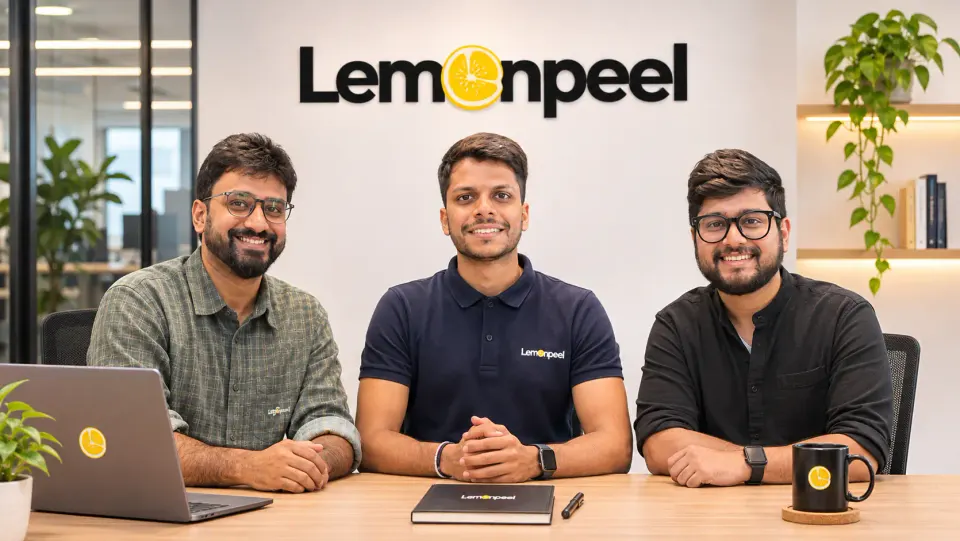
Hardik Goyal, Riddhiman Pal and Abhinav Nikam co-founded the company in September 2025. Their individual roles and backgrounds have not been disclosed.
The product strings together specialised AI agents that take a video from first generation to final delivery, with editing and quality checks in between. Lemonpeel says its engine is model-agnostic and routes tasks across more than 300 models, among them Google's Veo, Kuaishou's Kling and ByteDance's Seedance. A quality-control layer is meant to keep characters and brand assets consistent from shot to shot, and the company says the platform can translate and subtitle in more than 100 languages. It can also be operated from inside AI assistants such as ChatGPT and Claude.
Lemonpeel says it works with customers in India and the UAE and plans to expand into the wider MENA region and North America. According to the company, the money will go into the multi-agent platform and into marketing to enterprise creative teams. It also plans to build intellectual property around faces and creative workflows.
The company did not disclose revenue, the number of customers, any client names or its pricing. The valuation and the split of the round between Shastra VC, Rukam Sitara and the angels were not shared either.
Why It Matters
Enterprise video has a versioning problem as much as a creation problem. A brand film made once is often recut into many regional-language versions and formats, and each one has to keep faces and brand assets identical to the master. That repetitive work is where Lemonpeel aims its agents.
Staying model-agnostic is the central design choice. Video models are improving and changing price quickly, and no single model is best at every kind of shot. A routing layer can send each task to whichever model handles it best or most cheaply, then switch providers as the market moves. The trade-off is that Lemonpeel does not own the core generation step. Its variable costs are likely to be dominated by what it pays model providers per generation, plus the reruns needed when an output fails its checks.
That makes the quality-control layer the part clients would pay for. Generative video drifts, so a face can change between shots or a logo can warp. An automated check that catches drift before a human reviewer does saves the most expensive input in the chain, which is a person's time. Set too strict, the checks inflate generation spend. Set too loose, they push the work back onto the client's review team.
Lemonpeel is enrolled in startup programmes run by Nvidia, AWS, Microsoft and Anthropic. Such programmes usually come with cloud or API credits, which soften compute bills in the early months without changing the underlying unit economics.
The Strategic Read
Shastra VC is underwriting the view that value in AI video will settle in the workflow layer rather than in the models. If models keep converging in quality and falling in price, a company that sits between them and a client's brand guidelines keeps more of each project's margin. If one or two models pull far ahead, or the model makers build complete enterprise tools of their own, the routing layer loses much of its reason to exist.
That second scenario is already in motion. Google offers Flow, its own filmmaking tool built on Veo, and Runway already sells to studios. Higgsfield and Invideo are chasing the same creative teams with far larger budgets. In India, Clueso and TrueFan AI each raised $10 million Series A rounds this year. A $1 million pre-seed does not go far against that field.
Lemonpeel's defensible ground, if it builds any, lies in operations rather than technology. Indian brand campaigns routinely run in several languages, and a vendor that becomes the default for turning a master film into regional versions can build switching costs through stored brand assets and approval histories. The UAE customers point to a similar need among Gulf brands that advertise in more than one language.
The plan to build intellectual property around faces deserves scrutiny. Consistent digital faces are what make AI video usable for brands, but they raise questions of consent and likeness rights. Indian courts have repeatedly granted actors and other public figures protection against unauthorised AI use of their likeness, so any library of faces will need clear licensing before enterprise clients rely on it.
Execution risk sits in the gap between demos and approved deliverables. Lemonpeel has shared no revenue or client names, and the round is small. Its next raise will have to show repeat enterprise contracts rather than one-off projects.
For daily, sharp analysis of the biggest moves in the Indian business and startup ecosystem, follow StartupFox.