
The Story
Kiddo has raised ₹12.5 crore, about $1.3 million, in a pre-seed round led by Campus Fund, with a group of strategic angels participating.
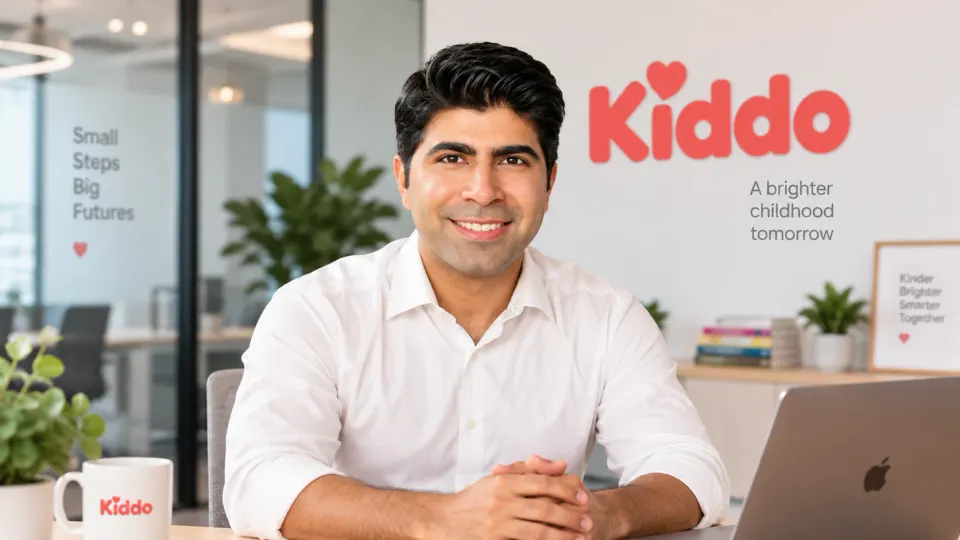
Ankit Kawatra launched the company in 2025. It delivers baby care and parenting essentials within minutes, pairing rapid delivery with life-stage based product recommendations that use a child's age and developmental stage to anticipate what a household will need next.
The money funds customer acquisition, dark store expansion across Delhi NCR, technology and product development, and hiring.
Kiddo says it has curated more than 30,000 SKUs across essentials, fashion and other categories since inception. It targets high-income households, currently operates only in Delhi NCR, and plans to widen its dark store network by the end of the year. It also claims a blended gross margin above that of horizontal grocery quick commerce platforms.
India's baby care market reached $31 billion in 2022 and is projected to reach $56 billion by 2029, growing at 13 to 14 percent a year, according to a market report cited by the company.
The segment has drawn considerable capital over the past year. Gurugram-based OZi raised $3.3 million in seed funding from Blume Ventures in October last year and a $6.2 million Series A led by RTP Global in March, and offers more than 15,000 products with delivery within 60 minutes. Bengaluru-based Peeko raised $3.2 million from Stellaris Venture Partners in August last year and ₹67.4 crore in a Series A led by Chiratae Ventures in August 2026. FirstCry, the incumbent, has been expanding its own faster-delivery services.
Why It Matters
Most quick commerce categories are built on manufactured urgency. Nobody has a beauty emergency, and very few people genuinely need a packet of biscuits in ten minutes rather than thirty. The speed is a habit the platforms taught, and the willingness to pay for it is thinner than the marketing suggests.
Baby care is the exception. A household that runs out of formula at eleven at night has an actual problem, and the parent solving it is not comparing prices across three apps. Nappies are consumed eight to twelve times a day in the first months, which makes replenishment constant rather than occasional. The urgency is real, the frequency is high, and the emotional weight of the purchase removes almost all price sensitivity in the moment. Of all the categories quick commerce has tried, this is among the few where the proposition was not invented by the platform.
What makes it more interesting still is how predictable the demand is. A baby's requirements change on a biological schedule that is broadly identical across every household: nappy sizes step up at known weights, formula moves through numbered stages, weaning begins around a certain month, clothing sizes turn over every few weeks, developmental toys follow milestones. Knowing a child's date of birth tells you more about what a family will buy next quarter than almost any behavioural data a grocery platform could collect on an adult.
That is the signal Kiddo is building on, and it is genuinely scarce. Retail spends enormous effort trying to predict demand; here the customer arrives carrying a timetable. It turns replenishment into something close to a subscription that the parent never has to set up, and it lets a small operator hold the right inventory in a small dark store rather than guessing across thousands of lines.
Blinkit and Zepto sell nappies too, of course. What they cannot easily do is organise a store, a feed and a replenishment cycle around the age of one child in one household, because their model is built on serving everybody the same way and quickly.
The Strategic Read
The competitive arithmetic is the uncomfortable part.
Kiddo launched in 2025 and is raising a pre-seed now. Peeko launched around the same time, raised $3.2 million in August last year and closed a ₹67.4 crore Series A last month. OZi raised $3.3 million in October and a $6.2 million Series A in March. Both are a full funding stage ahead, each with roughly ₹90 crore raised against Kiddo's ₹12.5 crore. In a business where the constraint is dark store density, and dark store density is bought with capital, being seven times behind is not a gap that better software closes.
That said, ₹12.5 crore for a single city is not obviously insufficient. Delhi NCR is one market, and a company that proves the model there at good margins raises its next round on evidence rather than on promise. The danger is not this round; it is the one after, if competitors have used the intervening year to take the customers Kiddo needed.
The 30,000 SKU figure should be read carefully, because in quick commerce catalogue size is a liability rather than a boast. A dark store has finite shelf space, every stocked line ties up working capital, and a picker who has to walk further finds orders more slowly. OZi, which has raised considerably more, lists 15,000 products. Kiddo's wording is that it has curated more than 30,000 SKUs since inception, which is a statement about assortment evaluated over time rather than about what sits in a dark store this week. The number that matters here is SKUs per store and how many of them turn, and it has not been disclosed.
The margin claim is the more credible one. Grocery quick commerce operates on thin gross margins because the basket is dominated by staples sold at competitive prices. Baby care is different: formula, specialist skincare and branded accessories carry considerably more room, and parents in the target segment do not comparison-shop when a child needs something now. A higher blended margin makes a smaller order volume survivable, which is exactly what a single-city operator needs.
The structural problem nobody in this category likes discussing is that the customer leaves. A baby is a baby for about three years, and then the household stops needing most of what you sell. Every baby commerce business therefore has permanent churn built into it, and must reacquire its entire customer base every few years. FirstCry's answer was to extend upward into kids' fashion and toys to age twelve, and then into physical stores. Kiddo already lists fashion among its categories, which suggests it understands the problem. Solving it means becoming something broader than a baby essentials app, and doing so before the first cohort of customers ages out.
For daily, sharp analysis of the biggest moves in the Indian business and startup ecosystem, follow StartupFox.