


The Story
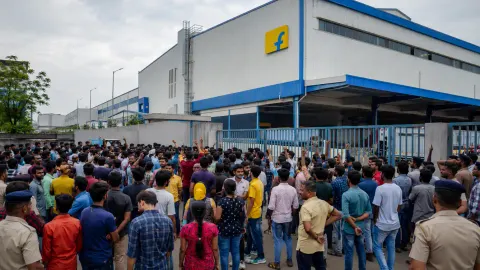
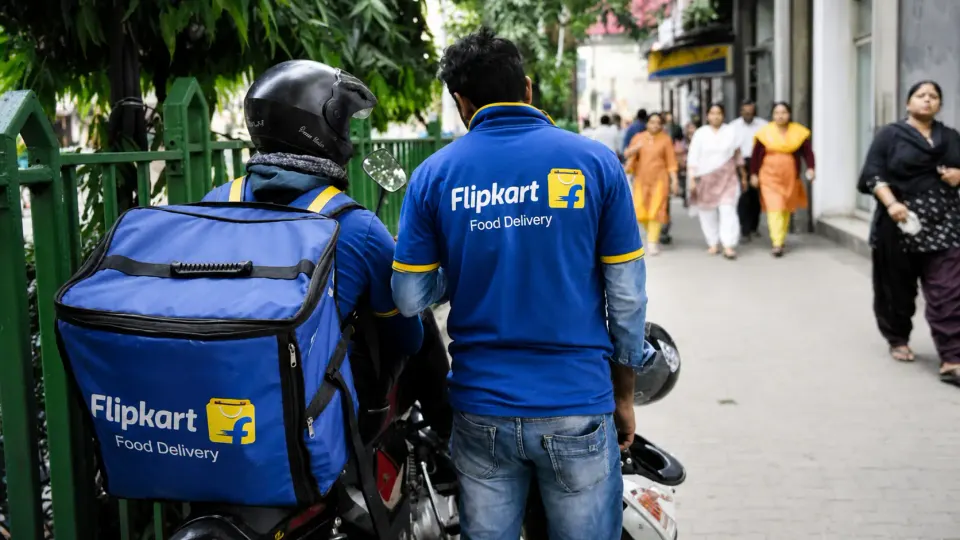
Flipkart is preparing to enter India's online food delivery market, group chief executive Kalyan Krishnamurthy confirmed in an interview with The Times of India. The plan was reported on 24 July 2026.
Krishnamurthy said food delivery will sit as another use case within Flipkart's existing e-commerce platform. The company will begin with a pilot and decide on a national rollout based on customer response and early learnings.
Flipkart has not disclosed the launch date, the commission structure it will charge restaurants, the delivery fee model, how it will build or source a rider fleet, the number of restaurants signed, the capital committed to the business, or whether the service will run through Ekart or a separate logistics arrangement.
The offering is reported to have deep integration with the Open Network for Digital Commerce, the government-backed protocol that separates the buyer-side app from the seller-side app. The company is also reported to be planning delivery on the main Flipkart app while testing a standalone app before scaling. Bengaluru is expected to be the first city, at what has been described as sizable scale, with the launch reported to fall within about 30 days.
Those details have been attributed to unnamed sources rather than to Flipkart. Krishnamurthy's on-record confirmation covers the intent to enter and the pilot-first approach, not the mechanics.
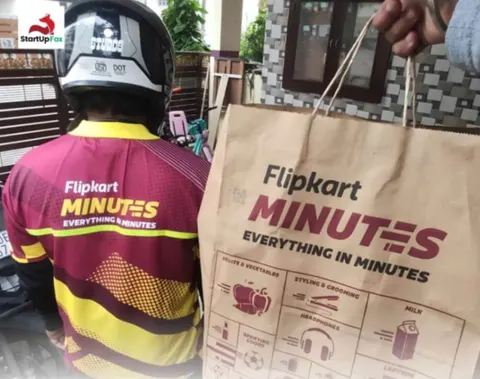
Flipkart already operates across fashion through Myntra, travel through Cleartrip, financial services through super.money and quick commerce through Flipkart Minutes. Citing Datum Intelligence estimates, TOI reported Zomato at roughly 57% of the food delivery market at the end of December and Swiggy at roughly 43%. Rapido has launched Ownly, a zero-commission offering for restaurants, and Swiggy has launched Toing, aimed at value-conscious consumers.
Why It Matters
Food delivery is a two-sided operation where the hard cost is neither the app nor the restaurant. It is the rider. An order has to be picked up from a kitchen that starts cooking on receipt and reach a customer before the food degrades, which caps batching and forces the platform to hold idle rider capacity through the gap between lunch and dinner. That idle capacity is the structural cost, and it is why the category took over a decade to reach thin profitability.
The revenue comes from three places: commission from the restaurant, a delivery fee from the customer, and advertising from restaurants bidding for placement. The commission is where the pressure now sits. Rapido's Ownly charges restaurants nothing and keeps menu prices near offline rates, which is a direct attack on the 15-20% incumbent take. Swiggy's Toing answers the same value-conscious segment.
Flipkart arrives with two assets the earlier failed entrants lacked in combination: a customer base already transacting on the app, and Flipkart Minutes dark stores in the cities that matter. Neither solves the rider problem. Quick commerce dispatches from a controlled dark store with predictable pick times. A restaurant is a third party whose kitchen throughput the platform cannot schedule.
The ONDC angle is the part worth watching, because it changes what Flipkart needs to build. On a shared protocol, restaurant supply is not proprietary. But ONDC's food delivery volumes have stayed modest, and no entrant has yet used it to take meaningful share. Flipkart has published no target, no city count and no timeline beyond a pilot, so at this stage the announcement establishes intent and nothing about whether the economics work.
The Strategic Read
The market assumption being underwritten is that food delivery in India is no longer a two-horse race decided by network effects, and that the incumbent 15-20% commission is a rent that a well-capitalised entrant can compete away. Rapido tested that with Ownly. Swiggy conceded part of it with Toing. Flipkart is the largest party to arrive at the same conclusion.
Previous challengers failed at a different problem. Ola Foods, Uber Eats and Amazon Food all had distribution and capital, and all exited or sold. What defeated them was not customer acquisition but the cost of running a dense delivery network in a small number of cities against operators who had already amortised it. Amazon Food ran in parts of Bengaluru for two years and shut in 2022.
Where value would be created here is the ONDC layer. If restaurant onboarding, catalogue and discovery sit on a shared protocol, Flipkart does not need to sign each restaurant itself, and the aggregator's supply-side moat weakens considerably. That is the genuinely new element, and it is also the least proven — ONDC's food delivery volumes have remained a small fraction of the market despite several years and heavy subsidy.
What would establish the thesis is per-order contribution in the Bengaluru pilot: delivery cost per order, restaurant take rate, and repeat rate among Flipkart customers who were not already ordering food online. None of that will be disclosed.
The largest execution risk is that Flipkart's advantages do not transfer. Its logistics network is built for next-day parcels from warehouses, not 30-minute hot food from thousands of kitchens. Flipkart Minutes gives it dark stores, which is closer, but a dark store is inventory the company controls and a restaurant is not. A pilot confined to one city is a cheap way to find out, and the word pilot is doing a lot of work in the announcement.
For daily, sharp analysis of the biggest moves in the Indian business and startup ecosystem, follow StartupFox.