

 DeepSeek
The Story
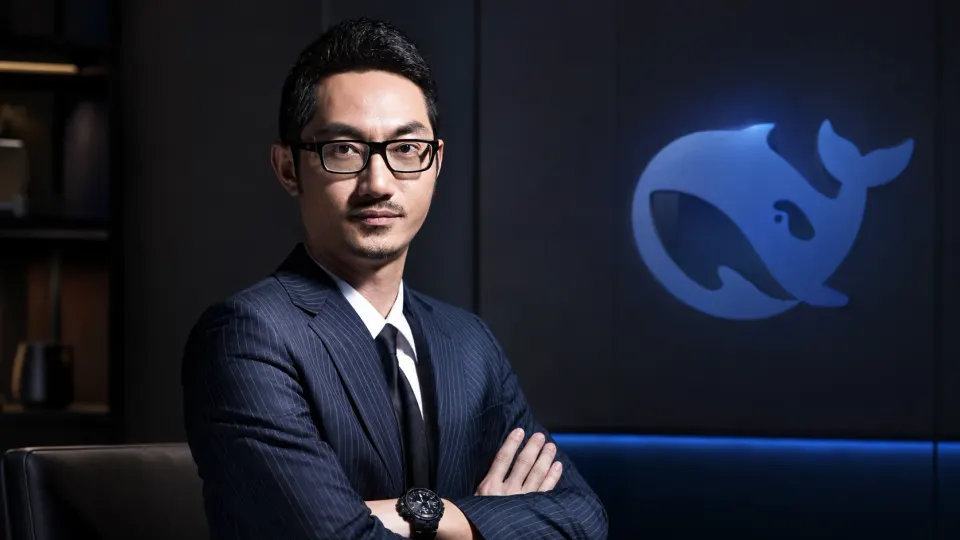
Chinese AI startup DeepSeek has reportedly raised more than $7.4 billion in its first external funding round, pushing its valuation past the $50 billion mark. Founder and CEO Liang Wenfeng emerged as the largest single contributor to the capital raise, injecting approximately $3 billion of his own funds into the round.
According to market reports, the financing features a highly unusual corporate structure. Commercial investors were reportedly required to funnel their capital into a limited partnership managed exclusively by Liang, denying them direct voting rights in the company and imposing a strict five-year lockup period on their shares. The only reported exception to this structure is China's state-backed National Artificial Intelligence Industry Investment Fund, which secured a direct equity stake and voting privileges.
The Hangzhou-based laboratory gained immense global traction in early 2025 following the release of DeepSeek-R1, an open-source reasoning model that temporarily triggered a major sell-off in artificial intelligence hardware stocks, including NVIDIA. Building on that momentum, the company recently introduced DeepSeek-V4-Pro. This 1.6 trillion parameter model utilises a mixture-of-experts (MoE) architecture designed to drastically reduce computing costs without sacrificing processing performance.
Why It Matters
The $7.4 billion capital injection matters because it fundamentally validates a divergent economic model for foundational artificial intelligence development. For the past two years, Western AI leaders like OpenAI and Anthropic have defined progress through massive compute expenditure, raising tens of billions of dollars to brute-force capability improvements. DeepSeek, operating under severe US export controls on advanced semiconductors, was forced to solve for software efficiency rather than raw hardware scale.
By releasing its models under open-weight licenses, DeepSeek is actively commoditising the foundational model layer. The core problem being solved is enterprise inference cost. Corporate clients are rapidly realising that deploying massive frontier models for routine data extraction, customer service routing, or basic code generation is economically ruinous. DeepSeek-V4-Pro attacks this margin vulnerability directly by offering near-frontier performance at a fraction of the cost.
Microsoft's reported interest is the most critical commercial validation of this thesis. As OpenAI's primary backer and distributor, Microsoft routing workloads toward a Chinese open-source alternative signals acute margin pressure within its own Azure AI ecosystem. Cloud providers desperately need cheap, highly capable models to bundle into enterprise software without destroying their gross margins. DeepSeek provides exactly that, effectively allowing cloud distributors to bypass the heavy API tolls extracted by proprietary frontier labs.
The Strategic Read
This funding round signals that the global AI landscape is splitting into two distinct battlegrounds: a capital-intensive race for proprietary artificial general intelligence (AGI) in the West, and an efficiency-driven, open-source commoditisation engine in the East.
The underlying business mechanism defining DeepSeek’s $50 billion valuation is the combination of architectural efficiency—specifically its MoE structure—and absolute corporate governance. By reportedly forcing external investors into a limited partnership and imposing a five-year lockup, CEO Liang Wenfeng has insulated the research laboratory from the standard venture capital pressures of rapid commercialisation or premature exits. This governance fortress provides DeepSeek with massive strategic leverage; it can continue its aggressive pricing strategy—releasing immensely powerful models at near-zero inference margins—without facing boardroom demands to immediately generate high-margin software revenue.
This creates extreme competitive pressure for proprietary labs like Anthropic and OpenAI. DeepSeek’s true moat is its ability to permanently depress the market clearing price for AI intelligence. If a 1.6 trillion parameter model is globally available at cut-rate prices, proprietary labs can no longer charge a massive premium for standard enterprise reasoning tasks. They are forced to continually invent entirely new capabilities just to justify their fundamental unit economics.
However, the strongest countercase to DeepSeek’s long-term enterprise dominance lies in geopolitical risk and infrastructure dependency. While Microsoft may explore customised DeepSeek variants for raw cost savings, it is highly unlikely that heavily regulated Western enterprises—such as defense contractors, banks, or healthcare networks—will comfortably deploy a Chinese foundational model at the core of their data infrastructure. Furthermore, as AI model sizes continue to scale toward the next generation, DeepSeek’s inability to freely procure the latest hardware due to strict export controls may eventually impose a hard physical ceiling on its capabilities, regardless of its software efficiency.
For daily, sharp analysis of the biggest moves in the Indian business and startup ecosystem, follow StartupFox.