
 Meta
MetaThe Story
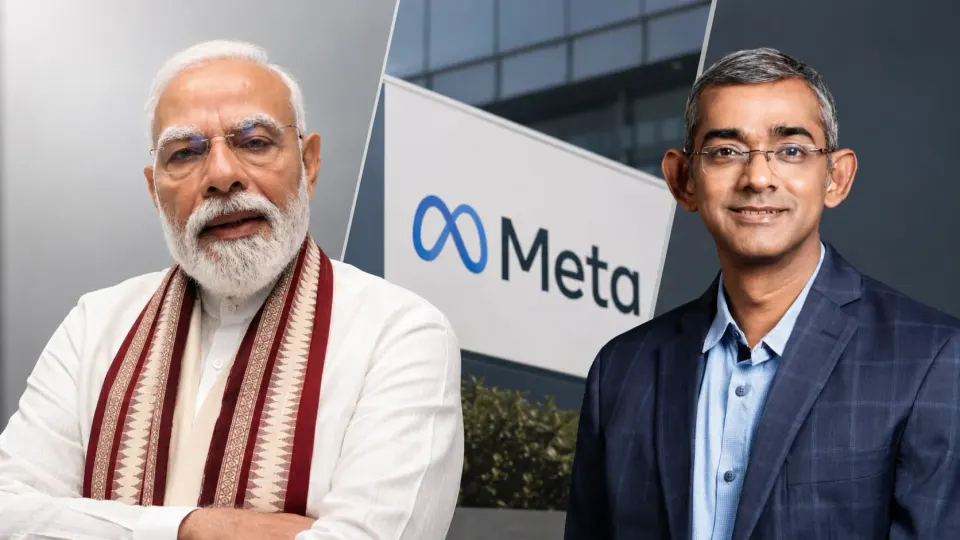
Hyderabad Cybercrime police have registered two cases naming Arun Srinivas, Meta Platforms' India head, along with the operators of several unidentified Facebook and Instagram accounts, over the alleged circulation of morphed and digitally altered content depicting Prime Minister Narendra Modi. The cases were reported on 31 July 2026.
The complaints allege the material was obscene, derogatory and misleading, and that some of it appeared to have been generated or altered using artificial intelligence. Investigators are examining possible offences under the Bharatiya Nyaya Sanhita and the Information Technology Act.
The first complaint was filed by S. Arvind Reddy, a 29-year-old businessman, who said he encountered the material while browsing Instagram. The second was filed by T. Saikiran Goud, described in reports as a member of the Telangana BJP's social media cell. Both complainants asked police to preserve electronic evidence and to seek subscriber information from Meta Platforms. One complaint separately alleges that Meta failed to remove the material promptly.
Several terms have not been disclosed. The specific sections invoked have not been made public. Nor has it been clarified whether Srinivas is named as an accused or as the company's representative for service of notice, how many accounts the cases cover, whether any takedown order preceded the complaints, or whether Meta has been served. No arrest has been reported, and Meta has not publicly responded to the cases.
The filings follow a separate dispute. A video posted from Modi's Facebook account on 23 July, addressing students during the Cockroach Janta Party agitation over NEET (UG) irregularities, became inaccessible to users in India on 28 July. Meta said the content was removed in error and restored it, with sources describing the takedown as a technical glitch. MeitY summoned the company's global public policy head over that incident.
Why It Matters
Section 79 of the Information Technology Act gives an intermediary immunity from liability for content its users post, provided it does not initiate the transmission and removes material on receiving a valid court order or government notification. That is the provision under which Facebook and Instagram operate in India. Nothing in the reported complaints alleges that Meta created the material.
Naming a country head therefore does something specific. It moves the dispute out of the platform-versus-regulator channel, where takedown notices and compliance timelines apply, and into a criminal process where an individual employee is a party.
India has been here before. In 2021, senior executives at Twitter and WhatsApp faced police notices and personal proceedings over content posted by users. The Supreme Court's 2015 ruling in Shreya Singhal read down the actual-knowledge requirement, so that an intermediary's duty to remove material is triggered by a court order or a government notification rather than by a private complaint.
The effect is procedural more than legal. Whatever the eventual outcome, a named executive answers summons, engages counsel and appears at a police station. That cost accrues regardless of whether the case survives a challenge before the High Court.
What the complaints do not establish is the fact that would actually pierce safe harbour: that Meta received a valid order to remove this specific material and did not act within the prescribed window. One complaint asserts the company was slow. An assertion is not a served order.
The Strategic Read
The market assumption changing behind this episode is that a platform's India problem is a policy problem, managed by a public policy team through ministry notices and compliance reporting. Two cases filed on private complaints in a single week suggest the channel has widened to include local police, and that the entry point is a named executive rather than a corporate entity.
What the previous model did was route pressure through MeitY. A ministry issued a notice, the company responded, a parliamentary committee occasionally called witnesses. That process is running here too. MeitY summoned Meta's global public policy head over the 23 July video, and the Parliamentary Standing Committee on Communications and Information Technology is scheduled to take up the removal on 3 August. What is new is a parallel criminal track, opened by individuals, in a state, over entirely different content.
The two tracks point in opposite directions, and that is the uncomfortable part. In the video row, Meta is faulted for removing content it should have left up. In the Hyderabad cases, it is faulted for leaving up content it should have removed. A platform cannot optimise for both. The incentive that emerges from being punished on both flanks is to over-remove — reviewing political content more conservatively and escalating decisions on prominent accounts to senior staff, which is broadly what Meta has reportedly told the ministry it will now do.
Where value is created for a platform is in predictable rules. A takedown regime with defined triggers and defined timelines is a compliance cost that can be budgeted against. Criminal exposure arising from a private complaint in any state is not, because it does not scale with policy investment. No amount of grievance-officer headcount closes it.
The largest execution risk is not this case. It is that the pattern generalises. If naming the country head becomes the default opening move for aggrieved complainants, the cost of holding a senior India role at a foreign platform rises for reasons unconnected to how well the platform is run. That cost lands on an individual, not on the balance sheet.
For daily, sharp analysis of the biggest moves in the Indian business and startup ecosystem, follow StartupFox.