

The Story
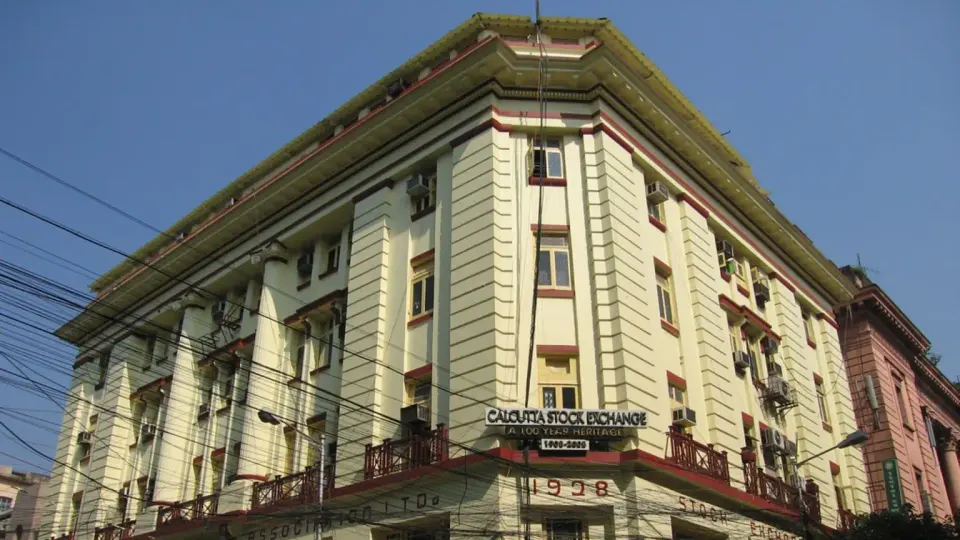
The newly elected West Bengal government has officially announced its intention to revive the Calcutta Stock Exchange (CSE), proposing state support for the 118-year-old institution in its 2026-27 budget. Finance Minister Swapan Dasgupta outlined the initiative, framing it as a critical step toward restoring Kolkata's historical legacy as a primary financial capital and linking the revival to the broader economic vision for the state.
The CSE, widely recognised as one of Asia's oldest stock exchanges, has not facilitated a single trade since April 2013, when the Securities and Exchange Board of India (SEBI) abruptly suspended its operations. The suspension followed the exchange's inability to establish or tie up with a recognised clearing corporation—a mandatory piece of market infrastructure required to settle trades and manage risk. This regulatory failure was compounded by outdated technological infrastructure and lingering governance vulnerabilities tracing back to the severe 2001 payment crisis triggered by stockbroker Ketan Parekh.
For years, the exchange faced the prospect of a permanent shutdown, recently moving toward a voluntary exit from SEBI’s regulatory framework. However, the political transition in the state has triggered a strategic reversal. Representatives from the exchange recently met with State Industry Minister Tapas Roy to secure government backing, signalling their intent to formally withdraw the voluntary exit application. To jumpstart the revival and provide immediate trading volume, the state government intends to mandate the listing of profitable public-sector enterprises (PSUs) on the platform. According to Dasgupta, the core challenge moving forward will be transitioning the exchange's remaining listed entities away from simple arbitrage and back into active trading, while navigating complex technological upgrades.
Why It Matters
The proposed resurrection of the CSE matters because it challenges the absolute geographic consolidation of India's capital markets. Over the last decade, financial gravity shifted entirely to Mumbai, with the National Stock Exchange (NSE) and Bombay Stock Exchange (BSE) absorbing all domestic liquidity after SEBI forced the closure of 17 regional stock exchanges between 2013 and 2015.
This national consolidation created highly efficient electronic markets, but it unintentionally widened the capital access gap for regional businesses. For small and medium enterprises (SMEs) in Eastern India, listing on the BSE or NSE mainboards involves prohibitive compliance costs, high minimum capital requirements, and intense competition for institutional visibility. By reviving a regional exchange, the West Bengal government intends to lower this barrier to entry, providing local companies with a cheaper, more accessible venue to raise equity without relying solely on venture capital or expensive bank debt.
Furthermore, the move is driven by severe employment and economic imperatives. A functional stock exchange acts as an anchor for a broader financial ecosystem. The state anticipates that reactivating the CSE will attract brokerage firms, merchant bankers, corporate lawyers, and wealth management services back to Kolkata. This influx is essential for driving high-value job creation and reversing the prolonged brain drain of financial professionals to the western and southern states.
The Strategic Read
The West Bengal government’s push to revive the Calcutta Stock Exchange signals a bold attempt to weaponise state policy against market monopolisation. The underlying business mechanism driving this strategy is the use of state-owned assets to generate "anchor liquidity." A stock exchange is essentially a two-sided marketplace facing a classic cold-start problem: companies will not list without active investors, and investors will not trade without liquid companies. The state plans to solve this by listing its own profitable public-sector enterprises on the CSE to unlock their value. By artificially injecting supply into the market, the government provides the necessary baseline trading volume to attract brokers and retail investors. If successful, this creates a regional capital flywheel, giving Kolkata a proprietary financial infrastructure that is semi-independent of Mumbai's dominance.
The competitive consequence of this strategy places immediate pressure on SEBI. The market regulator has spent years dismantling regional bourses to mitigate systemic risk and enforce unified, highly secure compliance standards. A politically backed attempt to reopen the CSE forces SEBI to navigate a delicate balance between supporting regional economic development and maintaining rigorous technological thresholds for national market infrastructure.
However, the strongest countercase to this revival is the brutal reality of modern exchange economics. An exchange is no longer a physical trading floor; it is a high-frequency technology company requiring hundreds of crores in cybersecurity, server infrastructure, and algorithmic trading latency management. The CSE currently possesses none of this. Even if the state injects capital to build a clearing corporation and upgrade the technology, convincing institutional investors—who demand absolute liquidity and millisecond execution—to route orders through Kolkata instead of the NSE will be exceptionally difficult. The risk is that the CSE becomes a "zombie exchange," technically open but devoid of meaningful daily volume.
The critical watchpoint over the next twelve months will be SEBI’s regulatory response to the CSE’s request to withdraw its exit application. Investors and policymakers should closely monitor whether the state government successfully allocates the necessary capital expenditure in the upcoming quarters to physically rebuild the exchange's digital infrastructure, proving this is a committed financial strategy rather than just political rhetoric.
For daily, sharp analysis of the biggest moves in the Indian business and startup ecosystem, follow StartupFox.