The Story
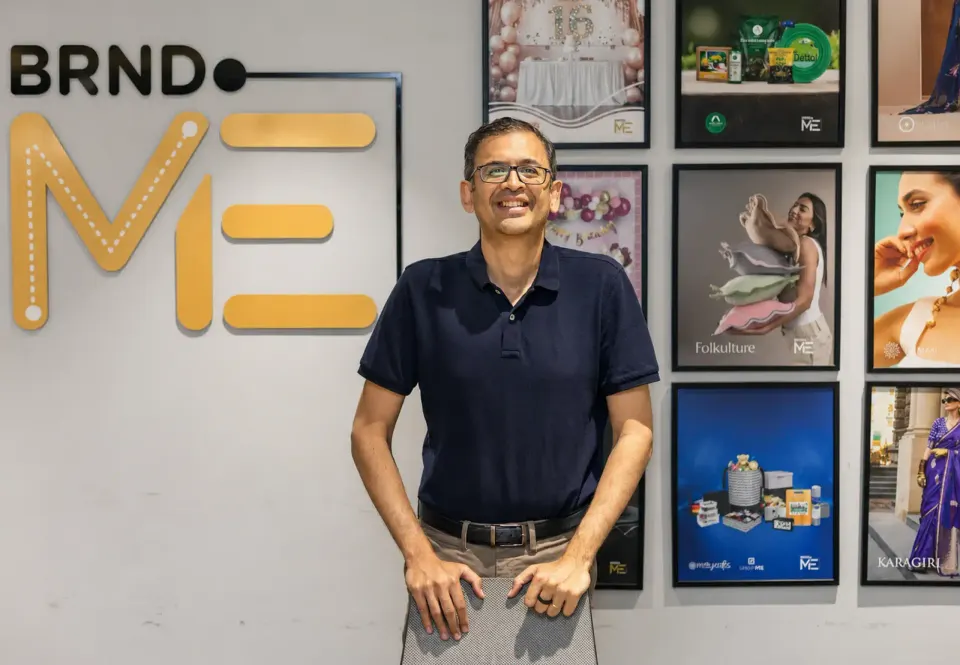
According to recent market updates and the corporate announcement, consumer brands platform BRND.ME—formerly known as Mensa Brands—has officially converted into a public company as it advances its preparations for a proposed initial public offering (IPO). Following necessary approvals from the National Company Law Tribunal (NCLT) and compliance filings with the Registrar of Companies, the entity has legally dropped "Private" from its name, operating now as Mensa Brand Technologies Limited.
The transition represents the final phase of a broader corporate restructuring effort. Earlier this year, the company completed a complex cross-border composite merger, successfully redomiciling its primary holding structure from Singapore to India within a ten-month window. Founder and CEO Ananth Narayanan stated that the conversion aligns the company with stringent public market requirements, significantly strengthening its governance and regulatory readiness. The firm is actively evaluating a domestic IPO over the next 12 to 18 months.
Founded in 2021 as a digital-first brand aggregator, BRND.ME has drastically shifted its operational focus from rapid asset acquisition to sustainable margin expansion. The company reported achieving adjusted EBITDA profitability and generating positive operating cash flow in the fiscal year 2026. It recorded an estimated revenue of ₹1,500 crore during the fiscal year and is currently operating at an annual revenue run rate of ₹1,700 crore to ₹1,800 crore.
Why It Matters
BRND.ME’s conversion to a public company matters because it highlights the structural and financial evolution required for Indian startups to access domestic public market liquidity.
The "reverse flip"—moving a corporate headquarters from a tax-favourable, light-compliance jurisdiction like Singapore back to India—is a legally exhaustive process. It frequently triggers significant capital gains tax liabilities and demands an entirely new layer of statutory reporting. By absorbing the cost of this merger and formally adopting a public structure under the Indian Companies Act, BRND.ME is signaling to institutional investors that its cap table is clean, its operational governance is institutionalised, and it is fully prepared for the scrutiny of the Securities and Exchange Board of India (SEBI). For the company, the timing is deeply tied to a recent and critical financial inflection point. The global e-commerce aggregator space was initially built on the premise of rapid top-line scale: raising immense debt to acquire multiple sub-scale brands and plugging them into a centralized supply chain. However, as global capital markets tightened and the cost of capital skyrocketed, the market brutally penalized growth without underlying margins. Aggregators that relied entirely on financial engineering found themselves incapable of funding the working capital required to run their brands. BRND.ME surviving this industry-wide contraction by intentionally stripping away non-core brands and achieving adjusted EBITDA profitability proves its operational resilience.
The Strategic Read
The structural cleanup at BRND.ME suggests a definitive maturation of the "house of brands" model in India. The underlying business mechanism here is the deliberate shift from aggressive acquisition toward intensive portfolio concentration.
Initially, aggregators operated almost like venture capital funds for consumer goods, making dozens of separate bets hoping a few would scale organically. BRND.ME’s current operating strategy demonstrates that true enterprise value lies in owning a highly concentrated cluster of category leaders. By intentionally shrinking its active portfolio from 20 brands down to roughly 10, the company structurally improves its working capital cycle, concentrates its performance marketing expenditure, and deepens its cross-border distribution moats. Building a $60 million European business around just two core brands (Majestic Pure and Botanic Hearth) is strategically far more defensible and capital-efficient than managing twenty $3 million brands scattered randomly across highly competitive domestic marketplaces.
The primary leverage point for BRND.ME is its unified corporate structure combined with its global distribution capacity. By domesticating the parent company, it gains unfettered access to the booming Indian retail investor base and highly active domestic mutual fund capital pools. Simultaneously, because the majority of its revenue is earned in strong foreign currencies (such as the US Dollar and the Euro), it benefits immensely from geographic wage and operating arbitrage, managing global consumer brands using cost-effective, India-based technology, analytics, and marketing teams.
For daily, sharp analysis of the biggest moves in the Indian business and startup ecosystem, follow StartupFox.