

 Atorie
The Story
Atorie, a US-based AI-powered fashion startup, has raised $9.5 million in a seed round with investors including a16z speedrun, Night Capital and Lightspeed Ventures' Jeremy Liew. The round was announced on 27 August 2026.
The company did not disclose a valuation or the equity diluted. Atorie sells handbags and clothing made from the same materials, and in the same factories, that high-end labels use, at a fraction of their prices, an Italian leather handbag for a few hundred dollars against the thousands a brand such as Prada or Louis Vuitton would charge. The company said the fresh capital will fund logistics, more AI tools and production.
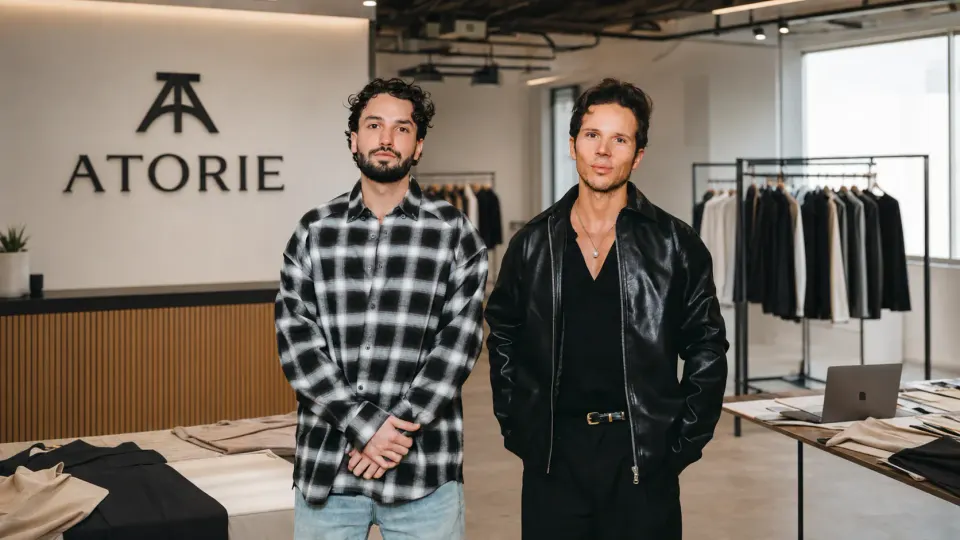
Founded in 2024 by Redouane Ramdani and Luis Angulo, Atorie operates a marketplace that connects luxury manufacturers directly with consumers. Ramdani, the chief executive, previously founded the creator platform Snipfeed, which was acquired in 2024; Angulo, the chief technology officer, is a former Google AI specialist. The company is based in the United States and works with more than 40 factories worldwide.
Ramdani frames the products as distinct from dupes, the near-identical luxury copies that have grown popular as post-pandemic price hikes drew consumer backlash against luxury brands. The items come from the same factories and use the same craftsmanship as high-end goods, he said, and described the model as slow fashion rather than fast fashion. He compared Atorie's approach to Quince, the retailer known for high-quality, low-priced goods, and said the company aims to be an alternative to Zara.
The pitch rests on a shift in luxury manufacturing. Ramdani said the best factories increasingly have their own design and product-development capabilities, rather than only manufacturing other brands' designs, which lets them develop products themselves, produce in smaller batches, and sell directly rather than depending on a handful of large brand customers who commit to big minimum orders and risk overproduction.
Atorie said it ended last year with around $5 million in sales and expects to reach an annualised run rate north of $55 million this year. Those figures are company-stated; earlier this cycle the company had cited a substantially smaller annualised run rate, and the projected jump has not been independently verified. The company said it uses AI to analyse trends, estimate demand and predict material shortages, and offers shoppers an AI agent that builds outfits, adding that it is already seeing sale referrals from platforms such as ChatGPT and Claude.
Why It Matters
Atorie is built on a simple observation about how luxury pricing works: the material and the craftsmanship of a high-end handbag account for a small share of its retail price, and the rest is brand. Its proposition is to sell the object without that markup, sourcing goods from the same Italian leather and cashmere factories that supply luxury houses, and offering them at a fraction of the price. It is aimed at a generation that has grown skeptical of paying luxury prices but is also tired of the low quality and environmental cost of fast fashion.
The business is a marketplace connecting those manufacturers directly to consumers. Rather than hold a brand's designs and markups, Atorie lets factories that increasingly design their own products sell them to shoppers through its platform, taking on demand generation, merchandising and logistics. Revenue comes from that intermediation, and the company's stated growth from around $5 million in sales suggests the direct-from-factory pitch is finding buyers.
The cost structure is that of a commerce operation with a technology layer on top. The heavy costs are the ones the funding names, logistics and production, because moving physical goods reliably is the hard part of any marketplace selling real objects. On top sits an AI layer the company leans on heavily: tools to analyse trends, estimate demand and warn factories of material shortages, plus a consumer-facing shopping agent that assembles outfits. That software is meant to reduce the overproduction that plagues the industry and to personalise the buying experience.
However, the reported growth trajectory cannot yet be taken at face value. The roughly $5 million in sales last year is a real if small base, but the projected annualised run rate north of $55 million is a company estimate, well above the figures Atorie cited earlier in the same cycle, and a run rate is not the same as revenue booked over a year. Whether the model sustains that pace, and whether the same-factory positioning holds up against the luxury brands it undercuts, are the questions the seed round leaves open.
The Strategic Read
The market assumption changing behind this round is that the value luxury brands capture, the enormous gap between what a bag costs to make and what it sells for, is becoming contestable as the factories that make those bags gain the ability to sell directly. Atorie is a bet that manufacturers, not brands, are the ones with the durable asset, the materials, the craftsmanship, the production, and that a platform aggregating them can offer consumers the object without the logo tax. Quince has already shown there is real demand for that proposition.
The timing rests on a genuine structural shift, and that is the strongest part of the case. Ramdani's observation that top factories increasingly do their own design and want to diversify beyond a few large brand customers is credible, and it is exactly the condition under which a manufacturer-to-consumer marketplace can exist. If factories are motivated to sell directly to escape the overproduction risk that big-brand minimum orders impose, a platform that gives them a channel and handles demand, logistics and merchandising is solving a real problem for the supply side as much as the demand side.
The revenue story is where scrutiny belongs, because the numbers point in two directions at once. Around $5 million in sales last year is a real, modest base; a projected annualised run rate north of $55 million this year would be a more-than-tenfold jump, and the company's own earlier figures this cycle were smaller still. Rapid growth off a small base is plausible for a viral, dupe-adjacent commerce brand, but a run rate is an annualised snapshot, not booked revenue, and fashion demand is seasonal and trend-driven in ways that make such extrapolations fragile. The AI layer, demand prediction, trend analysis, an outfit-building shopping agent, is real and useful, but most of it is operational tooling rather than defensible technology, and rivals can build the same.
The positioning question is the one that decides durability. Atorie insists its goods are not dupes because they share factories and materials with luxury brands, and that distinction is doing a lot of work: it is what separates the company from the legal and reputational hazards of the counterfeit-adjacent market, and what lets it claim slow-fashion credibility. But the same-factory, same-material pitch is hard for a consumer to verify and easy for a luxury house to dispute, and the brands whose margins Atorie is attacking have both the legal resources and the supplier relationships to push back. The largest execution risk is that a business built on selling the luxury object without the luxury brand sits permanently one lawsuit, or one supplier's exclusivity clause, away from disruption, and that the $55 million the company projects arrives, if it arrives, into exactly that contested space.
For daily, sharp analysis of the biggest moves in the Indian business and startup ecosystem, follow StartupFox.