


The Story
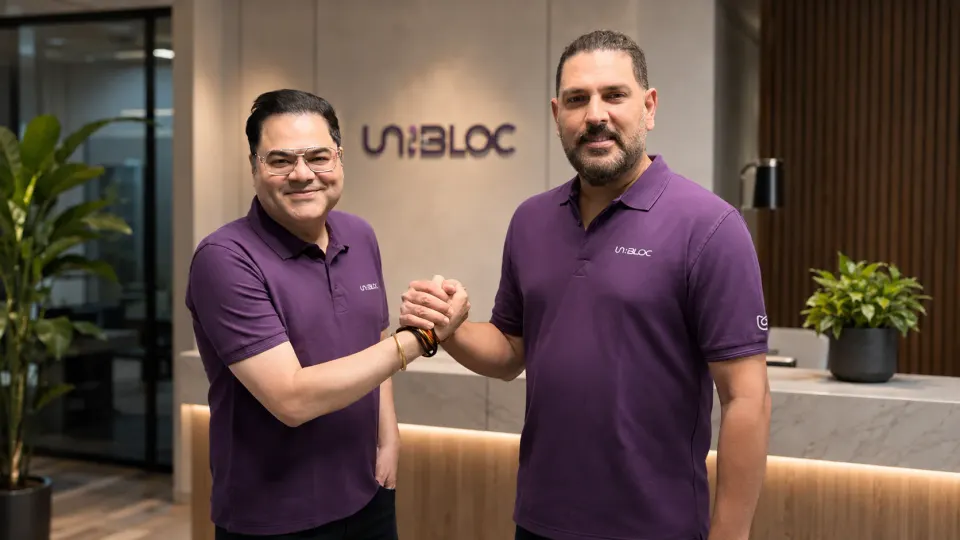
Cricketer and investor Yuvraj Singh has joined UN:BLOC, a healthtech venture floated earlier this year by Healthians founder Deepak Sahni, as an investor and a member of its founding team. The development was reported on 3 August 2026.
Almost everything that would let the investment be measured is undisclosed. Neither Singh nor UN:BLOC has stated the amount invested, the stake acquired, the valuation at which the money went in, whether the capital is cash or partly consideration for the founding-team role, or what operating responsibility the role carries. The company has also declined to describe its product, its technology stack or its launch timeline.
The startup is in stealth. Reporting on the day of the announcement said the cheque is expected to form part of a pre-launch funding round, sourced to people familiar with the matter rather than to the company, and that UN:BLOC is in discussions with a group of founders, healthcare operators and business executives who may join its cap table in the coming weeks. None of those participants has been named, and no round has been declared closed.
The same unnamed sourcing describes UN:BLOC as building an artificial-intelligence-led platform for chronic disease care spanning early diagnosis, treatment and long-term management, and as targeting the root cause of chronic illness rather than lifelong medication. UN:BLOC itself has confirmed none of this.
This is the second time the two have worked together. Singh backed Healthians in 2015 through his early-stage vehicle YouWeCan Ventures. Sahni founded Healthians in 2014 and stepped back from day-to-day responsibilities there in January 2026.
Why It Matters
A celebrity name on a cap table is a distribution asset, not an operating one, and the distinction matters more in chronic care than in most categories.
Chronic disease management is a subscription business in economic shape. The company carries the cost of clinician time, diagnostics, device or app engineering and continuous patient follow-up, and it recovers that cost only if the patient stays enrolled long enough for the lifetime value to exceed acquisition and servicing cost. Retention, not sign-ups, is where the model lives or dies. Indian consumers have repeatedly proved willing to buy a one-off diagnostic test and unwilling to pay a recurring fee for care management they cannot immediately feel working.
Singh's usefulness sits at the front of that funnel. He gives a stealth brand reach and a credibility shortcut in a category where trust is the binding constraint, and his own cancer treatment and the YouWeCan foundation give the association more substance than a typical endorsement deal. That advantage decays. Awareness converts once, then the business has to hold the patient on clinical outcomes.
Sahni's record cuts both ways. Healthians solved a logistics problem, moving phlebotomy to the doorstep at scale, which is an execution achievement rather than a clinical one. Building a platform that claims to reverse the trajectory of a chronic condition is a materially different problem, and nothing announced so far establishes that UN:BLOC has solved it.
The Strategic Read
The market assumption being underwritten here is that Indian patients will pay for chronic care as an ongoing relationship, and that artificial intelligence has lowered the cost of delivering that relationship enough for the unit economics to work at consumer price points.
The previous generation of Indian healthtech bet on access. Diagnostics platforms, teleconsultation and e-pharmacy all took an existing transaction and moved it closer to the patient. Those models were legible because the transaction already existed and the value was a discount or a convenience. Chronic care management has no such incumbent transaction. The company has to create the willingness to pay before it can capture it, and the competing product is a ₹200 monthly prescription the patient is already tolerating.
Where value could be created is real. Diabetes, hypertension and cardiac conditions represent an enormous and largely unmanaged Indian burden, and a platform that measurably reduced medication dependence would have pricing power that no diagnostics business ever had. The claim is also the hardest kind to substantiate. Reversal or root-cause resolution requires longitudinal clinical evidence, not user testimonials, and the evidence needed is exactly what a stealth startup with no launched product cannot yet have.
The moat question is unresolved because there is nothing public to assess. An AI care model built on standard clinical protocols and off-the-shelf foundation models is replicable within a funding cycle. What would not be replicable is a proprietary longitudinal dataset on Indian chronic patients, and that takes years of enrolled cohorts to accumulate.
The largest execution risk is that the company launches into a category where several well-capitalised entrants are already spending on the same awareness problem, and finds that celebrity-driven acquisition fills the top of the funnel with patients who churn before the clinical model has had time to show a result.
For daily, sharp analysis of the biggest moves in the Indian business and startup ecosystem, follow StartupFox.