
 Vedanta
The Story
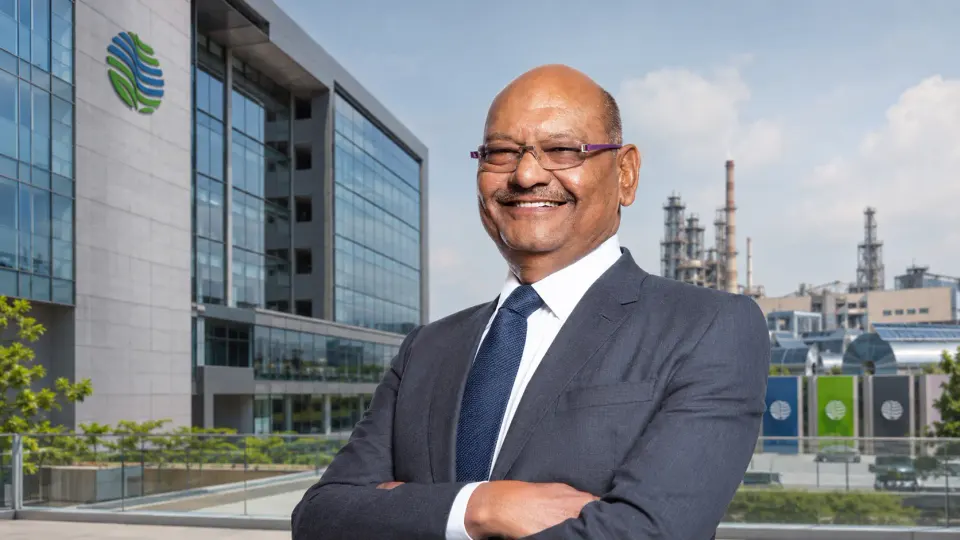
Following the landmark demerger and listing of four new entities from its core conglomerate, Vedanta Chairman Anil Agarwal has stated that each of the group's five distinct businesses has the potential to become a $100 billion company.
The restructuring, described by Agarwal as a transformational moment for the group, has given each business an independent identity, management structure, and distinct growth roadmap. Under the arrangement, existing shareholders received shares in the newly listed companies, positioning them to benefit from long-term value creation and regular dividends as the entities scale independently.
To support the aggressive valuation targets, Agarwal outlined massive capacity expansions across the portfolio.
The group plans to scale its power generation capacity to 50,000 MW, focusing on its existing thermal assets while exploring future opportunities in nuclear energy. In the metals and energy verticals, Vedanta aims to expand its steel production from 4 million tonnes to 15 million tonnes and increase its oil and gas output to 1 million barrels per day over time.
Why It Matters
The demerger solves one of the most persistent problems in public markets: the holding company discount. For years, Vedanta’s high-performing, high-margin businesses—such as its low-cost aluminium operations—were financially entangled with more capital-intensive or cyclical divisions. By unbundling the conglomerate, the group is forcing the market to price each asset independently based on its specific sector economics rather than applying a blended, conservative multiple to the entire enterprise.
The capacity expansion targets are specifically calibrated to intersect with India’s structural macroeconomic deficits. Producing 1 million barrels of oil per day would significantly alter the domestic supply equation in a country that relies heavily on expensive crude imports. Similarly, scaling power capacity to 50,000 MW and steel to 15 million tonnes positions the separate entities to directly capture the massive capital expenditure boom currently underway in Indian infrastructure, real estate, and manufacturing.
The Strategic Read
The aggressive $100 billion valuation target for each entity suggests that Vedanta’s leadership views the demerger not just as a structural cleanup, but as the foundation for an unprecedented commodities supercycle in India. The underlying mechanism here is the separation of cash flows and the decentralisation of leverage.
By giving each entity its own balance sheet and independent board, Vedanta gains significant strategic leverage in capital markets. The new entities can secure project financing, issue sector-specific debt, or execute joint ventures tailored to their specific gestation periods. A nuclear power project, for instance, requires a drastically different capital structure and investor profile than a downstream steel facility. By stripping away the conglomerate structure, each company can optimise its cost of capital. The competitive consequence of this scale is substantial. If Vedanta achieves 15 million tonnes in steel and 1 million barrels per day in oil, it will consolidate its position as an unavoidable private-sector supplier for India's industrial backbone. This level of domestic production capacity shifts bargaining power away from importers and gives the individual Vedanta entities immense pricing leverage within the domestic supply chain.
The strongest countercase to this $500 billion aggregate vision is the highly cyclical nature of commodities combined with the realities of debt servicing. Capital expenditure for heavy industries is largely fixed, but the revenue from metals, oil, and steel fluctuates wildly based on global macroeconomic conditions and foreign exchange rates. If global commodity prices soften while these entities are aggressively deploying capital to reach their capacity targets, the separated companies will no longer have the cash flow of the broader, diversified group to absorb the shock, leaving highly leveraged individual entities vulnerable.
For daily, sharp analysis of the biggest moves in the Indian business and startup ecosystem, follow StartupFox.