
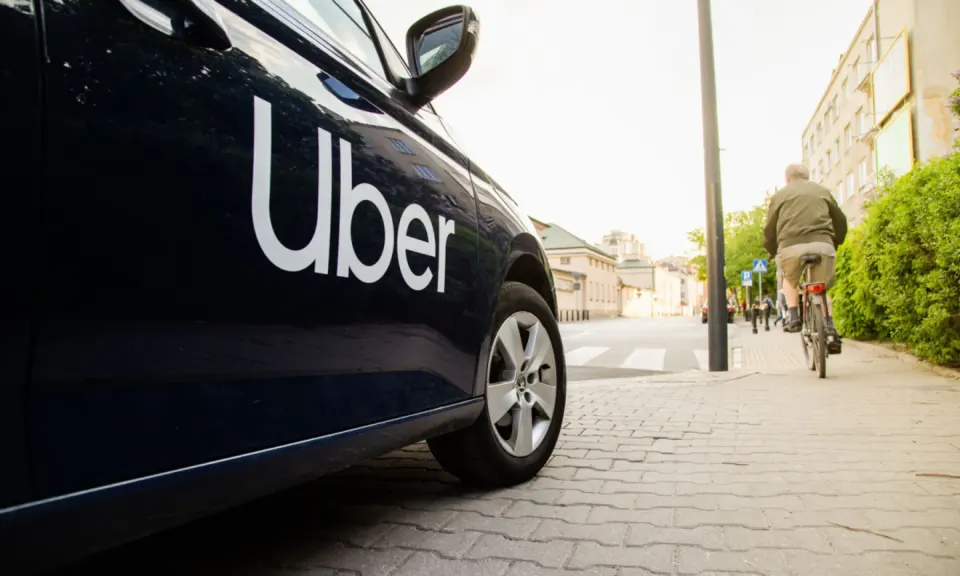
 Uber
UberThe Story
Shareholders of Uber Technologies have filed a derivative lawsuit in a San Francisco federal court against the company's board of directors and senior management, including Chief Executive Officer Dara Khosrowshahi. Led by the Police and Fire Retirement System of the City of Detroit, the complaint accuses Uber’s leadership of letting the ride-hailing giant cut corners on compliance to accelerate business growth, ultimately exposing the company to massive legal liability.
The core of the lawsuit alleges that the board ignored repeated internal and external warnings regarding Uber's failure to address sexual abuse and harassment by its drivers. As of June 1, 2026, Uber faced 3,571 active lawsuits in a multidistrict litigation (MDL) overseen by the San Francisco court from passengers alleging sexual misconduct by drivers. The complaint characterizes Uber as a "serial compliance offender" whose reputation has been irredeemably damaged by negative media coverage. It further claims the board was repeatedly informed that fewer than 40% of users believe the company takes safety seriously. Beyond the sexual assault claims, the lawsuit cites two government actions filed last year: one accusing Uber of routinely refusing service to disabled passengers—including those with service animals or stowable wheelchairs—and another alleging deceptive billing and cancellation practices within its Uber One subscription service.
An Uber spokesperson rejected the allegations, stating that the lawsuit "ignores important facts and is based on misleading, false narratives from other meritless lawsuits that we have already addressed publicly and in the courtroom". The derivative lawsuit seeks to compel the directors and executives to reimburse Uber for alleged breaches of fiduciary duties and violations of securities law, with any recovered proceeds benefiting the company and its shareholders.
Why It Matters
This derivative lawsuit matters because it exposes the severe, compounding financial cost of prioritizing rapid scale over operational compliance in the gig economy. For years, mobility platforms globally treated driver background checks, safety monitoring, and compliance frameworks as expensive friction that slowed down driver onboarding and geographical expansion. By allegedly skimping on robust vetting mechanisms—such as in-person interviews, biometric fingerprinting, and comprehensive FBI database checks—platforms like Uber prioritized immediate liquidity over long-term risk mitigation. The 3,571 active federal lawsuits are not merely a public relations crisis; they represent an existential balance sheet threat. With recent bellwether trials resulting in multimillion-dollar jury verdicts against the company—including an $8.5 million verdict in Arizona earlier this year—the aggregate liability across thousands of cases could easily run into the billions.
Furthermore, the legal strategy employed by the Detroit pension fund represents a significant escalation. In a derivative lawsuit, shareholders seek to hold the board members and executives personally and financially responsible for failing in their oversight duties. This moves the legal pressure beyond standard corporate fines, threatening the directors directly for their alleged governance failures and forcing them to internalize the cost of the company's damaged reputation.
The Strategic Read
The shareholder lawsuit against Uber signals that the tolerance for "regulatory arbitrage" within the global gig economy has structurally collapsed.
The underlying business mechanism being challenged here is the risk-transfer paradox of ride-hailing. Platforms like Uber built their unit economics on the premise that drivers are independent contractors, theoretically shielding the corporate software entity from direct liability for driver behavior.
However, when systemic safety failures occur at scale, courts and institutional investors are increasingly piercing this shield. They are holding the platform liable not as a mere software intermediary, but as a transportation provider that failed to implement necessary product safety features. The competitive consequence of this dynamic is critical for the Indian mobility and quick-commerce sectors. Domestic giants operate under similar independent-contractor models and frequently face criticisms regarding the depth of their background checks and emergency response protocols. If a globally capitalized leader like Uber is facing a full-scale shareholder revolt over safety and compliance blind spots, domestic platforms must view this as a leading indicator. Regulators and investors in India will increasingly demand that safety and compliance be treated as a core capital expenditure, not a disposable afterthought.
However, the strongest countercase to this derivative lawsuit succeeding is the exceptionally high legal burden required to prove that a corporate board knowingly breached its fiduciary duties. Current CEO Dara Khosrowshahi was brought in explicitly to overhaul the toxic corporate culture established during Uber's aggressive early expansion. The lawsuit itself acknowledges that he has been less brazen in pushing regulatory limits than his predecessor. Proving that the current board intentionally ignored safety warnings to boost profits—rather than simply struggling to perfectly manage an inherently risky, decentralized global workforce of millions of independent contractors—remains notoriously difficult in corporate law.
For daily, sharp analysis of the biggest moves in the Indian business and startup ecosystem, follow StartupFox.