
The Story
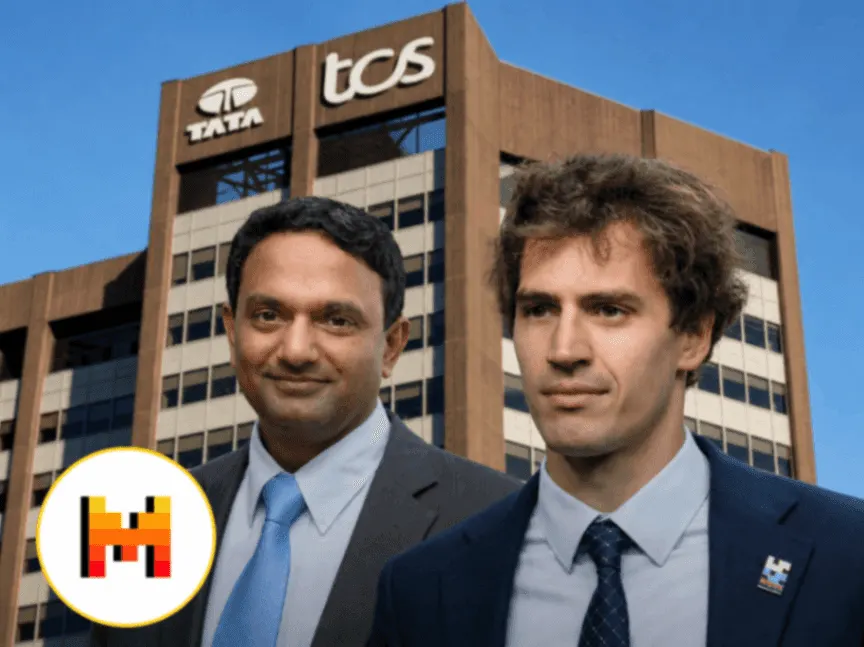
Tata Consultancy Services (TCS) has officially entered a strategic partnership with French artificial intelligence startup Mistral AI to build and deploy custom generative AI solutions for global enterprises. The collaboration aims to leverage Mistral AI’s cutting-edge language models—known for their efficiency and open-weight architectures—alongside TCS’s deep domain expertise and vast cloud infrastructure services. Announced amid growing corporate demand for domain-specific AI models, the partnership will focus on helping large-scale enterprise clients design, fine-tune, and deploy bespoke AI applications. By combining Mistral's advanced computational architectures with TCS's massive engineering workforce, the alliance seeks to address critical corporate requirements around data sovereignty, computational cost optimization, and localized regulatory compliance across international markets.
Why It Matters
To understand the business logic behind this alliance, one must look at the shifting economics of enterprise AI deployment. During the initial wave of generative AI adoption, large enterprises rushed to plug into proprietary, closed-source models managed by dominant cloud conglomerates. However, corporate buyers quickly hit severe operational friction: skyrocketing API token expenses, unpredictable latency, and intense data privacy risks associated with sending proprietary corporate data to external servers. Mistral AI offers a powerful alternative through its highly optimized, high-performance open-weight models that can be hosted natively within an enterprise's secure cloud or on-premise infrastructure. TCS acts as the critical deployment engine here. Legacy corporations possess decades of unstructured internal data but lack the specialized machine learning engineers needed to clean datasets, execute fine-tuning protocols, or set up robust retrieval-augmented generation (RAG) pipelines. TCS can bridge this engineering gap at scale, using Mistral's resource-efficient architectures to build tailored systems that run at a fraction of the compute costs required by traditional heavy foundational models.
The Strategic Read
This partnership signals a major shift in how global system integrators are positioning themselves in the software layer. For decades, Indian IT services giants grew by deploying and maintaining third-party enterprise resource planning (ERP) systems and cloud migrations. In the era of automation, the battleground has shifted to who controls the implementation of specialized corporate intelligence. By anchoring its generative AI strategy to open-weights innovators like Mistral, TCS reduces its dependency on dominant cloud providers, giving it greater pricing flexibility and architectural freedom when bidding for multi-million dollar digital transformation contracts. For competitors like Infosys, Wipro, and Cognizant, this move accelerates the race to lock down sovereign AI partnerships. More broadly, it underscores a growing trend where global enterprise buyers are moving away from monolithic, one-size-fits-all commercial models in favor of flexible, localized network architectures that protect data ownership and optimize long-term return on technology investments.
For daily, sharp analysis of the biggest moves in the Indian business and startup ecosystem, follow StartupFox.