

The Story
QpiAI has raised ₹50 crore in debt from InnoVen Capital. The Bengaluru quantum computing company's board approved the issue of 5,000 non-convertible debentures with a face value of ₹1 lakh each, according to its filing with the Registrar of Companies. The debentures carry an annual coupon of 13.85 percent and mature on 1 December 2028. The company has not said how it will use the money.
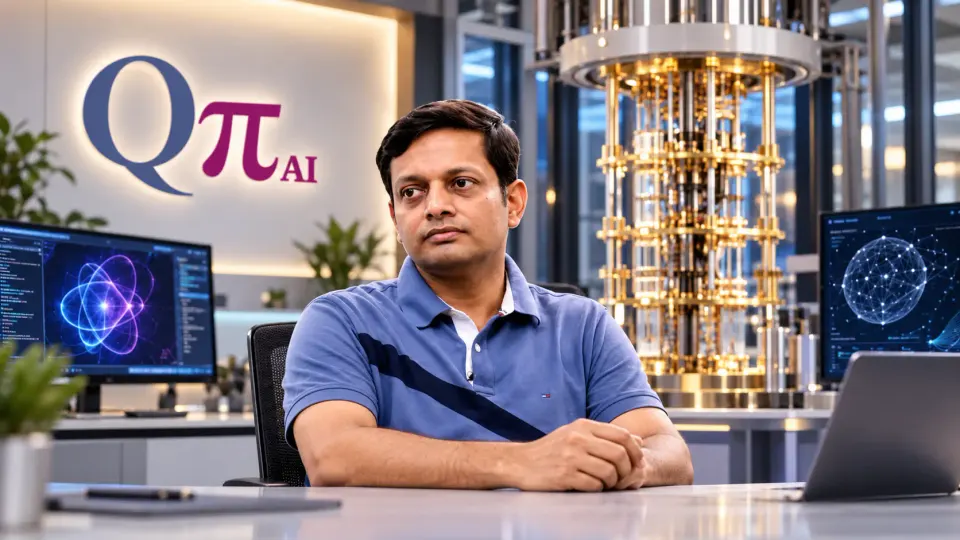
Nagendra Nagaraja founded the company in 2019. It builds superconducting quantum computers and the software around them, alongside AI products, for applications including drug discovery, manufacturing, finance and materials science.
In April 2025 it launched QpiAI-Indus, a 25-qubit system described as India's first full-stack superconducting quantum computer, developed under the National Quantum Mission. It has since fabricated a 64-qubit processor, Kaveri, unveiled in November 2025 with commercial availability targeted for late 2026, as well as an eight-qubit system, QVidya, and a nine-qubit processor, Yukti, based on its own variation of fluxonium technology. Its roadmap aims for 1,000 qubits by 2030.
In August it opened a quantum chip foundry in Bengaluru to handle the full manufacturing process, from lithography and etching to assembly and packaging, after concluding that existing foundries could not make the devices it needs. Nagaraja has said the company has put about $20 million to $25 million into the facility and expects to invest another $10 million to $15 million.
QpiAI raised $32 million, about ₹279 crore, in a Series A in July 2025 co-led by Avataar Ventures and the National Quantum Mission, at an estimated valuation of around ₹2,050 crore. It was the first company backed through the mission's startup programme and is one of eight startups selected under it. It has also received backing from the Small Industries Development Bank of India.
It has not yet filed FY26 accounts. In FY25 it reported operating revenue of about ₹2 crore and a loss of ₹16.67 crore.
Why It Matters
Venture debt is usually lent against revenue. A software company with predictable subscriptions borrows to extend its runway between equity rounds, and the lender takes comfort from cash arriving every month. QpiAI's FY25 operating revenue was about ₹2 crore. A year's interest on this debt, 13.85 percent of ₹50 crore, is roughly ₹6.9 crore, more than three times that.
So the lender is not underwriting quantum revenue. It is underwriting the backers: a $32 million Series A co-led by Avataar Ventures and the Government of India's National Quantum Mission, a valuation estimated at around ₹2,050 crore, and the expectation that a larger equity round will arrive before the debentures mature. That is a legitimate basis for lending to a capital-intensive company. It also means repayment depends on the next round rather than on the business. If that round comes on time and at a higher price, the debt will have been cheap. If it does not, a 13.85 percent obligation falls due with little revenue beside it.
Why a company in this position borrows at all is visible in the foundry figures. Nagaraja has said QpiAI has spent about $20 million to $25 million on its chip fabrication facility and expects to spend another $10 million to $15 million. Against a $32 million Series A, that is most of the equity before salaries, cryogenics and research. The company has not tied this debt to the foundry, but the arithmetic explains why it needs capital now, between rounds.
Why it built a foundry is the core of its strategy. Superconducting qubits are made with processes general-purpose chip fabs do not offer, and the leading companies using this approach, including IBM and Google, fabricate their own. Owning the fab lets QpiAI iterate on its designs without waiting for anyone, which matters when progress between hardware generations is measured in fabrication cycles. It also turns a research company into a manufacturer with heavy fixed costs, which is what makes this debt both understandable and consequential.
The Strategic Read
Start with the choice of instrument. At the estimated July 2025 valuation of around ₹2,050 crore, raising ₹50 crore of equity would have cost QpiAI roughly 2.4 percent of the company. Debt costs nothing in ownership and 13.85 percent a year in cash. Choosing it is a bet that the company will be worth meaningfully more at its next round, once Kaveri is commercially available and the foundry is producing, so that selling shares now, ahead of those milestones, would have been the more expensive option. That is a reasonable bet for a founder who believes the milestones are close, and a costly one if they slip.
The timing is the part to watch. The debentures mature in December 2028. QpiAI's headline target of 1,000 qubits is set for 2030, and the National Quantum Mission's own goal is 50 to 1,000 physical qubits over eight years. The debt falls due well before the technology is expected to reach the scale at which revenue could plausibly service it, so the bridge has to reach another equity round, a government contract, or both.
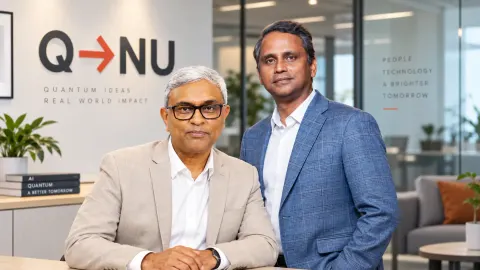
That makes the state the most important party in this story. The National Quantum Mission co-led QpiAI's Series A, QpiAI was the first company backed through its startup programme, and the mission's targets define what Indian quantum hardware is being built toward. Last month's QNu Labs round showed the same pattern in quantum communication, with the mission funding the company, setting the timetable and anchoring the market. For QpiAI, that relationship is effectively part of the collateral, and a government-linked round or procurement order is a more likely source of repayment than any private customer.
It also changes how to read the qubit numbers. Twenty-five and 64 qubits are not frontier counts by global standards; IBM's processors run well beyond them. But qubit count alone says little about usefulness. Error rates, coherence and how many reliable logical qubits can be built from the physical ones decide whether a machine can do anything a classical computer cannot, and those figures have not been independently benchmarked for QpiAI's systems. India's case for building its own hardware is not that it will lead on qubit count. It is that a country without domestic fabrication depends on someone else's machines for a technology with national security implications, and a sovereign foundry is the precondition for everything that follows.
Seen that way, ₹50 crore at 13.85 percent is a small, expensive instrument attached to a large and slow strategic bet. The interest is real money for a company of this revenue, and the next eighteen months, Kaveri's commercial release and the foundry's first output, will decide what the next round is priced at.
For daily, sharp analysis of the biggest moves in the Indian business and startup ecosystem, follow StartupFox.