


The Story
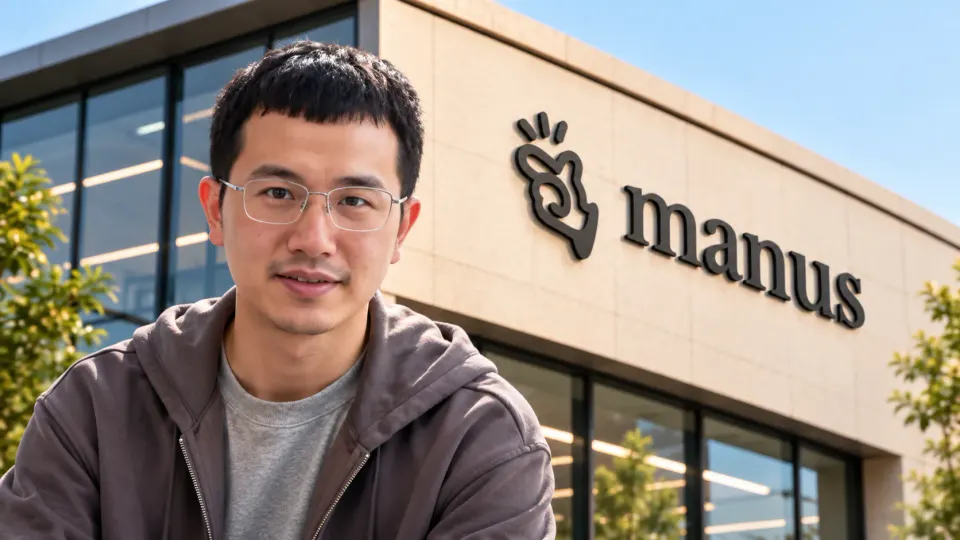
Butterfly Effect, the company behind the AI agent Manus, has raised more than $500 million in a round led by Boyu Capital and IDG Capital, with existing investors Tencent, HSG, formerly Sequoia China, and ZhenFund participating. It is the company's first round since its acquisition by Meta was unwound. It did not disclose a valuation; Manus was reported in September to be in talks to raise $500 million at a valuation of about $4 billion, roughly twice what Meta had agreed to pay. Part of the money will go into hiring in China and abroad, and the company has said it is forming teams to develop products for the Chinese domestic market.
Manus launched in early 2025 with a general-purpose AI agent that carries out multi-step tasks on a user's behalf, and drew wide attention after a demo went viral. It was developed in China and moved its staff and headquarters to Singapore in mid-2025 after raising money from US investors. By December it had reached about $100 million in annualised revenue, roughly eight months after launch.
Meta announced it would acquire Manus at the end of December 2025, in a deal reported to be worth more than $2 billion, and began integrating its engineers and technology. In January, Chinese authorities said they would examine the deal. On 27 April, China's National Development and Reform Commission said it would prohibit foreign investment in the Manus project and required the companies to withdraw the transaction. Beijing also reportedly restricted overseas travel by two of the company's co-founders.
In August, Manus said it would operate independently again and would delete some user data created on or after 29 December 2025 to separate its systems from Meta's and comply with regulatory requirements in certain jurisdictions. It has since resumed independent operations, and the two co-founders reported to have been barred from leaving China appeared at a Manus product launch in Singapore in September.
Its annualised revenue was reported in June to have reached between $400 million and $500 million.
"The immediate task for Manus now is proving scale, profitability and regulatory alignment," said Han Lin, China country director at The Asia Group.
Why It Matters
Manus did what many Chinese-founded AI companies have done to reach global markets. It moved its people and its headquarters to Singapore, took money from US investors and then agreed to sell itself to an American technology giant. Beijing's answer was that none of that changed where the company came from.
The decision is the significant part. Governments routinely block foreign takeovers of companies on their own soil, and the United States has done so for years through its foreign investment reviews. China's planning agency went further: it prohibited foreign investment in a company that had already relocated abroad, and ordered a signed deal reversed after integration had begun. The message to Chinese founders is that moving offshore does not take their technology, their teams or their companies outside Beijing's reach, least of all in AI, which China treats as strategic.
That changes the calculation for a whole category of companies. A large share of the world's AI researchers were educated in China, and a growing number of AI applications are built by founders who trained there. The route many took, relocating to Singapore or elsewhere to raise international money and sell to global customers, was partly a way of staying acquirable by Western buyers. If a sale to a US company can be unwound by Chinese regulators, those companies are worth less to Western acquirers, and more of their future depends on Chinese capital and Chinese markets.
Manus's new round shows that shift in practice. The leads are Boyu Capital and IDG Capital, alongside Tencent, HSG and ZhenFund, and the company is building teams for the Chinese domestic market. A company that set out to be global has, within a year, had its ownership decided by geopolitics in both directions.
The Strategic Read
Commercially, the block may have done Manus little harm. Its annualised revenue was reported at about $100 million in December and at $400 million to $500 million by June, and the valuation it was reported to be seeking is roughly double Meta's price. On those figures the company grew faster during a regulatory fight than most AI applications grow in calm conditions, and investors paying more than Meta did are betting that the growth continues.
The harder questions sit underneath. Manus builds its agent on top of foundation models from other companies, and agents that run long, multi-step tasks consume a great deal of computing for every user. Revenue growing fourfold shows that customers want the product. It says nothing yet about the margin left after paying for the models and the computing that serve it, which is why profitability sits alongside scale as the immediate test.
Model access is the second question, and geopolitics makes it sharper. Several US AI developers have restricted access for companies controlled from China, and a Manus backed by Chinese capital and building for the Chinese market will have to think carefully about which models it relies on in which markets. Chinese models have improved quickly, which lowers the risk, but an agent's quality rests on the model beneath it, and switching is never free.
The separation also carried costs. Manus deleted user data created after the deal to untangle its systems from Meta's, and Meta has lost a team and a product it had paid for and begun absorbing, at a time when it is spending heavily to strengthen its position in AI.
The precedent matters more than this company. Every Chinese-founded AI startup that has moved abroad, and every Western company considering buying one, now knows that Beijing can treat a completed acquisition as reversible. Manus has its money and its independence back. What it has lost is the option of being owned by anyone outside China, and that is a constraint the rest of the category will now have to price in.
For daily, sharp analysis of the biggest moves in the Indian business and startup ecosystem, follow StartupFox.