
 Telegram
The Story
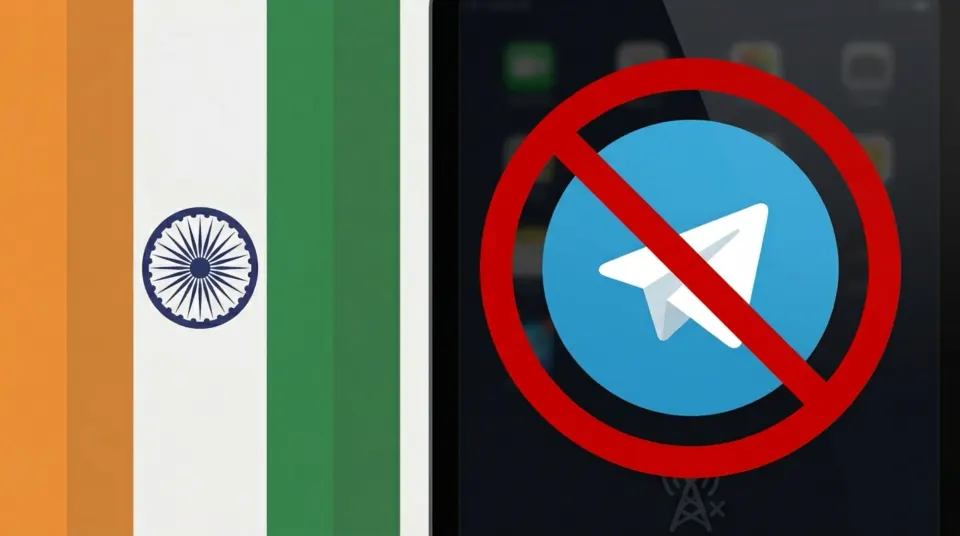
The Ministry of Electronics and Information Technology (MeitY) has temporarily restricted access to the messaging application Telegram in India until June 22, 2026. Additionally, the government has directed the platform to disable its message-editing feature for previously posted messages across the country until June 30, 2026.
The directives, executed under Section 69A of the Information Technology Act, 2000, follow formal recommendations from the National Testing Agency (NTA) and the Department of Higher Education. The unprecedented platform-wide action aims to secure the National Eligibility cum Entrance Test (NEET) UG 2026 re-examination, scheduled for June 21, 2026, against organized cheating networks operating on the app.
According to the NTA, the measure became necessary after standard enforcement actions proved insufficient. Over the past several weeks, the Indian Cyber Crime Coordination Centre (I4C), operating under the Ministry of Home Affairs, alongside state police departments in Bihar, Gujarat, and Rajasthan, secured the takedown of numerous Telegram channels, groups, and bots. In one instance, the Ahmedabad City Cyber Crime Branch arrested an inter-state gang operating eight channels, tracking financial transactions worth approximately ₹1.5 crore. However, as new channels continuously emerged demanding sums ranging from thousands to lakhs of rupees for purported access to the paper, the testing agency sought a broader blackout.
Why It Matters
The NTA is operating under immense public and political scrutiny following the cancellation of the original May 3 examination over widespread paper leak allegations, necessitating an unimpeachable environment for the 22 lakh candidates taking the re-test.
The core problem the government is attempting to solve is not just the distribution of leaked material, but the structural weaponisation of Telegram's specific product architecture. According to the NTA, the platform's message-editing feature allows channel administrators to edit an innocuous message that was posted prior to the exam, replace its attachments with a PDF of the actual question paper after the exam has concluded, and crucially, retain the original send-time stamp.
The Strategic Read
The platform-wide block and the highly specific feature-level mandate signal a dramatic escalation in India's technology regulation framework. The Indian state has effectively moved from individual content moderation to structural product intervention.
The underlying mechanism here is the supremacy of sovereign public order over global software uniformity. By issuing a legally binding directive to disable a specific button within a messaging app, MeitY is telling global technology platforms that if their core functionalities inadvertently facilitate domestic fraud or public order disruptions, the state will mandate those features be switched off within its borders.
Leverage shifts entirely to the government. Telegram, which built its user base on the premise of privacy, encryption, and operational independence, is now forced into complex jurisdictional compliance. If the platform refuses to alter its global codebase to geofence the edit feature for Indian users, it risks a permanent ban under Section 69A. Conversely, if it complies, it proves that its technical infrastructure can be bent to accommodate local regulatory demands, inviting similar requests from other jurisdictions globally.
However, the strongest countercase to this regulatory strategy is the dangerous precedent it establishes for digital rights and business continuity. Section 69A of the IT Act was designed to be invoked in the interest of India's sovereignty, integrity, defence, security, or public order. Utilising this powerful national security tool to prevent cheating in a medical entrance exam significantly lowers the threshold for internet censorship. If an examination justifies a sweeping blackout of a major communication network, the economic risk for businesses relying on digital platforms increases exponentially, as the state may similarly justify blackouts during protests, local elections, or other non-security-related civic events.
For daily, sharp analysis of the biggest moves in the Indian business and startup ecosystem, follow StartupFox.