

The Story
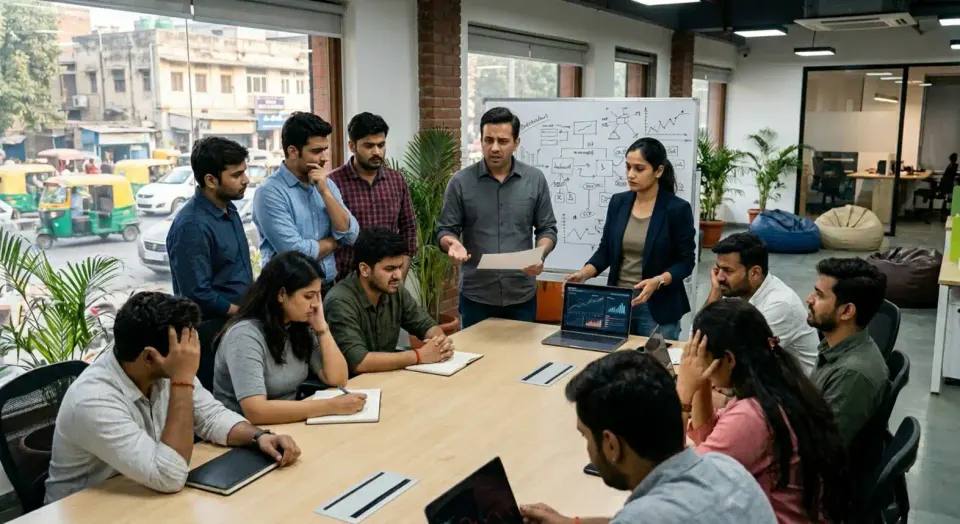
A bizarre corporate crisis at a Delhi-based tech startup has ignited an intense debate across the Indian startup community after management demanded a blanket 20% to 30% salary reduction from its entire workforce. The drastic measure stems from a critical software testing error committed by a single employee, which reportedly botched a major project for a multinational client and resulted in a Rs 2 crore financial hit to the firm. According to a viral Reddit post shared by the company's lead backend engineer, the founders have asked the entire team to provide written consent for the two-month pay cut to socialize the loss. In exchange, the management is offering future Employee Stock Ownership Plans (ESOPs) or an unwritten promise to repay the deducted wages at a later date, while simultaneously freezing all annual appraisals.
Why It Matters
The core driver behind this unusual management decision is a severe cash flow crunch triggered by the sudden loss of enterprise revenue. Early-stage startups, particularly those operating in the B2B tech or IT services sector, often operate with minimal cash reserves and rely heavily on milestone-based payments from large corporate clients. When a Rs 2 crore contract falls through due to a technical failure, it instantly burns a hole in the working capital required to process monthly payroll. However, rather than absorbing the operational risk—which is the fundamental duty of founders and equity-holding management—the leadership is attempting to distribute the penalty across the employee base. Offering ESOPs in lieu of cash is a classic crisis management tactic for cash-starved startups, effectively converting immediate wage liabilities into speculative equity that may never materialize if the company fails to secure subsequent funding.
The Strategic Read
This incident exposes a deeply flawed cultural and structural issue within certain segments of the Indian startup ecosystem: the asymmetric distribution of risk and reward. When a startup secures a massive enterprise contract or achieves profitability, the financial upside is rarely distributed equally among the technical staff via immediate profit-sharing bonuses. Therefore, enforcing a collective penalty for a localized operational failure sets a dangerous precedent and signals weak corporate governance. For the broader talent market, this serves as a massive red flag. High-performing developers, such as the engineer who built this company's core architecture, will likely interpret this as a signal of systemic instability and jump ship to better-capitalized competitors. Ultimately, relying on employees to subsidize business losses through forced pay cuts breaks the fundamental employment contract and accelerates talent attrition in a market where top-tier engineering talent is already scarce.
For daily, sharp analysis of the biggest moves in the Indian business and startup ecosystem, follow StartupFox.