 Simple Energy
The Story
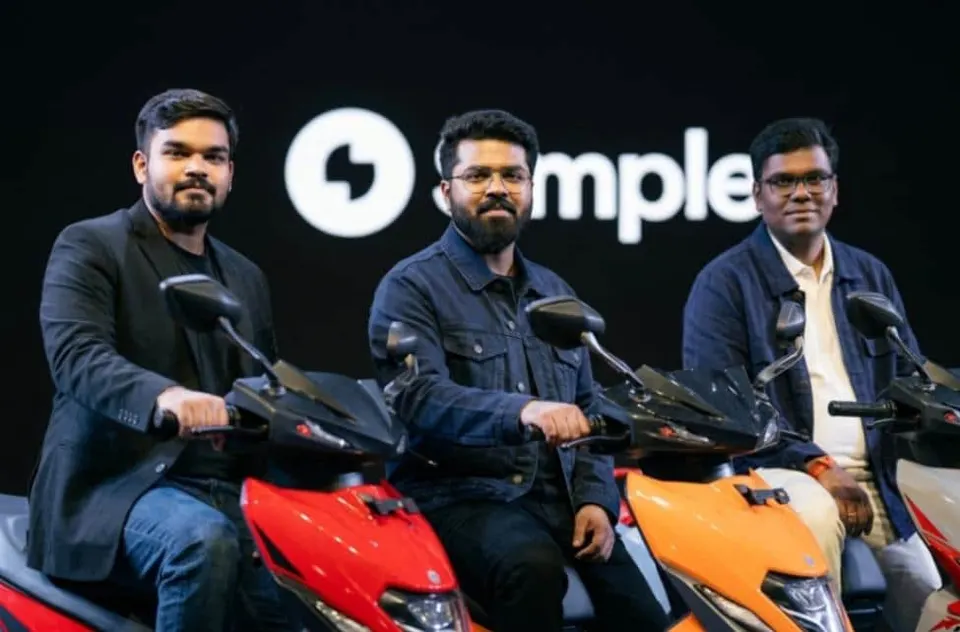
Bengaluru-based electric two-wheeler manufacturer Simple Energy has closed a ₹250 crore Series B funding round to accelerate its manufacturing capabilities and retail expansion. The capital structure is a strategic blend of equity and debt. The equity portion, totaling ₹127 crore, was led by the family office of Dr. Arokiaswamy Velumani, the founder of Thyrocare Technologies, alongside participation from Simple Energy’s co-founders Suhas Rajkumar and Ankit Gupta. To complement the equity, the company secured ₹123 crore in debt financing from HDFC Bank, Capitar Ventures, and a consortium of non-banking financial companies. This fresh injection arrives at a critical juncture for the firm, which recently saw its annual operating revenue surge fourfold from roughly ₹40 crore in the previous fiscal year to ₹170 crore in FY26. Armed with this capital, the company has explicitly stated its intention to aggressively prepare the groundwork for an initial public offering in the second half of the financial year 2028.
Why It Matters
The strategic decision to utilize a mix of debt and equity is highly calculated. By avoiding a pure equity round, the founders prevent excessive dilution of their ownership while still accessing the heavy working capital required to survive the capital-intensive nature of hardware manufacturing. The unit economics of the electric two-wheeler market demand massive volume to achieve profitability, a challenge Simple Energy intends to tackle head-on. Currently, the company operates at a manufacturing output of roughly 3,000 units per month, with monthly retail sales hovering around 1,500 to 2,000 units. The primary objective for this funding is a rapid scaling operation. Simple Energy aims to deploy approximately 70% of the newly raised capital directly into scaling production and expanding working capital, pushing its manufacturing capacity to 10,000 units a month by January and 15,000 units by March of next year. Furthermore, the company understands that localized distribution is the key bottleneck preventing EV startups from competing with legacy automakers. Consequently, they plan to expand their retail presence from the current 80 outlets to over 200 touchpoints nationwide.
The Strategic Read
This funding event highlights a broader maturation within the Indian electric mobility sector. The public markets have already demonstrated a strong appetite for EV manufacturers, as evidenced by the successful recent public listings of competitors like Ola Electric Mobility and Ather Energy, alongside regulatory approvals for Greaves Electric Mobility. Simple Energy is positioning itself to be the next major contender in this ongoing transition away from internal combustion engines. However, to capture a wider market share before its targeted IPO, the company will need to transition from a premium, niche brand into a mass-market player. Management has already signaled plans to introduce more affordable scooter variants to convert price-sensitive buyers who are currently hesitating due to the high upfront cost of their flagship models. If Simple Energy can successfully navigate supply chain constraints, utilize this capital to optimize its dedicated battery assembly lines by mid-2026, and execute its massive retail expansion strategy, it stands a strong chance of consolidating a firm position among the top-tier domestic EV manufacturers before tapping the public markets.
For daily, sharp analysis of the biggest moves in the Indian business and startup ecosystem, follow StartupFox.