 OYO
OYOThe Story
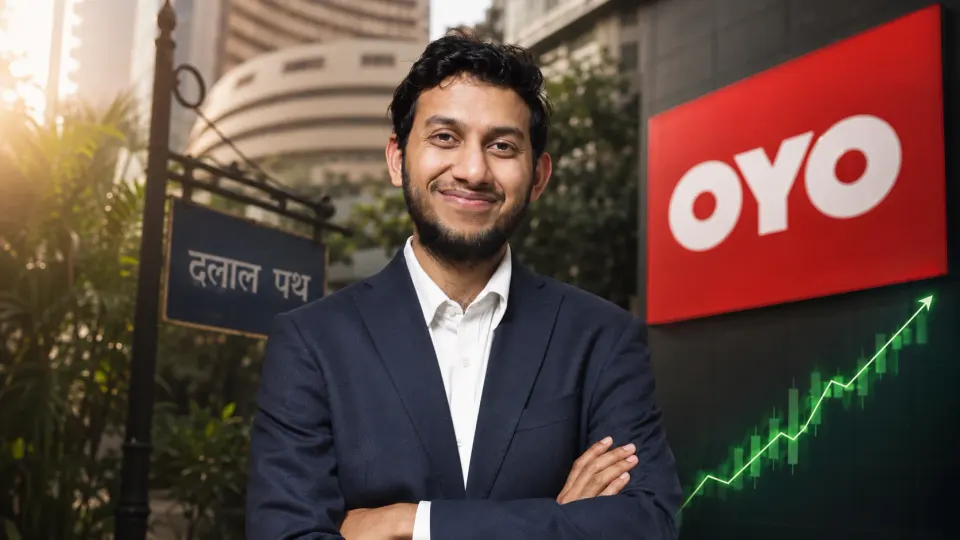
Prism, the parent company of hospitality tech operator OYO, has officially received approval from the Securities and Exchange Board of India (SEBI) to launch its highly anticipated initial public offering. Filing through the confidential route in late December 2025, the company aims to raise a substantial ₹6,650 crore through a purely fresh issue of equity shares. By entirely omitting an Offer For Sale (OFS) component, founder Ritesh Agarwal and major institutional backers like SoftBank are signaling an intention to remain heavily vested. Following this regulatory green light, Prism is preparing to submit its Updated Draft Red Herring Prospectus (UDRHP-I) by early July, targeting an estimated valuation bandwidth of $7 billion to $8 billion. The issue will be managed by a formidable syndicate of bookrunners, including Axis Capital, Goldman Sachs, Citi, and Kotak Investment Banking.
Why It Matters
The structural architecture of this ₹6,650 crore capital raise reveals a calculated shift in OYO’s operational thesis. In earlier valuation regimes, OYO operated as a hyper-growth aggregator subsidizing market share through aggressive discounting and rapid property onboarding. Today, the unit economics are entirely different. This capital is specifically earmarked to aggressively fund the company’s pivot toward premiumization and direct operational control. Over the last twenty-four months, OYO has structurally reorganized to optimize yield over sheer volume, targeting self-operated formats and higher-margin premium brands like Sunday Hotels and Palette. Furthermore, the complete absence of an OFS means every rupee raised will drop straight onto the corporate balance sheet, lubricating domestic expansion, debt reduction, and aggressive inorganic moves such as the recent acquisition of US-based G6 Hospitality, which instantly expanded their North American cash flow.
The Strategic Read
This public market debut operates as a massive litmus test for India's consumer-tech ecosystem, particularly for heavily capitalized legacy unicorns that previously faced severe valuation corrections. OYO’s journey from a $10 billion private peak, through severe internal markdowns by SoftBank, to a structurally profitable entity projecting an FY26 EBITDA of approximately ₹2,496 crore, sets a critical precedent. If public markets absorb this $7-8 billion valuation, it fundamentally validates the strategy of pivoting from cash-burning market acquisition to disciplined yield management and premium segment ownership. For legacy hospitality incumbents and fragmented digital aggregators, a publicly listed and deeply capitalized OYO presents a terrifying structural moat. The injection of ₹6,650 crore in fresh capital allows the company to lock down premium inventory globally while leveraging its mature technological infrastructure to outprice and out-scale traditional hotel franchises on their own turf.
For daily, sharp analysis of the biggest moves in the Indian business and startup ecosystem, follow StartupFox.