The Story
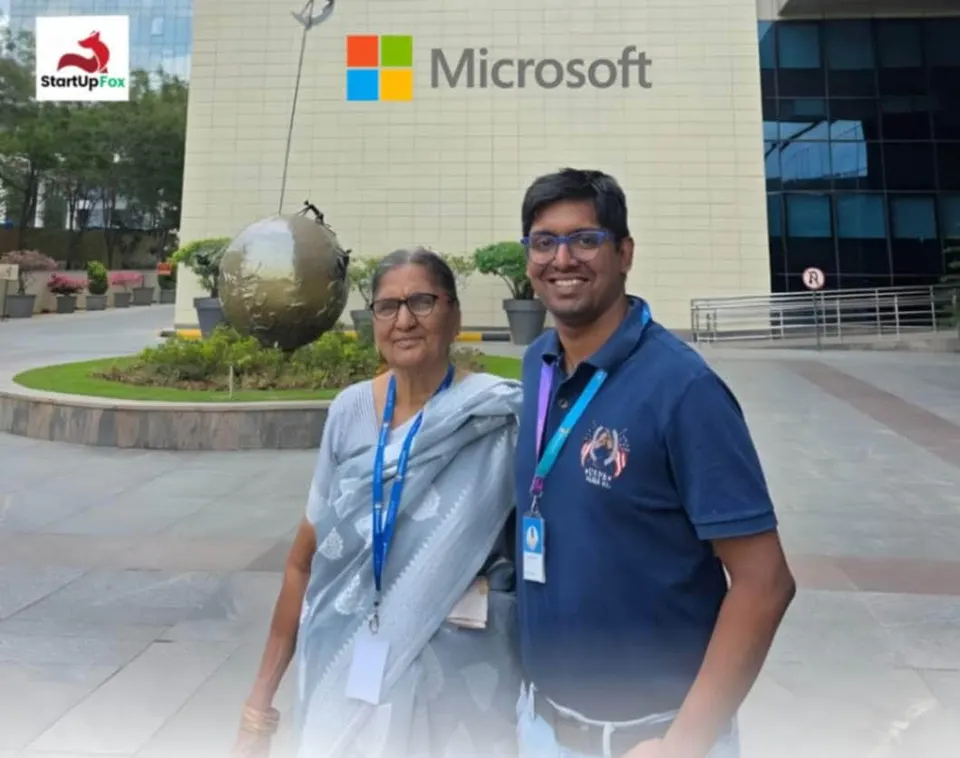
Vyanktesh Bajaj, a manager at Microsoft and an IIM Ahmedabad alumnus, recently shared a deeply personal milestone on LinkedIn that quickly went viral across the Indian corporate ecosystem. He took his 81-year-old grandmother on her first-ever tour of a corporate facility at the Microsoft campus in Bengaluru. Hailing from Mangrulpir, a small town in Maharashtra where exposure to the corporate world was virtually non-existent, Bajaj reflected on his childhood dreams of working in the tall glass buildings he only saw on television. The post captured his grandmother's awe as she navigated the massive scale and energy of the global tech hub, culminating in her simple but profound validation: "Are, tu to bahut bada kaam karta hai re" (You are doing very meaningful work).
Why It Matters
To understand why a simple family office tour generated such massive organic engagement, you have to look at the exact demographic pipeline powering India's IT and SaaS sectors. The domestic tech ecosystem is predominantly built by first-generation corporate professionals emerging from tier-2, tier-3, and rural micro-economies. For decades, the path from remote locations like Mangrulpir to global tech giants involved navigating severe resource constraints, fierce educational bottlenecks, and intense financial pressure. When professionals like Bajaj achieve this level of corporate stability, the victory is rarely individual—it is heavily viewed as a collective return on investment for generations of familial sacrifice. The grandmother's lack of formal education combined with her immediate grasp of the "massive scale" of his work perfectly encapsulates the dual realities existing within single Indian families today, striking a deeply relatable chord with millions of middle-class professionals.
The Strategic Read
This viral moment serves as a highly effective baseline for understanding talent acquisition and HR psychology across the tech sector. While companies aggressively compete on compensation brackets, stock options, and remote work flexibility, the core emotional driver for a massive segment of the Indian workforce remains upward social mobility and familial pride. Corporate campuses are not just real estate assets or operational hubs; for many employees, they represent the physical manifestation of breaking out of generational financial stagnation. As global companies like Microsoft, Google, and Amazon continue to expand their global capability centers (GCCs) in cities like Bengaluru, Pune, and Hyderabad, recognizing and validating these deep cultural anchors will become a critical tool. In a highly transient job market where average tenures are shrinking, fostering this specific type of emotional connection often yields higher long-term talent retention than financial incentives alone.
For daily, sharp analysis of the biggest moves in the Indian business and startup ecosystem, follow StartupFox.