
 Flipkart
The Story
Indian e-commerce giant Flipkart is currently exploring a massive $2 billion to $2.5 billion pre-IPO funding round, tapping both domestic and global institutional investors. Group Chief Executive Officer Kalyan Krishnamurthy has spent recent months traveling across Singapore, London, and the United States, engaging directly with heavy-hitting investment banks including Goldman Sachs, JP Morgan, Citigroup, and domestic giants like Axis Bank and Kotak Mahindra. While the outreach is aggressive, the final execution of this mega-round remains firmly in the hands of its parent company, Walmart. Holding an 80% stake in the Bengaluru-based firm, Walmart is reportedly weighing the strategic benefits of external capital against the realities of pre-IPO equity dilution. Flipkart, true to standard corporate protocol, has declined to comment on what it terms market speculation, reiterating a focus on long-term growth.
Why It Matters
The mechanics behind a pre-IPO round of this magnitude are largely about price discovery and setting a robust floor for the public markets. Flipkart’s last major private market event was a $350 million infusion from Google in mid-2024, which anchored its valuation at $36 billion. By raising private capital now, Flipkart aims to establish a higher, updated valuation benchmark before exposing itself to the volatility of public retail investors. For Walmart, approving this round is a calculated trade-off. While it means diluting their holding slightly, bringing in high-pedigree crossover funds and institutional capital validates the company's growth trajectory and arguably guarantees a more successful, stable IPO listing in the next 12 to 18 months. It is essentially an exercise in risk mitigation—securing powerful backers who will hold the line when the stock eventually goes public.
The Strategic Read
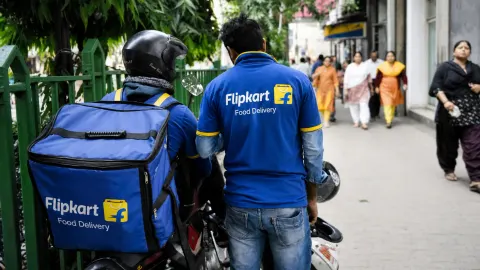
Zooming out, this $2.5 billion target reflects the sheer capital intensity required to defend market leadership in the current Indian retail environment. Traditional e-commerce is no longer a two-horse race between Flipkart and Amazon; the battlefront has shifted heavily toward quick commerce. Scaling services like Flipkart Minutes to compete head-on with heavily funded players like Blinkit, Zepto, and Swiggy Instamart burns significant cash, specifically in building out urban dark store infrastructure and optimizing ultra-fast supply chains. A fresh capital injection ensures Flipkart does not have to compromise its core e-commerce margins to fund its quick commerce ambitions. Furthermore, an IPO of this scale—potentially valuing the company north of $60 billion—would act as a massive liquidity event for early backers and employees, paving the way for a major late-stage tech investment cycle across the Indian ecosystem.
For daily, sharp analysis of the biggest moves in the Indian business and startup ecosystem, follow StartupFox.