The Story
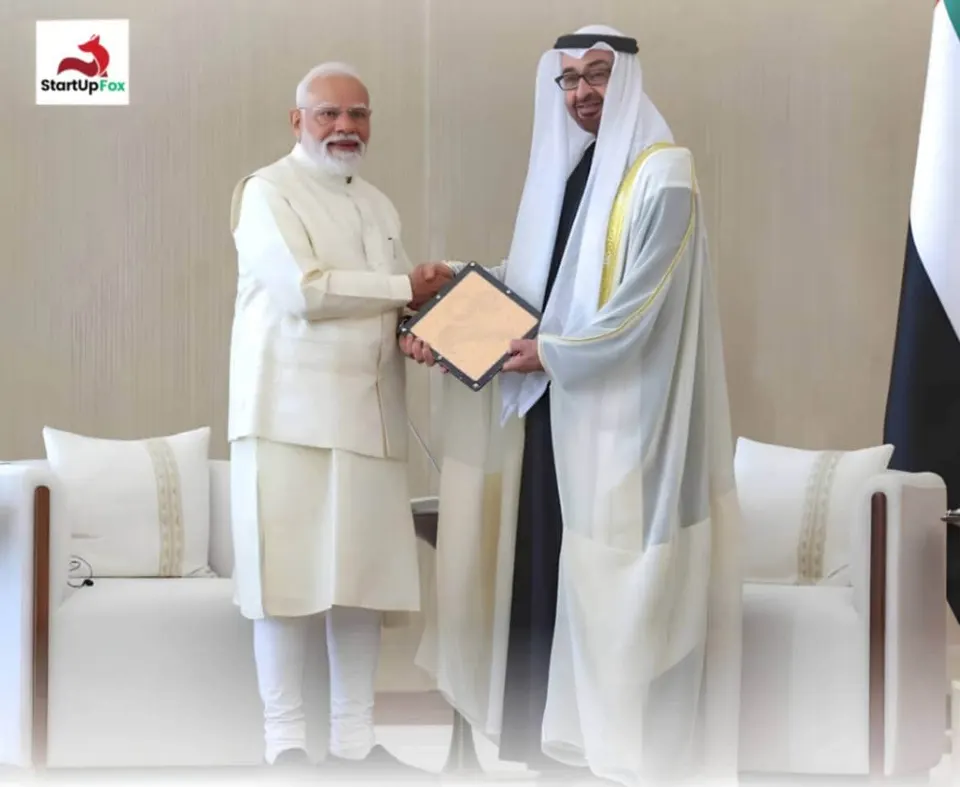
Prime Minister Narendra Modi's high-level meeting with UAE President Sheikh Mohamed bin Zayed Al Nahyan has resulted in a staggering $5 billion investment commitment directed squarely at India’s financial and infrastructure sectors. The capital deployment is structured around two historic transactions alongside broader bilateral agreements in energy, defense, and maritime cooperation. Emirates NBD, the UAE's largest lender, is executing a $3 billion transaction to acquire a controlling stake of up to 74% in RBL Bank. Concurrently, Abu Dhabi-based International Holding Company (IHC) has committed $1 billion to acquire a 41.5% promoter stake in Sammaan Capital, the non-banking financial company formerly known as Indiabulls Housing Finance. The remaining $1 billion is earmarked for infrastructure projects via the Abu Dhabi Investment Authority (ADIA) and the National Infrastructure & Investment Fund (NIIF).
Why It Matters
The mechanics behind these massive capital injections reveal a calculated defensive strategy by Middle Eastern wealth funds. Facing global energy market volatility and regional geopolitical tension, Gulf economies are aggressively diversifying their balance sheets away from pure oil reliance. India offers an unparalleled combination of geopolitical stability and a highly underpenetrated, high-margin credit market. For Emirates NBD, spending $3 billion is the fastest route to bypass decades of organic branch-building in India. The Reserve Bank of India's (RBI) approval allowing ENBD to treat RBL as a foreign subsidiary gives the Dubai lender an immediate, fully functional banking apparatus in one of the world's fastest-growing economies. Similarly, IHC's $1 billion move into Sammaan Capital is not a passive portfolio play. By taking over the promoter role, IHC gains direct access to India's booming mortgage and retail lending sector, turning a historically distressed asset into a capitalized vehicle ready to capture consumer debt demand.
The Strategic Read
This $5 billion commitment represents a fundamental maturation of the India-UAE economic corridor, moving past the trade frameworks established by the Comprehensive Economic Partnership Agreement (CEPA). Historically, Middle Eastern capital in India has been patient and passive—usually parked in sovereign wealth funds, real estate, or minority stakes in tech startups. Now, Gulf capital is actively buying the plumbing of the Indian economy. The implications for the domestic banking sector are severe. A heavily capitalized RBL Bank, backed by Emirates NBD's global balance sheet, will immediately challenge legacy mid-tier private banks like IndusInd, Yes Bank, and IDFC First Bank for corporate and retail market share. Furthermore, this signals to global markets that the RBI is increasingly comfortable with major foreign direct investment in the private banking sector, potentially triggering a new wave of cross-border acquisitions as global institutions hunt for yield in India.
For daily, sharp analysis of the biggest moves in the Indian business and startup ecosystem, follow StartupFox.